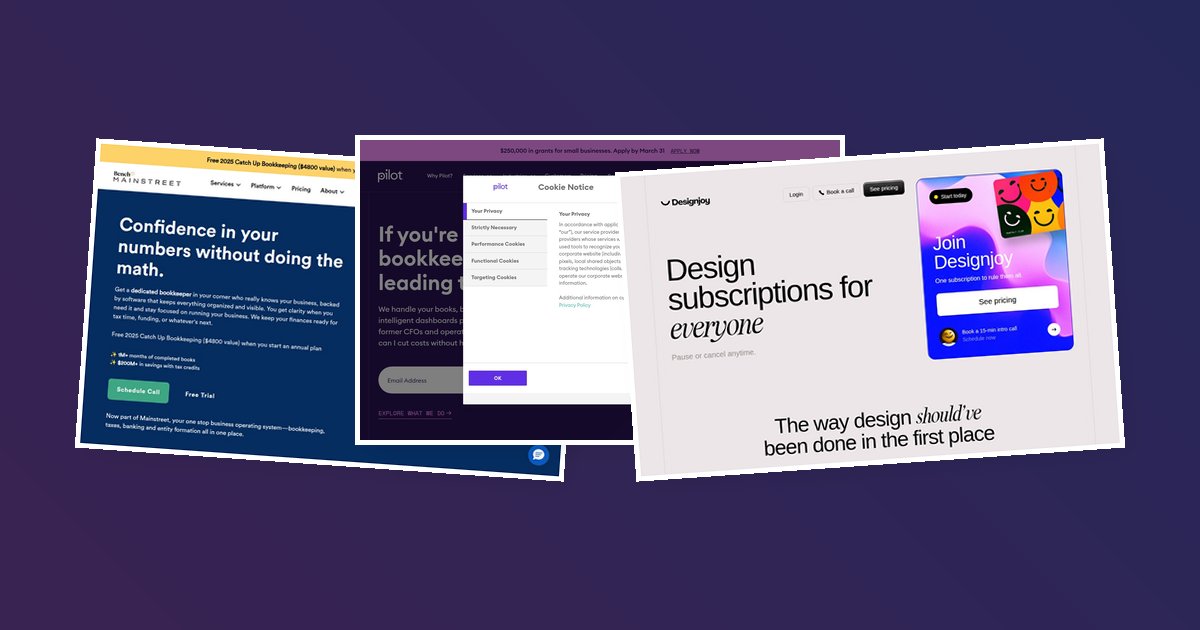
After reviewing over a hundred barbershop websites, one thing is clear: put booking at the top of every page, and keep the whole process on-site.
Nearly 80% of the sites we reviewed use Squarespace for design and hosting. Shopify was popular for retail-focused shops. Boulevard was the most popular booking tool, with Squire and Square Appointments close behind.
The 20 examples below each do something specific worth adapting:
Birds Barbershop
Austin's 20-year #1 vote streak
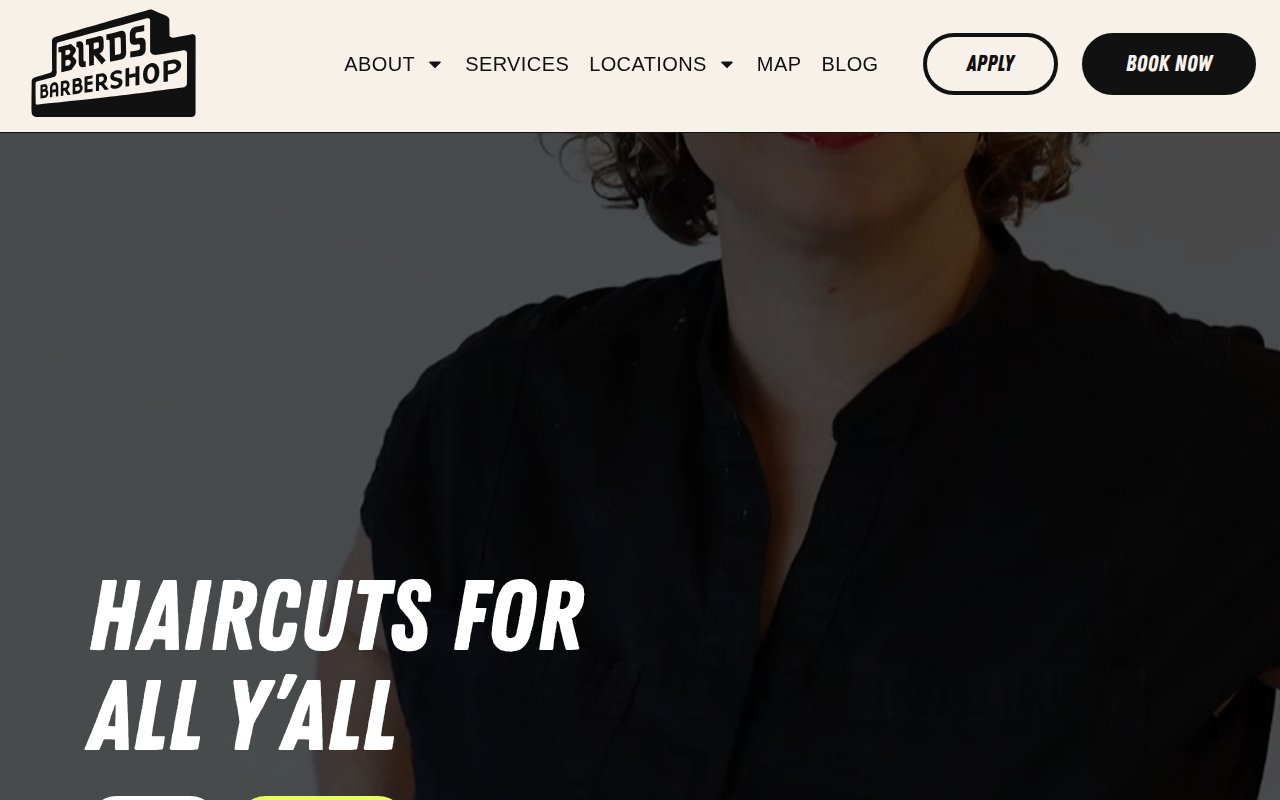
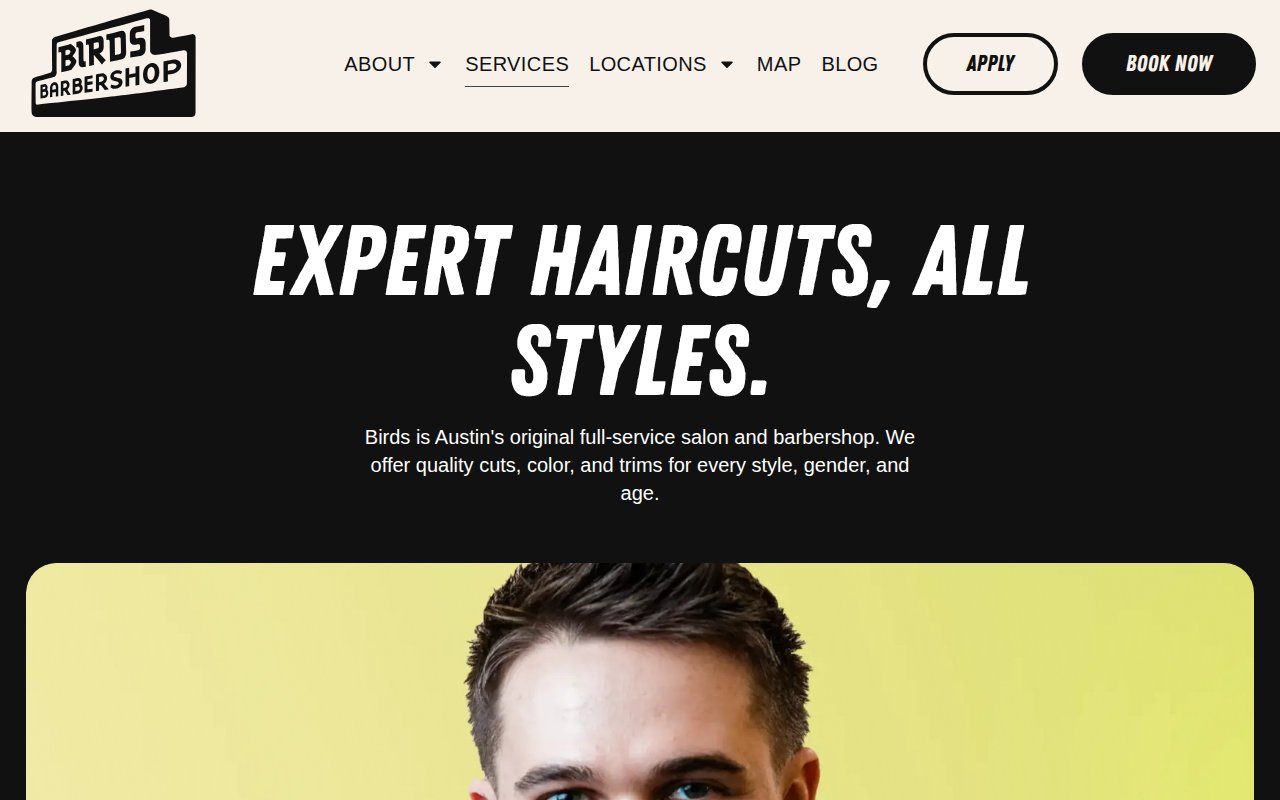
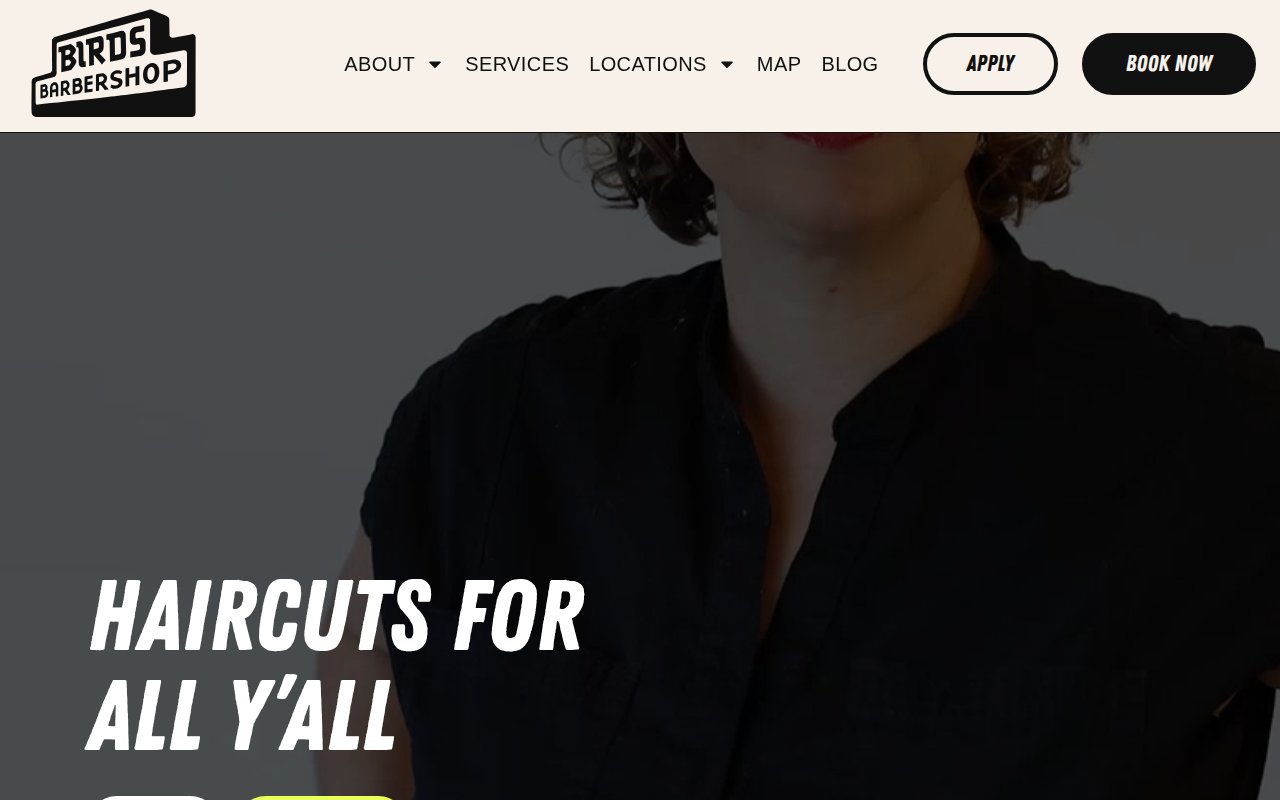
Birds Barbershop has been voted Austin’s best barbershop by the Austin Chronicle every year since opening in 2006. The website reflects why: “Haircuts for all y’all” sets the tone instantly, and the Book Now button opens a popup rather than redirecting to a third-party platform. The visitor never leaves the page.
With 9 Austin locations, the site handles multi-location booking cleanly. Pricing is transparent with specific rates for each cut type, and named testimonials from real customers mentioning specific barbers and locations add credibility without feeling curated.
There are no individual barber profiles, though. For a 9-location shop built on personality, showing who’s behind the chair would strengthen the connection.
Scissors & Scotch
Grooming meets a full-service bar
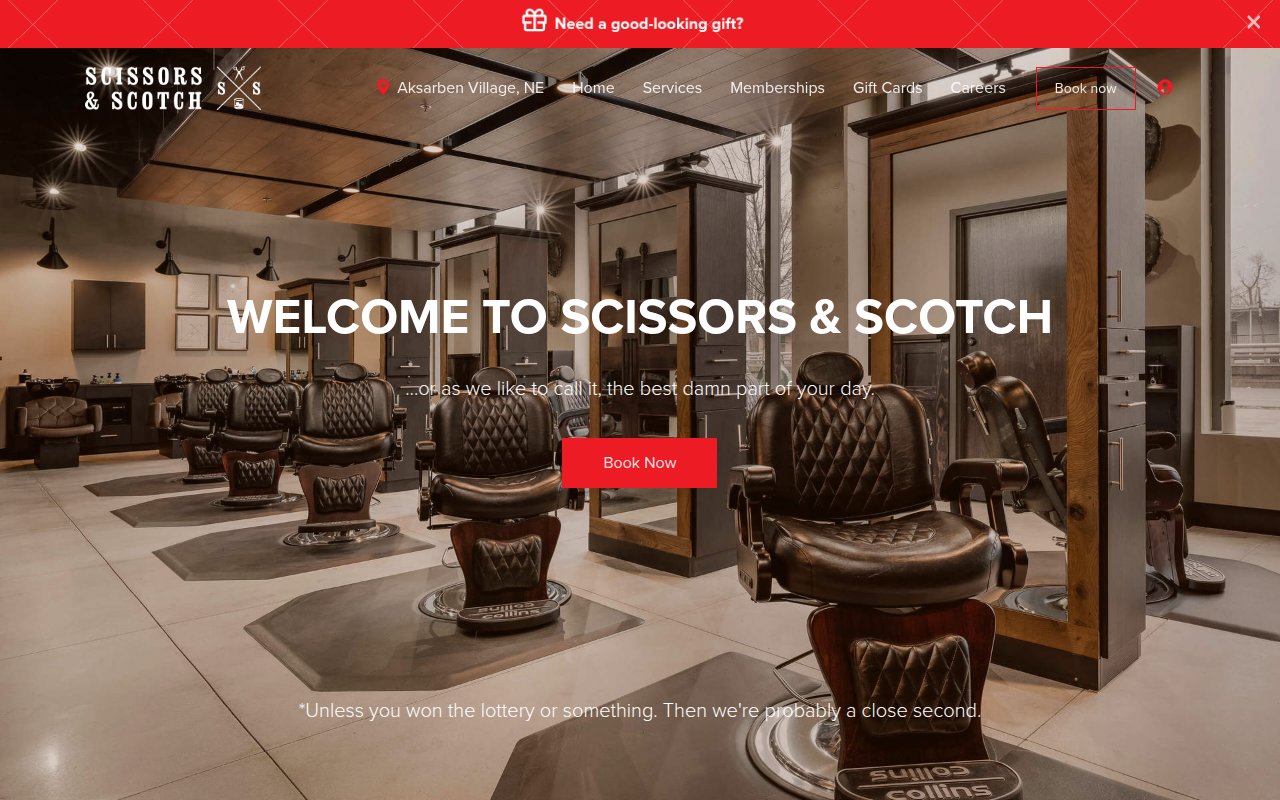
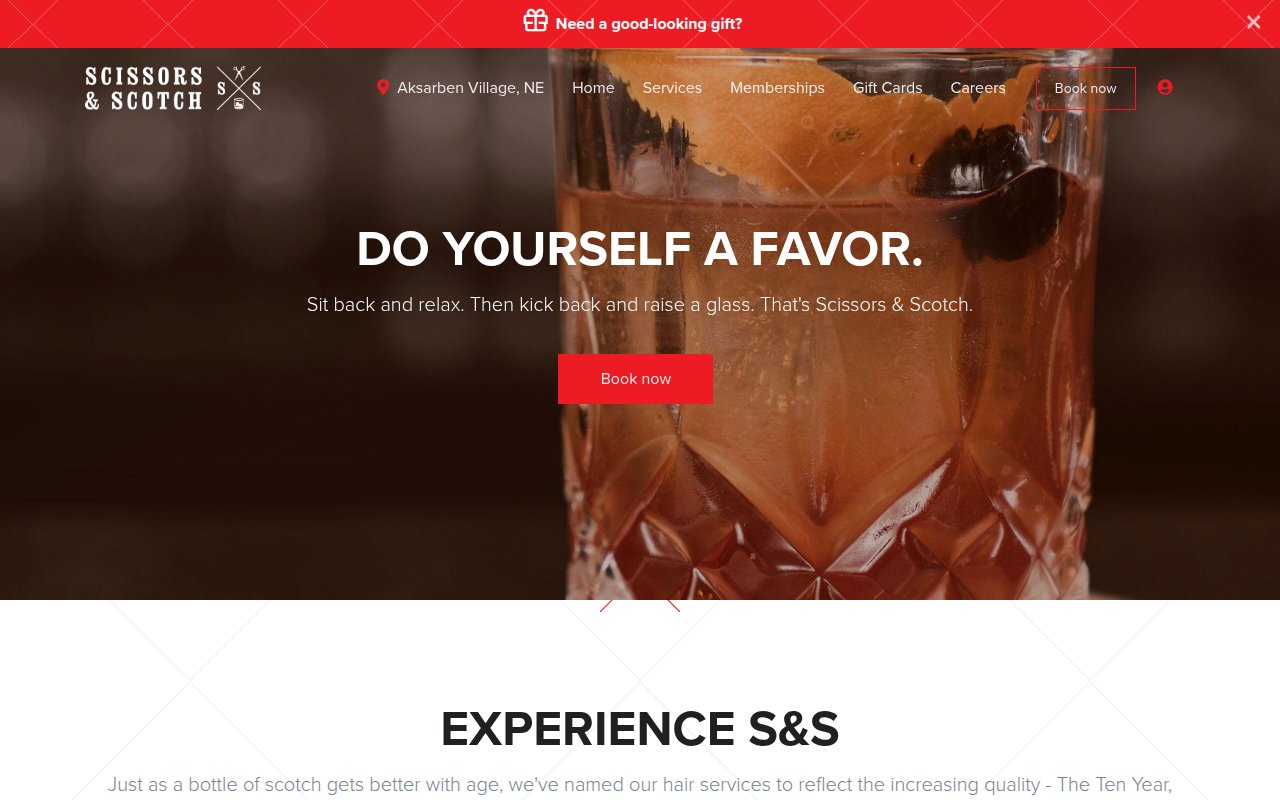
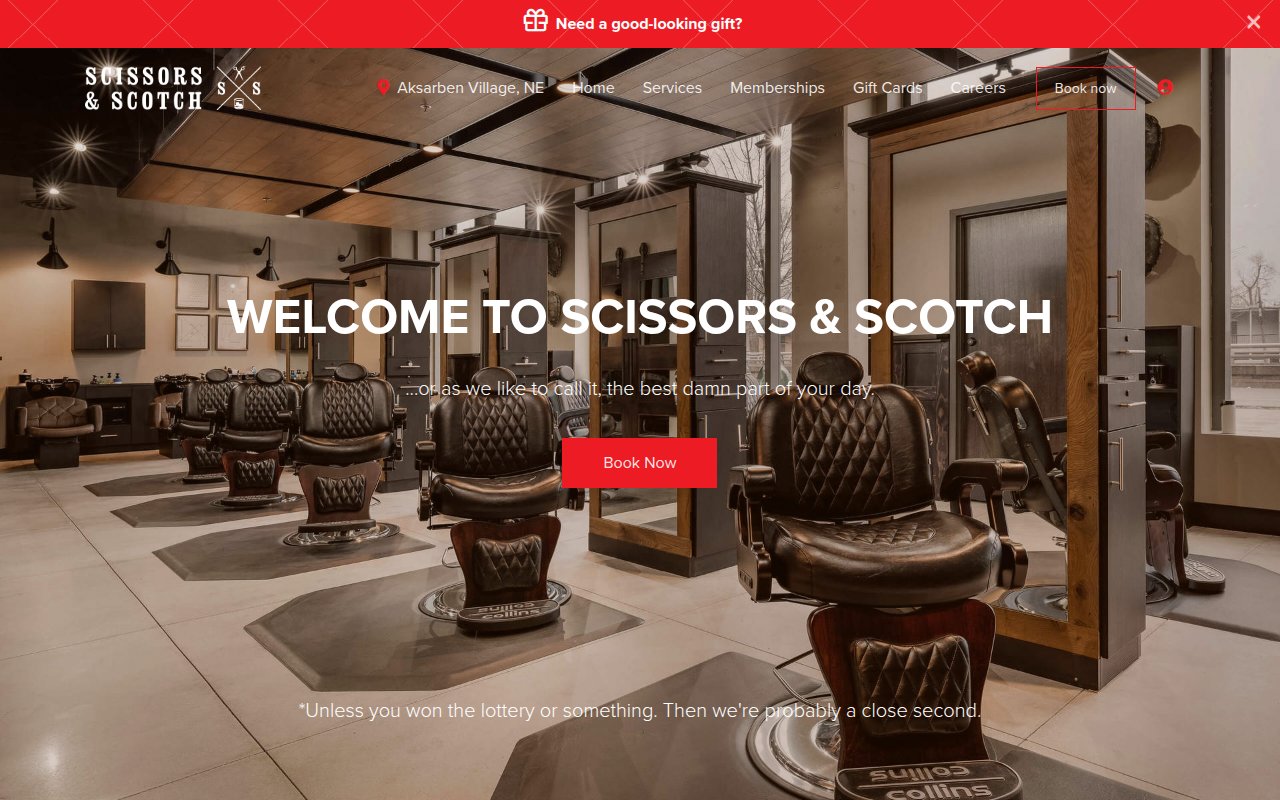
Scissors & Scotch built an entire brand around one idea: grooming plus a full-service bar. The concept shapes everything on the site. Services are named after scotch aging tiers, so you remember the menu. They back it up with 4,000+ Google reviews at 4.9 stars.
The booking flow is one of the smoothest here. Click Book Now and an inline modal opens on the same page. No redirect, no new tab. The membership program adds recurring revenue and gives regulars a reason to stay loyal.
The trade-off is that Scissors & Scotch is a franchise, so the site feels polished but impersonal. No individual barber names or founder narrative. If you’re a one-location shop, you have a personality advantage they can’t replicate.
Barber & Co (Miami)
Luxury Webflow with Squire booking
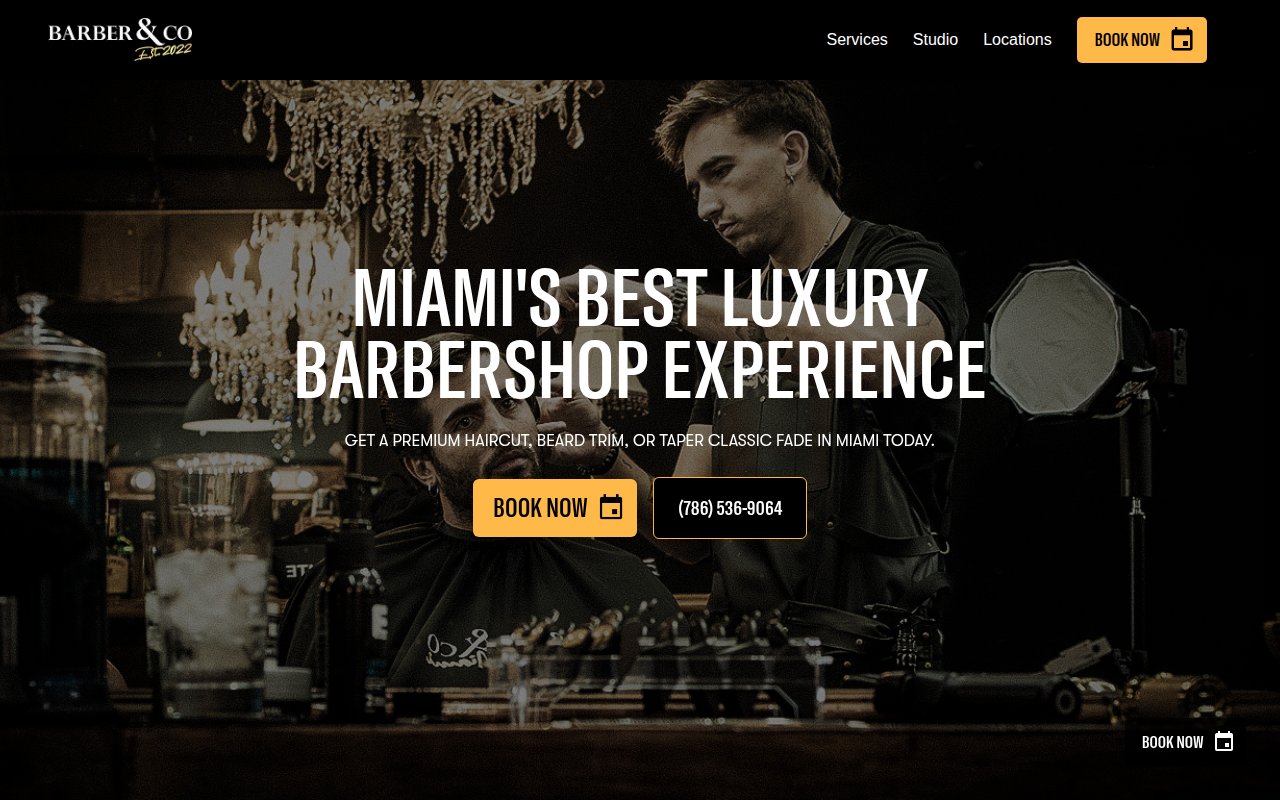
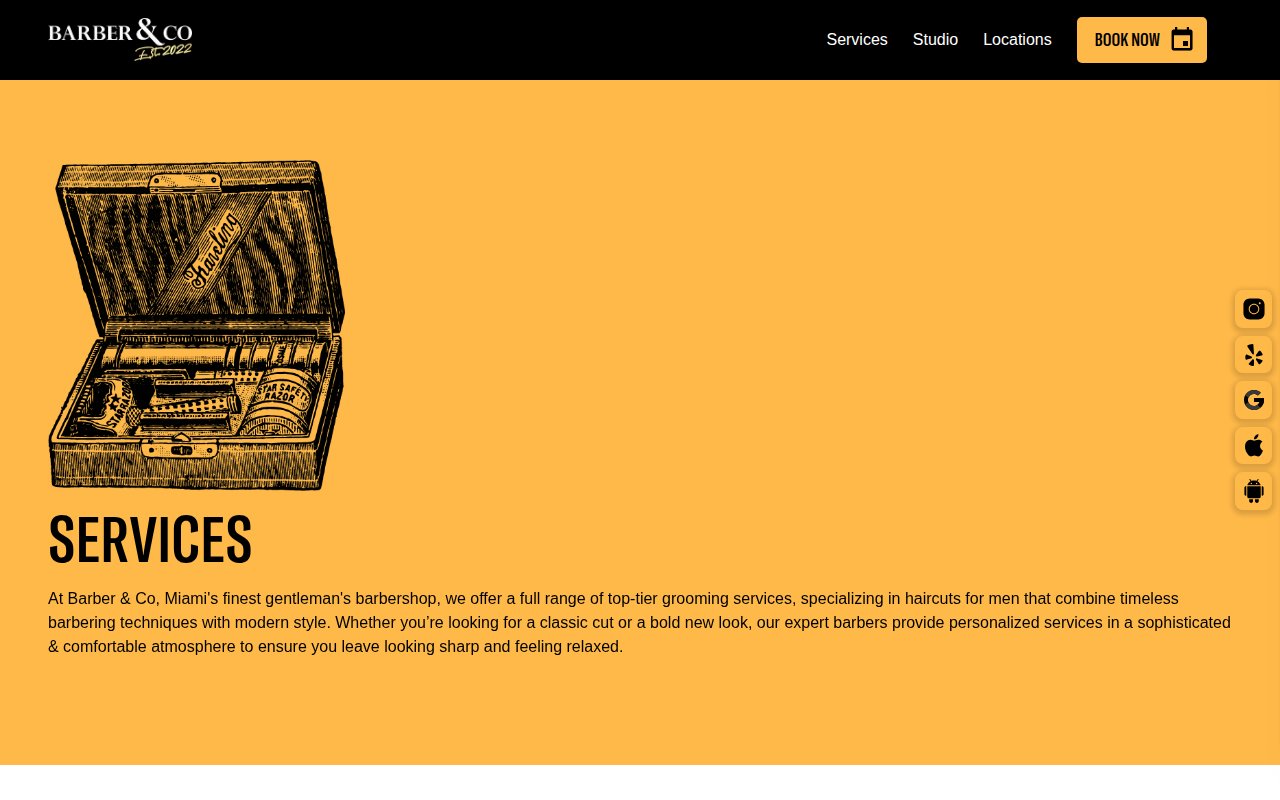
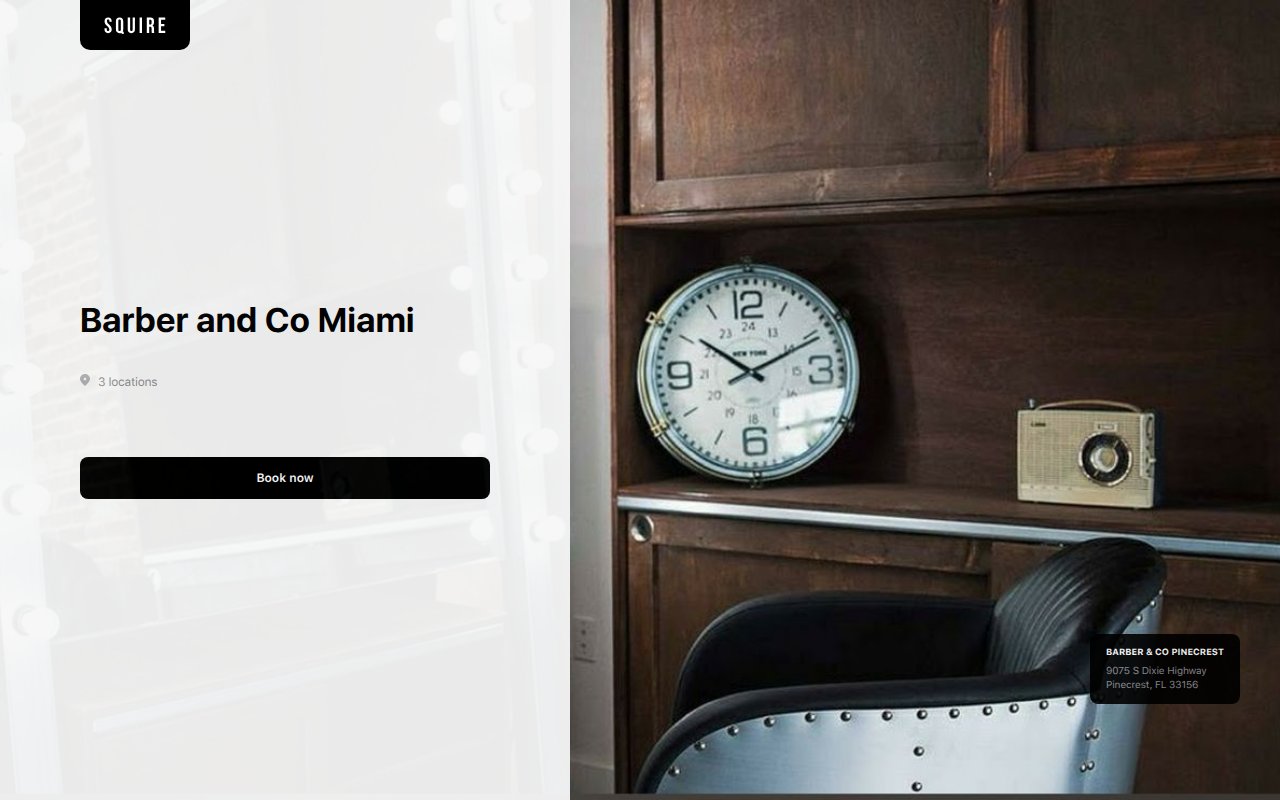
Barber & Co in Miami is what a barbershop website looks like when the design matches the price point. Built on Webflow, the photography is dark and editorial, and the whole site feels more like a fashion brand than a barbershop. Haircuts start at $60, and every service includes a complimentary drink, grooming consultation, and styling.
Booking runs through Squire, starting with location. For a two-shop operation, that keeps the flow short. Woman-owned and LGBTQ+ friendly. They offer a 10% off email signup, which captures leads from visitors who aren’t ready to book yet.
The missing piece is social proof. They position as “Miami’s Best” but don’t embed a single customer review. At $60+ per cut, a few testimonials would help justify the premium.
Heritage Barbershop
Prices and durations visible before you book
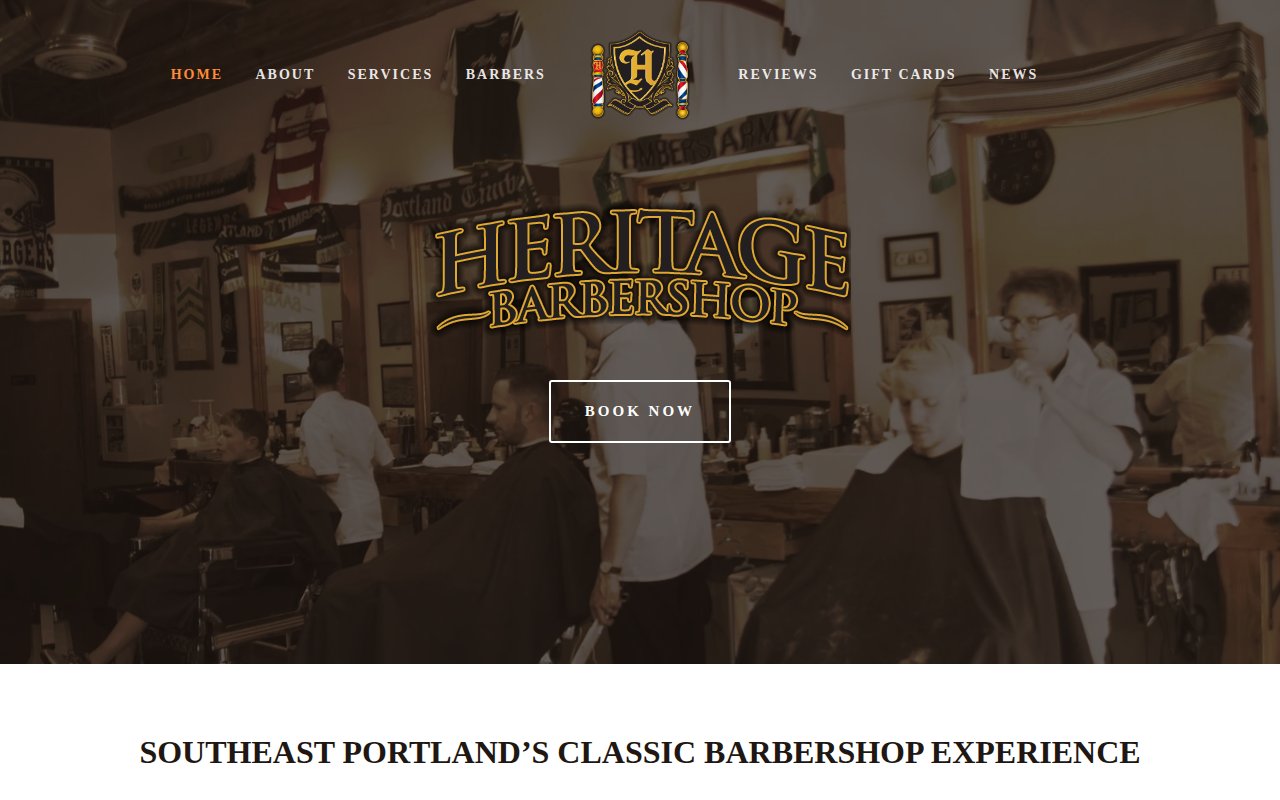
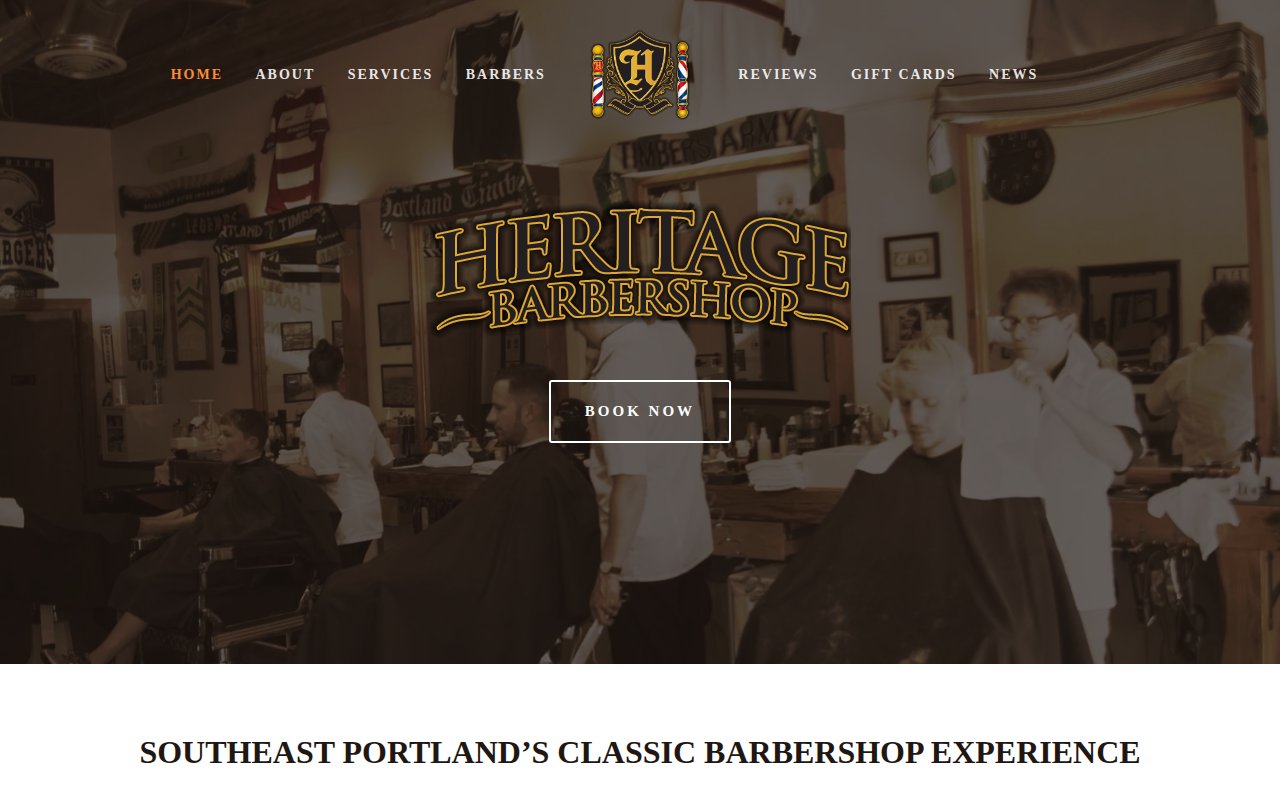
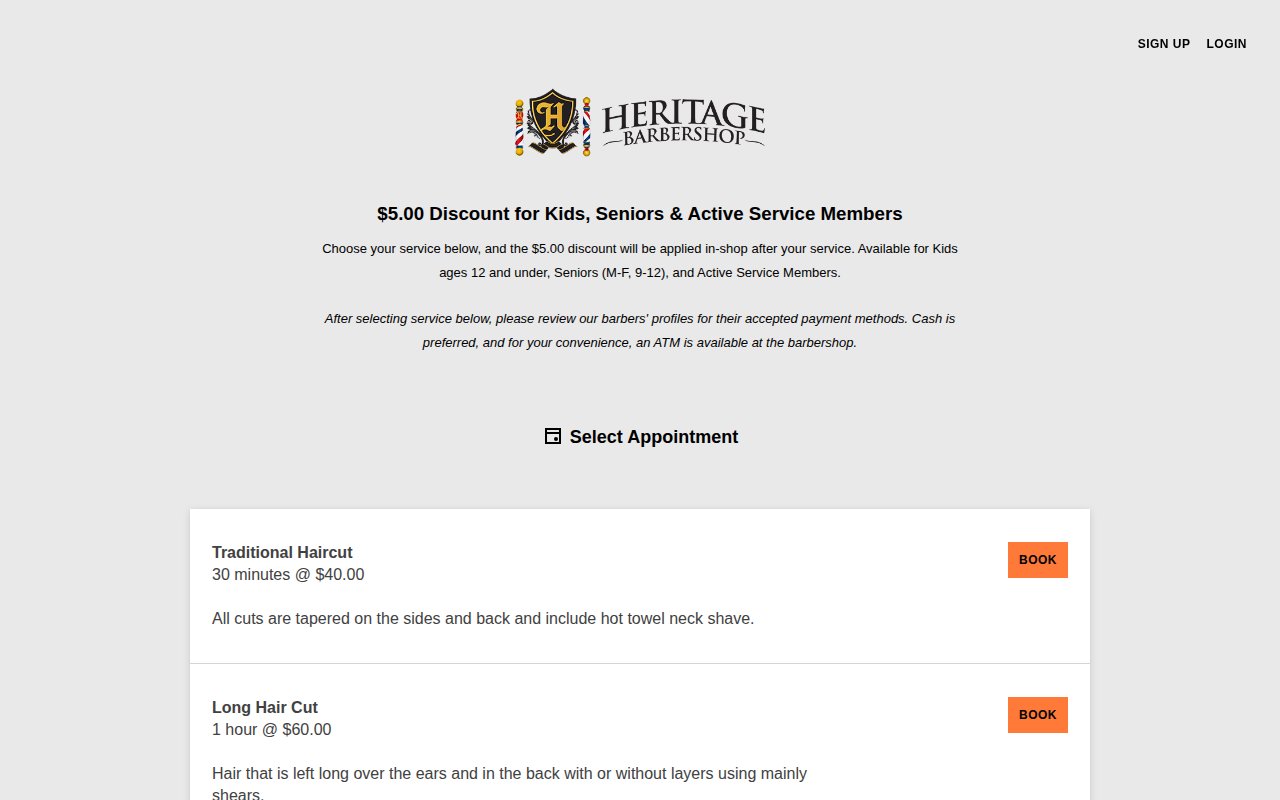
Heritage Barbershop in Southeast Portland runs the most transparent booking flow in this roundup. Their Acuity Scheduling integration shows every service with its price and duration upfront. You know exactly what you’re paying and how long it takes before you pick a time slot.
Family-owned and operated, the site lists 9 barbers by name with individual schedules and payment preferences. Discounts for kids, seniors, and active service members show up in the booking flow rather than buried on a policies page.
The cash-preference creates some friction for visitors who expect to tap a card, but it’s clearly a deliberate choice.
South Austin Barber Shop
1,066 Google reviews on the homepage
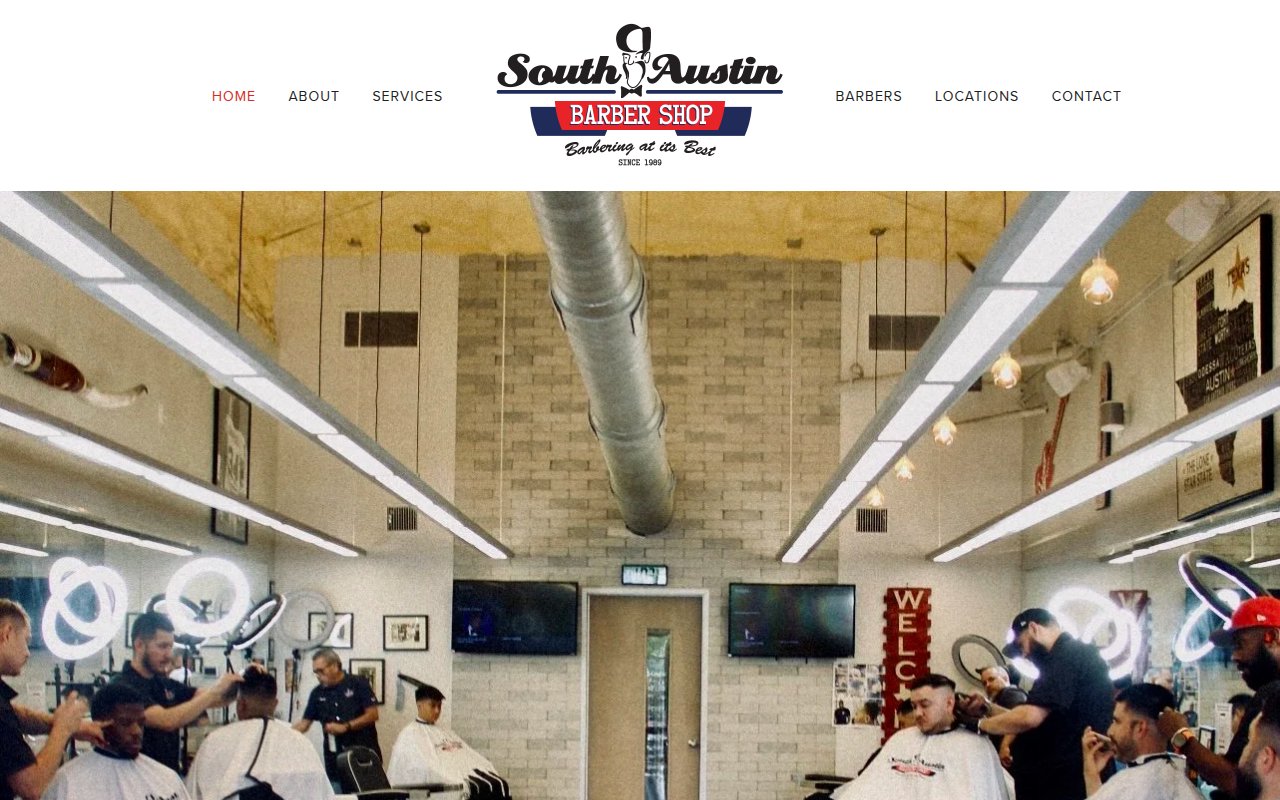
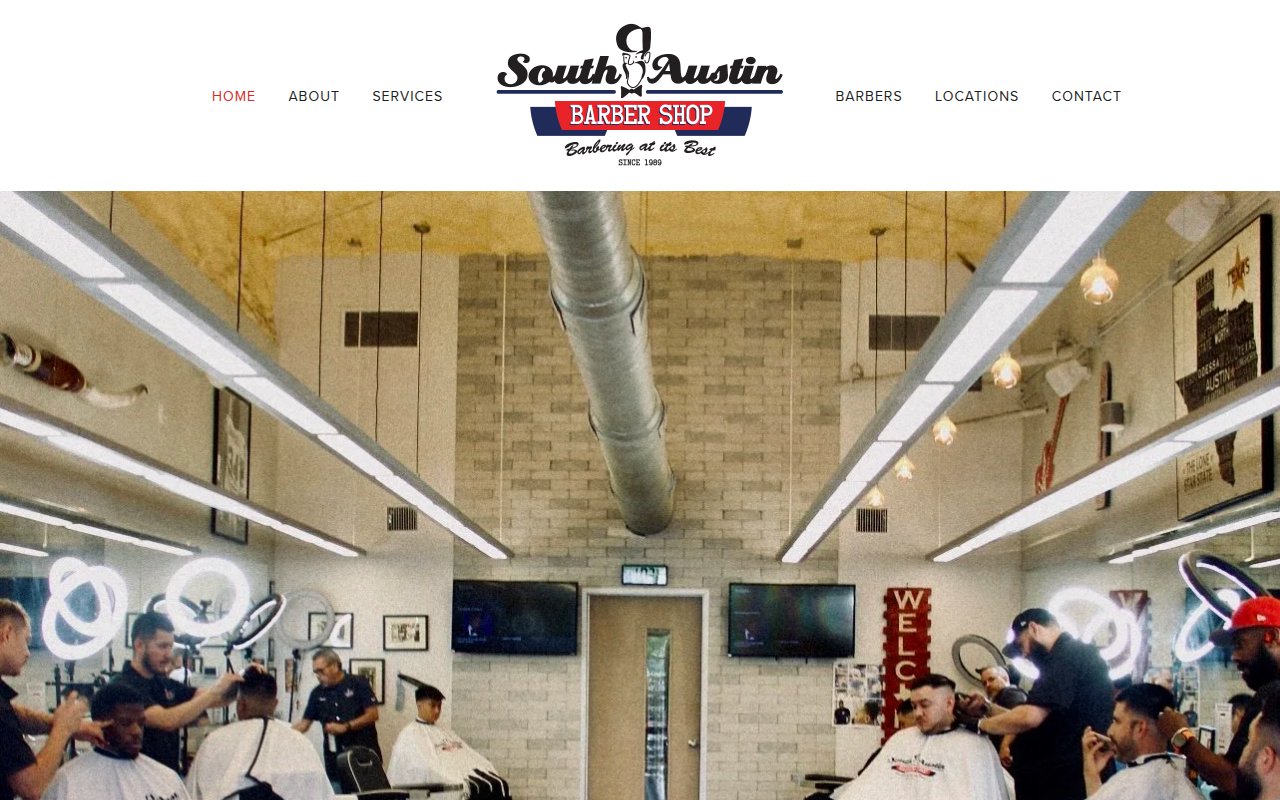
South Austin Barber Shop has the strongest social proof in this roundup: 1,066 Google reviews at 4.7 stars, embedded directly on the homepage. Named reviewers mention specific barbers, which is more convincing than “Great haircut! 5 stars.”
Their angle is simple: every chair is staffed by a licensed barber trained specifically in men’s cuts. That positions them against salons that also do men’s cuts but don’t specialize. Two Austin locations with per-location Schedule Now CTAs.
Clicking Schedule Now redirects to Facebook, though. For a shop with 1,000+ reviews on Google, losing visitors to a Facebook redirect at the moment of conversion is a wasted opportunity.
Mr. Winston's Barbershop
Video hero sells the atmosphere
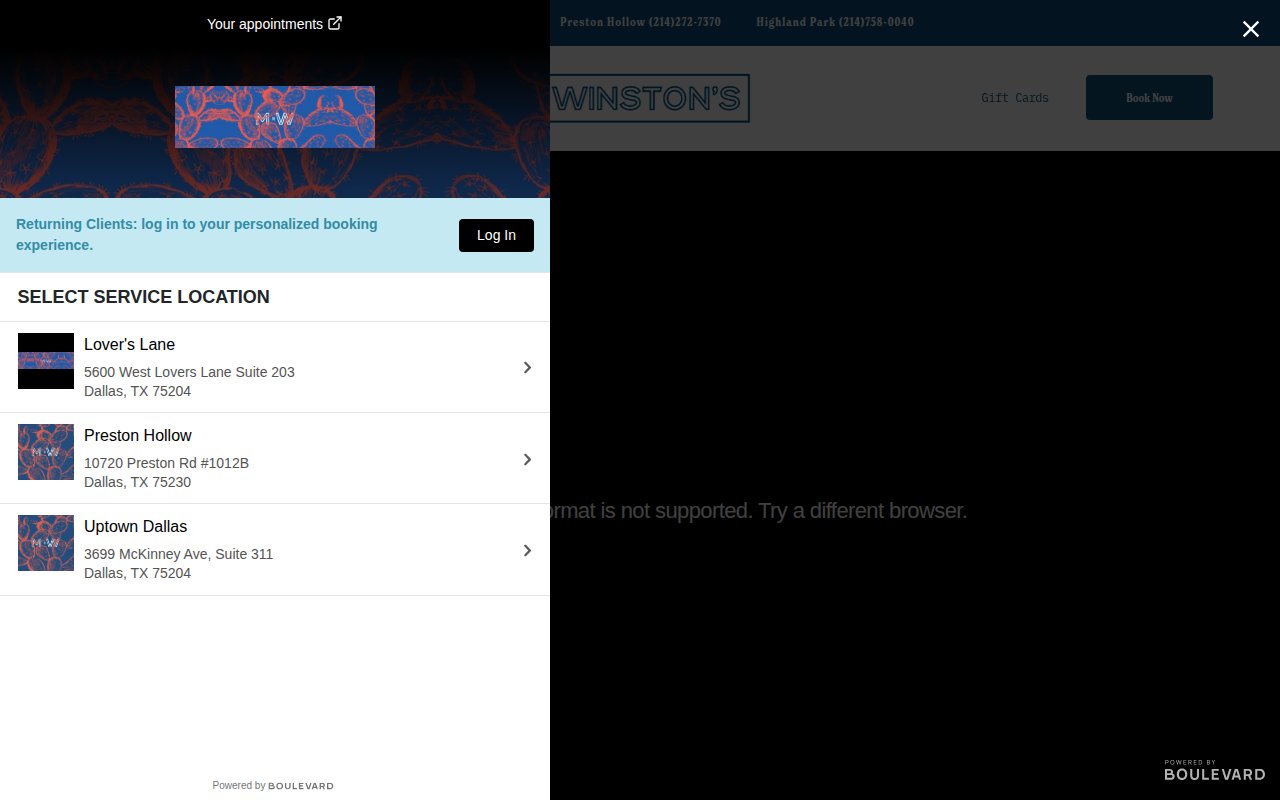
The homepage of Mr. Winston’s opens with a video hero showing the actual experience: the music, the chairs, the lighting.
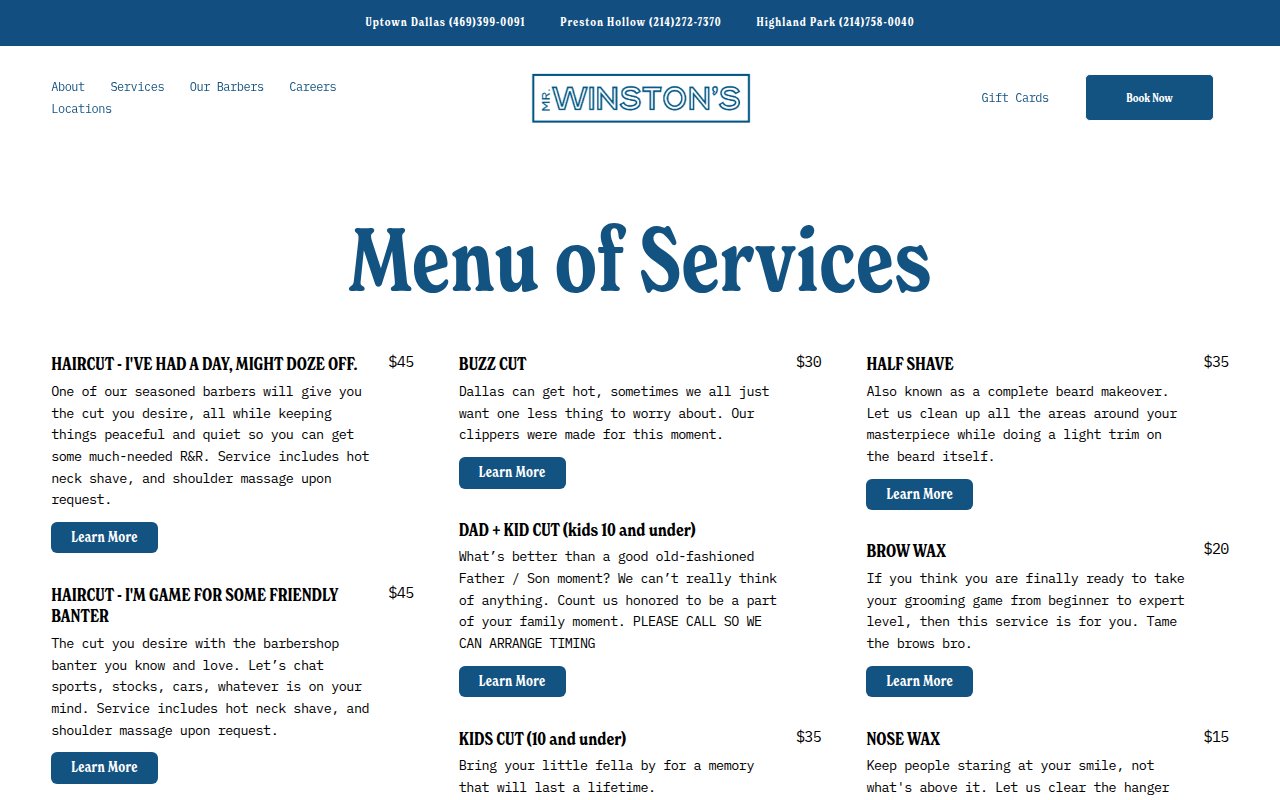
The service menu lists two versions of the same haircut at the same price: one quiet, one social. The customer chooses the experience, not just the service. The classic face shave includes a glass of bourbon. D Magazine named it Best Barber Shop, and Paper City gave it Best Retail Store Design.
The weakness is third-party proof. No embedded reviews or testimonials despite the awards. A few customer quotes would reinforce what the video already shows.
Scotch Pine
Barbering with intention, not just technique
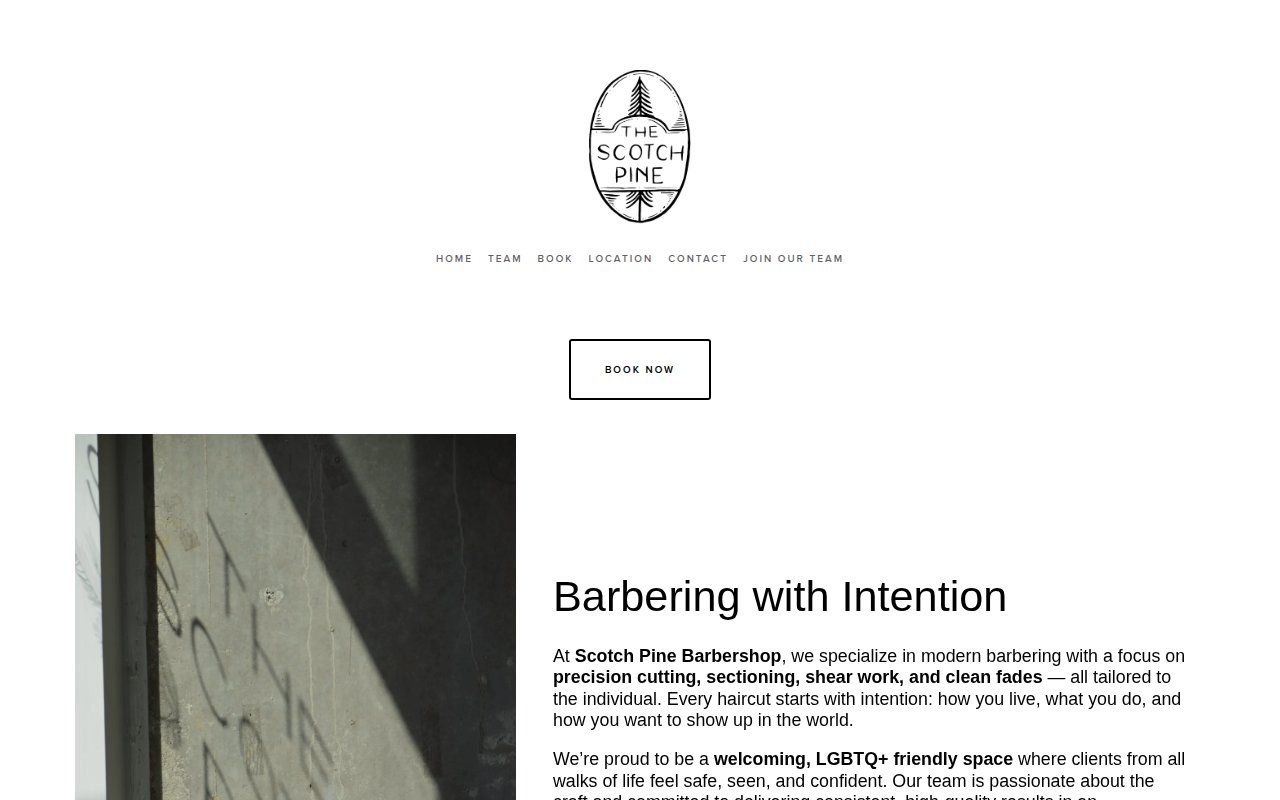
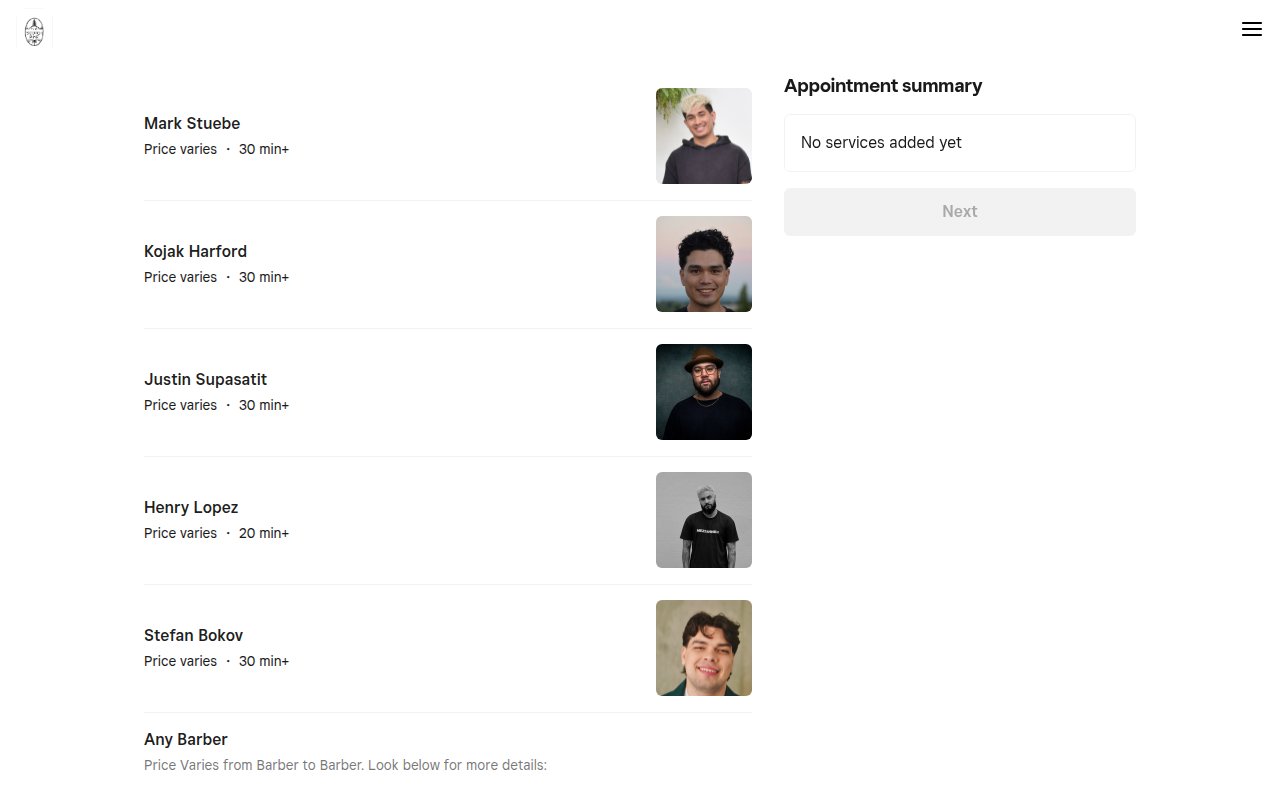
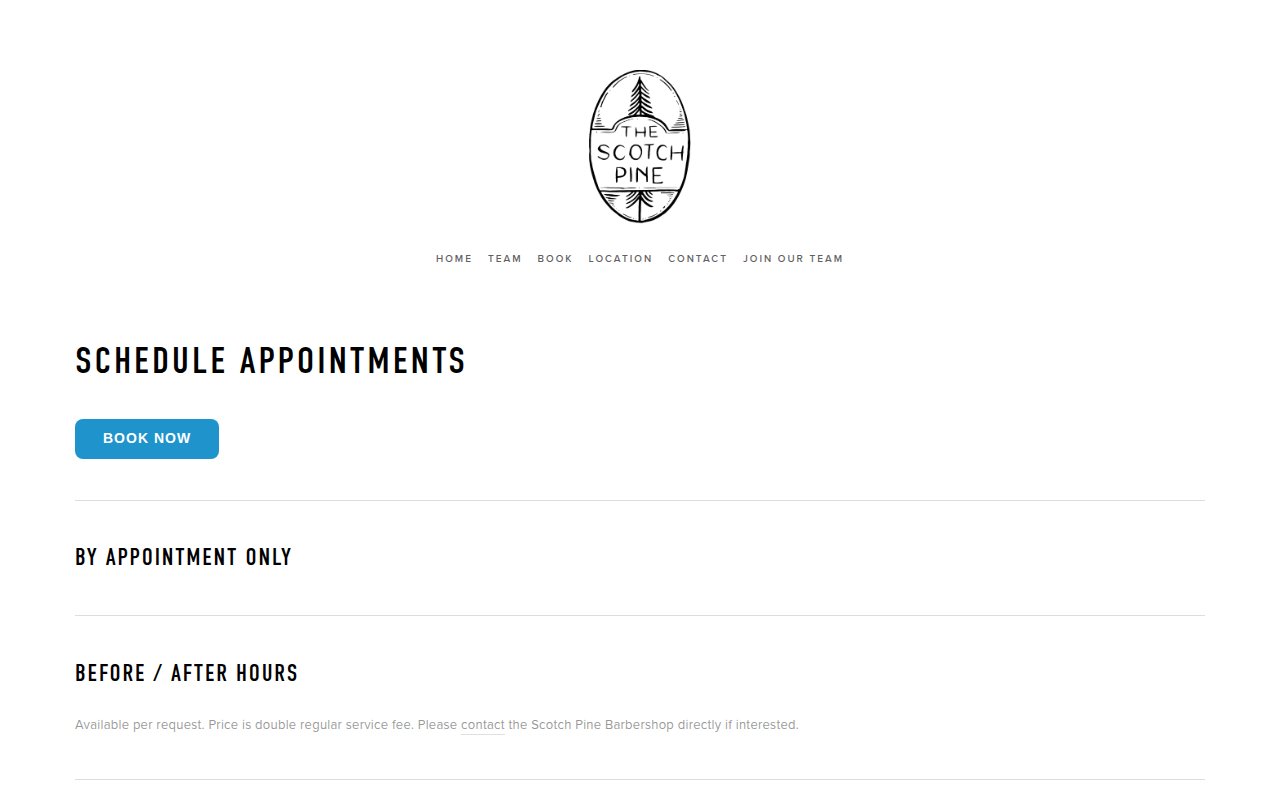
Scotch Pine in Seattle’s Capitol Hill positions itself around a philosophy: The philosophy (every cut starts with understanding how you live and how you want to show up) sounds like marketing copy, but the team page proves they mean it.
Five barbers, each with a real introduction covering background, specialties, and personal interests. LGBTQ+ friendly, with a 6-hour cancellation policy communicated upfront on the booking page.
Limited page count (no blog, no FAQ) leaves SEO value on the table, but the pages that exist are genuine.
Fellow Barber
Barbershop and product brand on one Shopify site
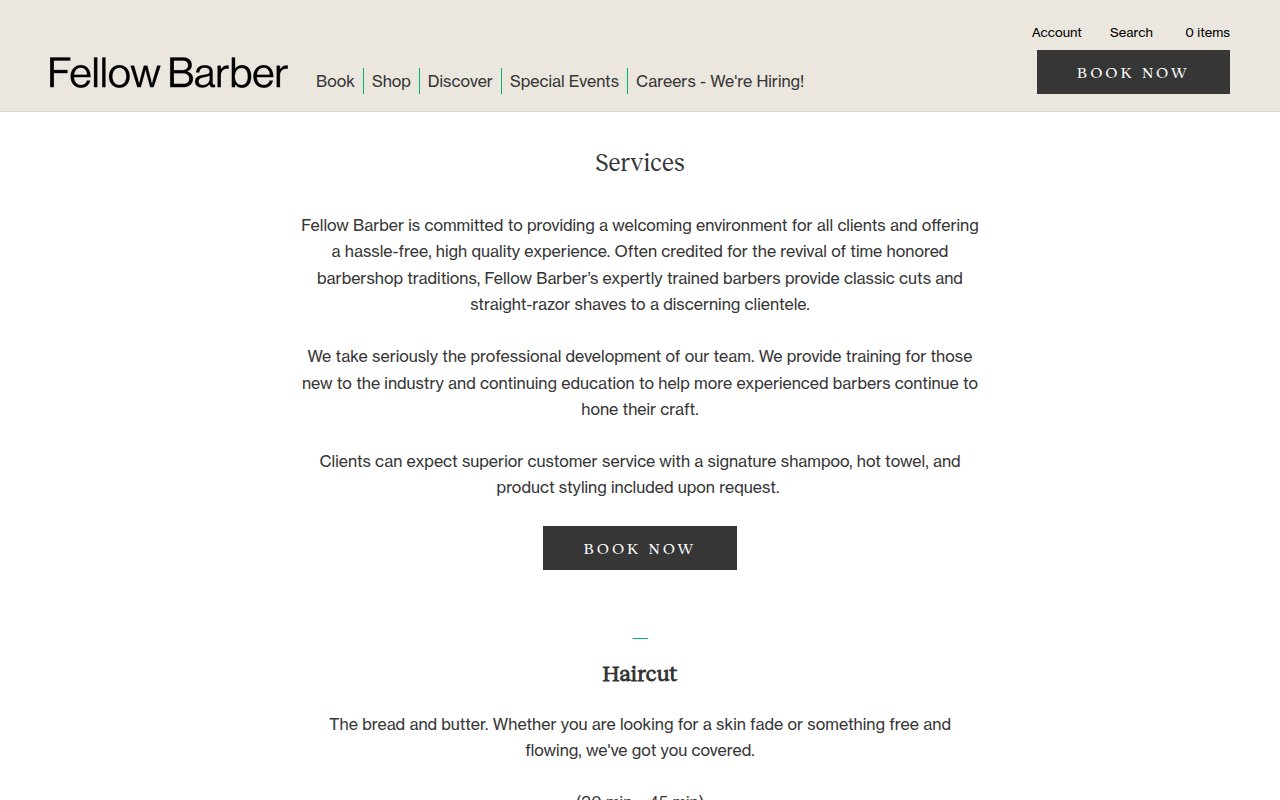
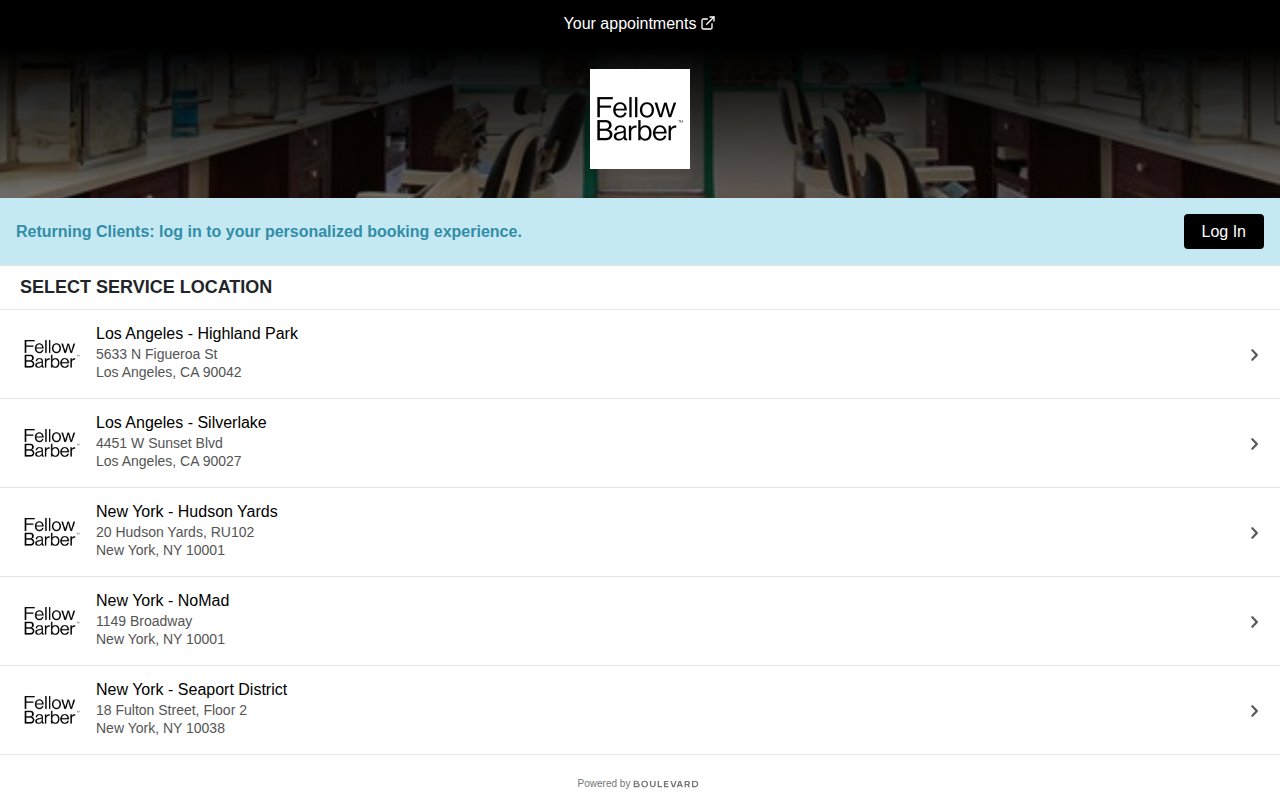
Fellow Barber runs barbershops in LA, NYC, and SF and sells its own product line from the same Shopify site. The homepage gives equal weight to “Book” and “Shop,” which means the site generates revenue even when nobody books a chair.
Booking uses Boulevard with multi-city location selection and a returning client login. They run a tiered barber system reflecting different levels in their apprenticeship program. The SF Mission District location has fixtures from the 1893 World’s Fair.
No individual barber profiles, though. For a brand built on craftsmanship, that’s a missed opportunity to show the people behind it.
Master Class Barber NYC
Unlimited monthly haircut membership
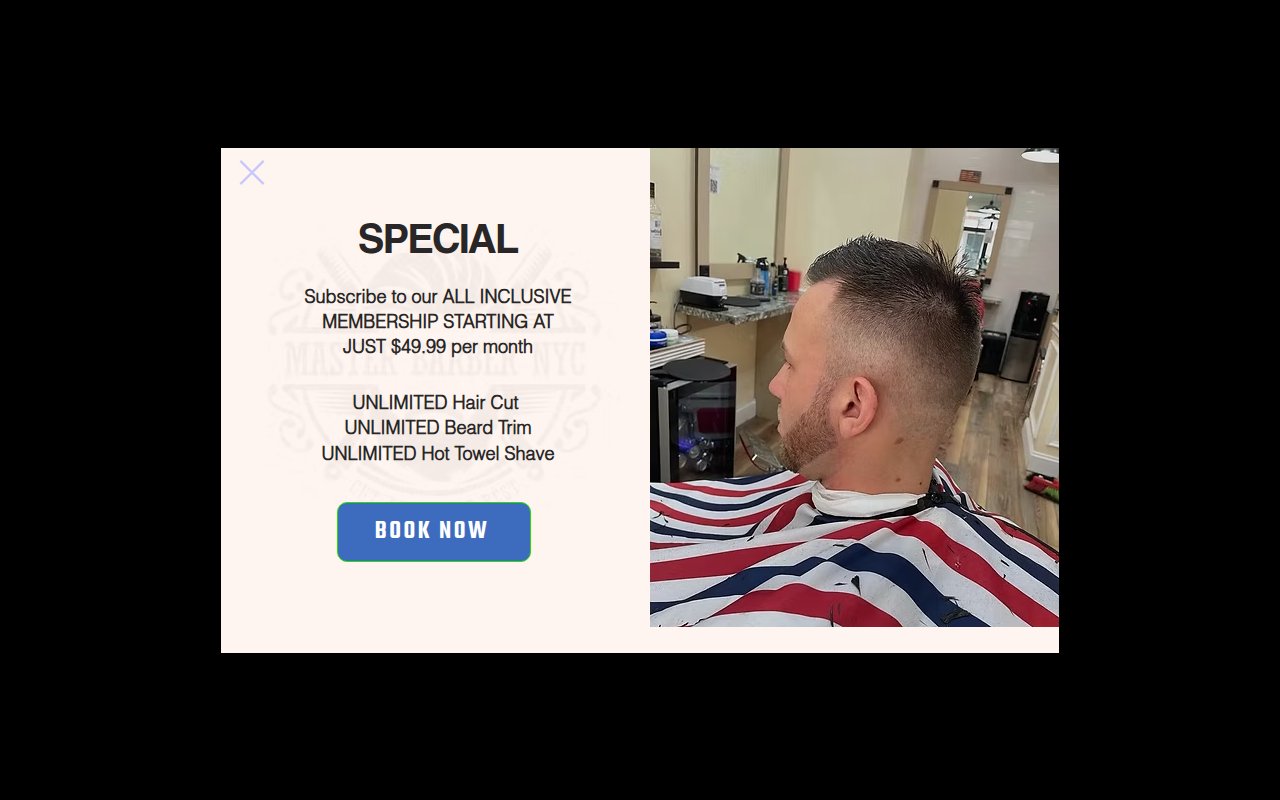
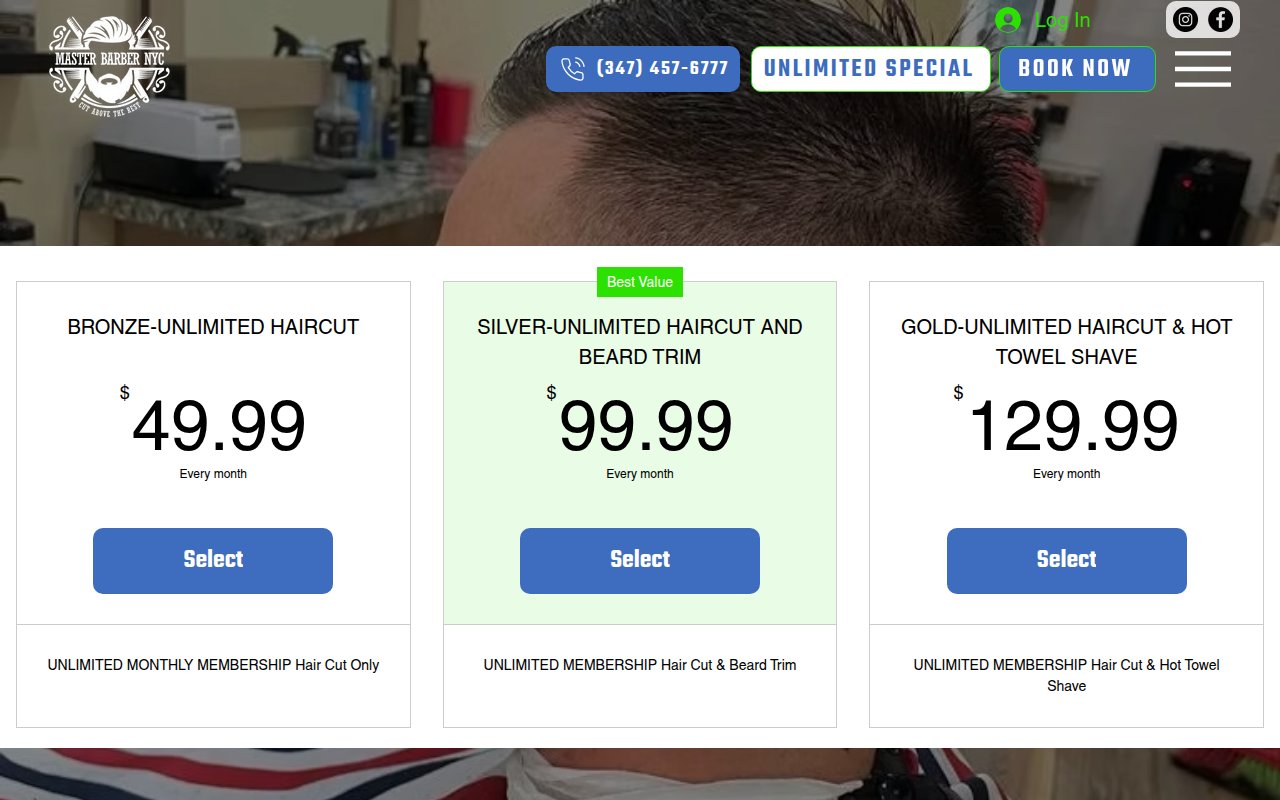
Master Class Barber NYC sells a subscription with three tiers (Bronze, Silver, Gold), each adding more services at a higher monthly rate, all with unlimited visits. The membership is the primary CTA alongside Book Now. A regular who comes twice a month pays less per visit, and the shop gets predictable recurring revenue.
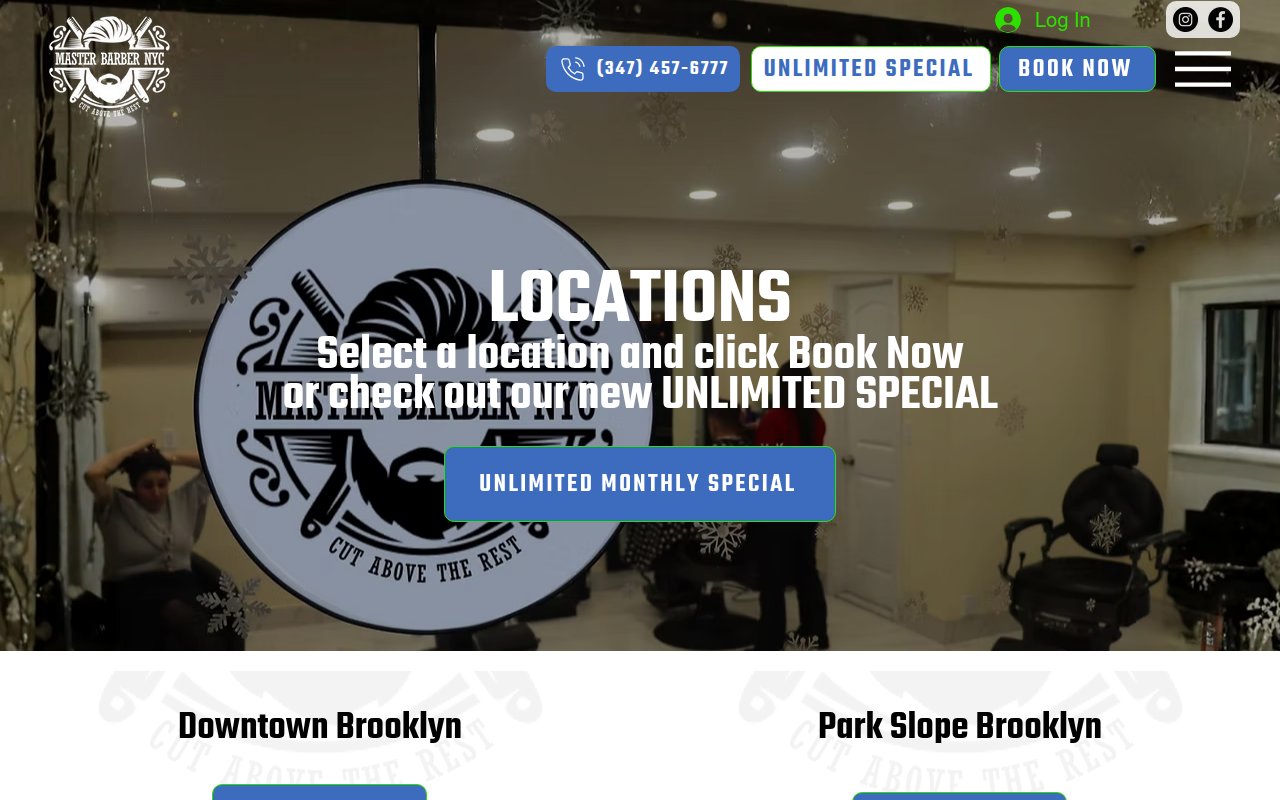
Two Brooklyn locations (Park Slope and Downtown) with 600+ reviews linked on the homepage. The site runs on Wix and looks like a standard template. The offer carries the page regardless.
Where it falls short is team visibility. No individual barber profiles despite 20+ years of combined experience.
East Nashville Beard & Barber
Named testimonials with experiential detail
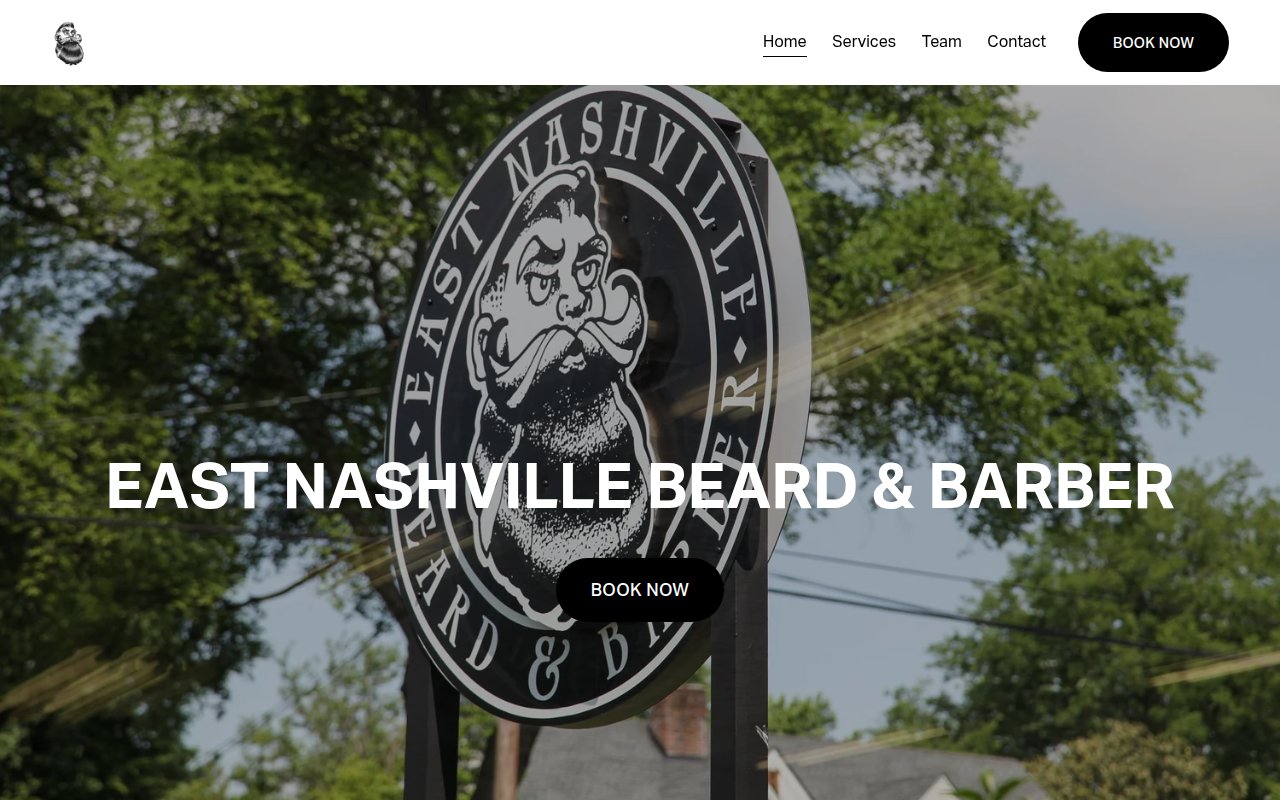
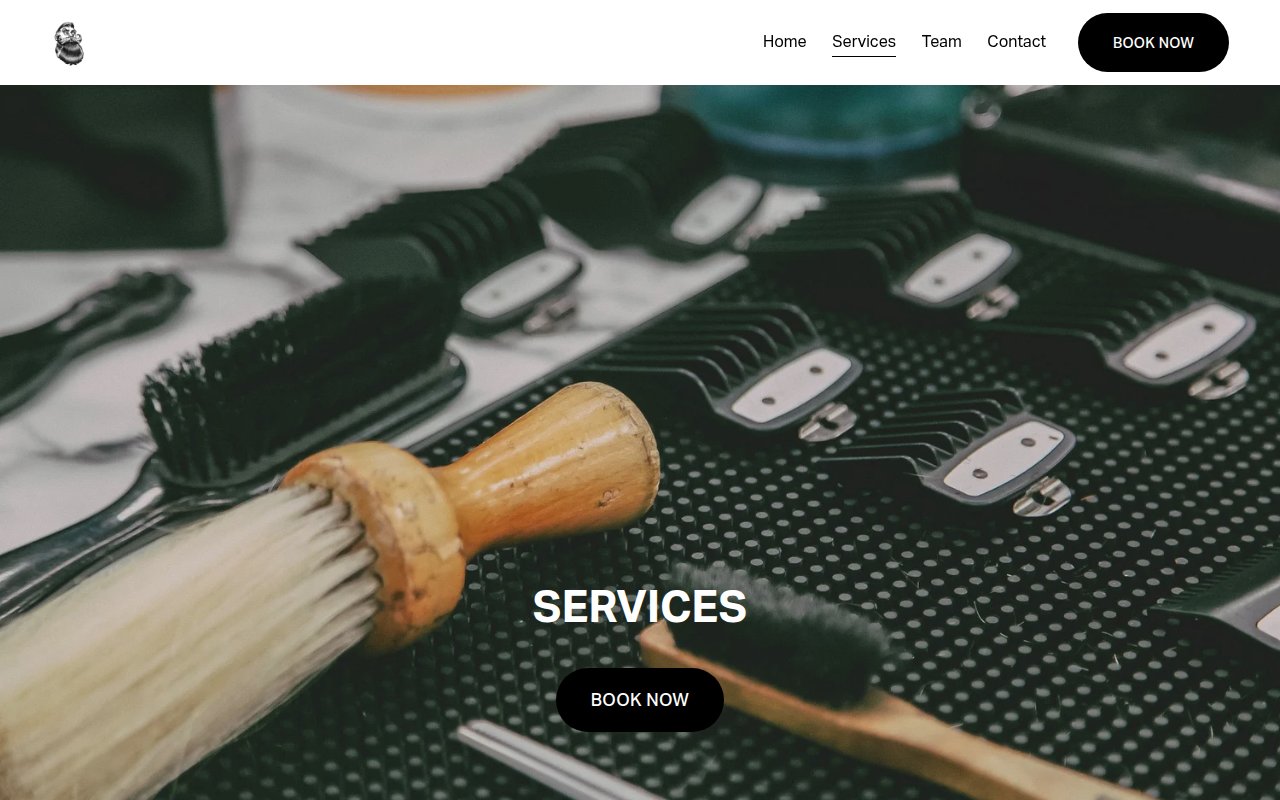
East Nashville Beard & Barber features a named customer testimonial on the homepage. The reviewer walks through the visit in enough detail that you can picture sitting in the chair.
The site offers 24/7 online booking with email confirmation through MySalonOnline. Pricing is specific and honest, with each service showing cost and duration. The buzz cut listing explicitly excludes fades, which prevents mismatched expectations, and the most popular combo is flagged, which helps if you’ve never been.
Limited page coverage (no blog, no FAQ) means the site depends heavily on the homepage.
Logan Parlor
Gender-free pricing based on time, not gender
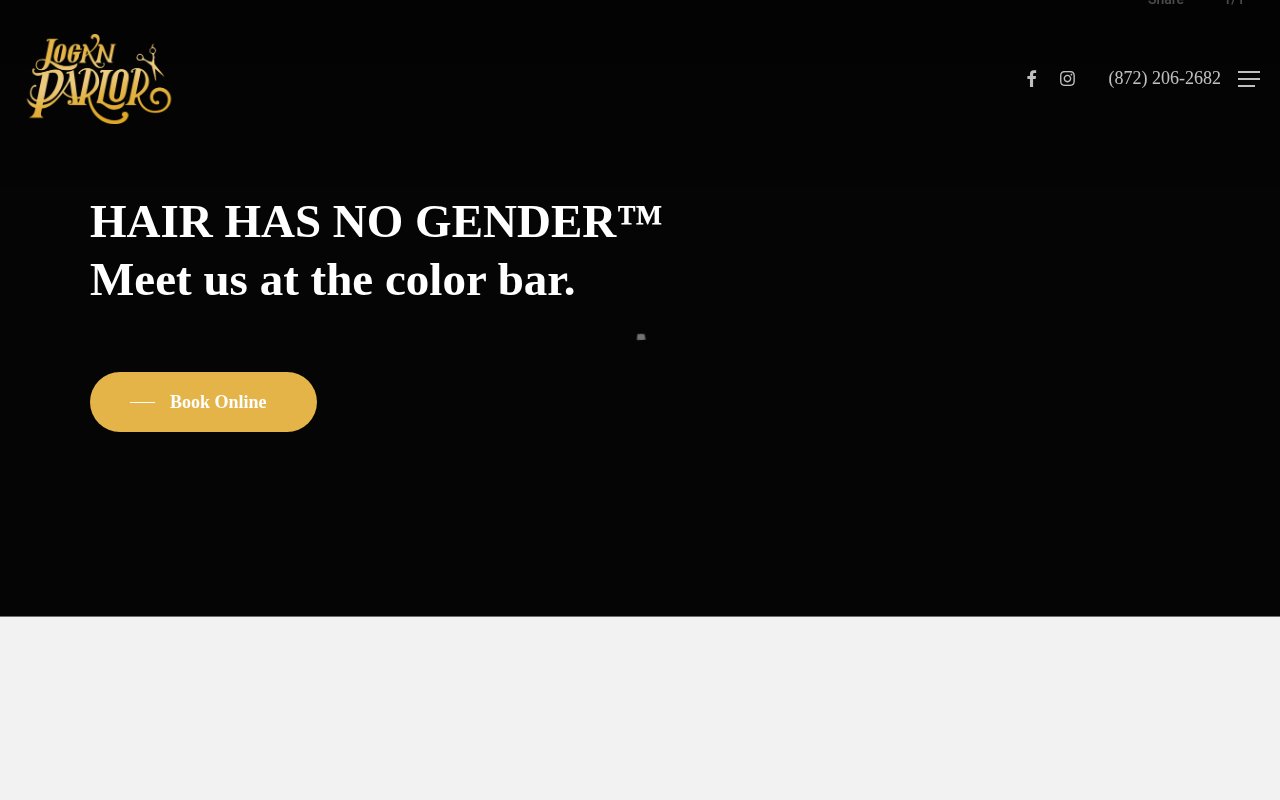
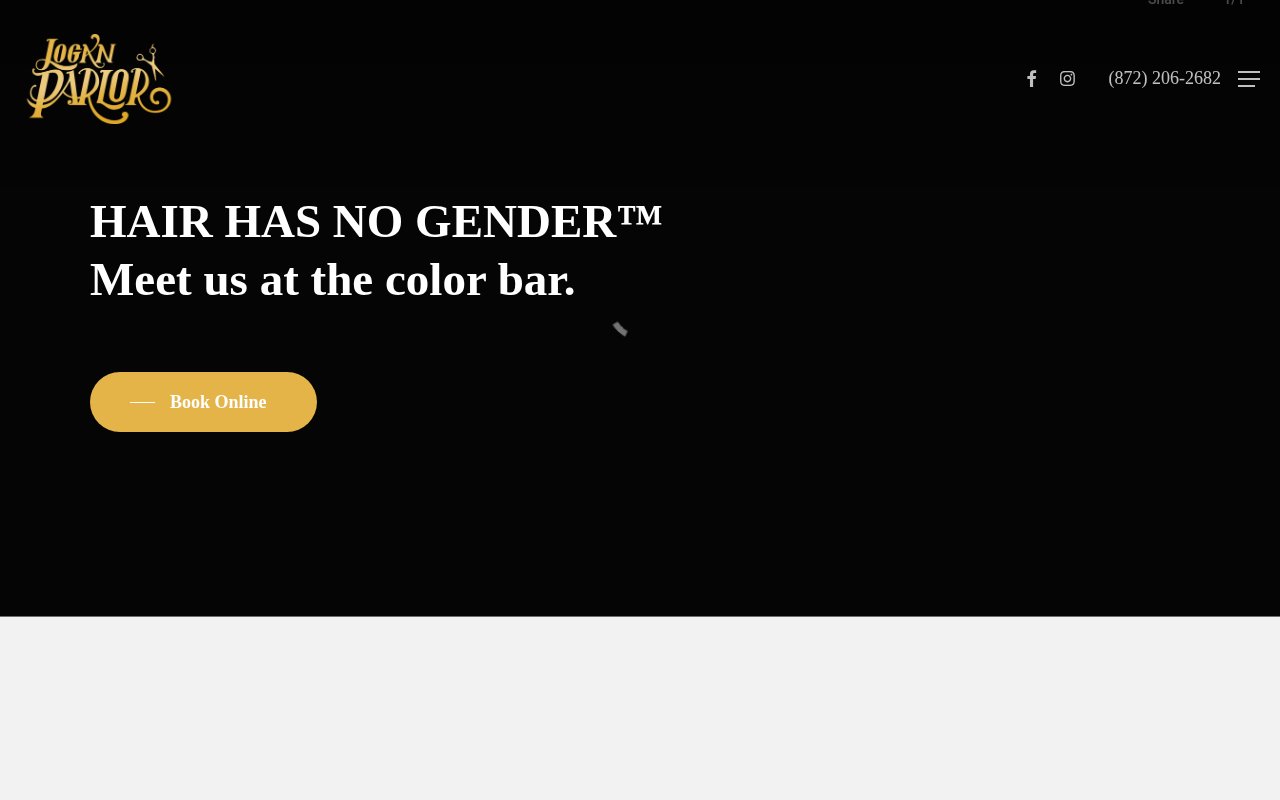
Logan Parlor in Chicago’s Logan Square built its brand around “Hair Has No Gender.” Pricing is based on timing, hair length, and stylist level rather than gender. That’s fairer to customers and simpler to explain on a website. Named testimonials back it up, with reviewers specifically praising the gender-free pricing structure.
Multiple local and industry awards, including a Chicago Magazine Best New Salon nod. Redken-certified colorists on staff mean this isn’t a traditional barbershop. They do color work and treatments too.
Booking redirects to Facebook, though, which loses visitors at the moment of conversion.
BarberX
Reuzel Certified with embedded Google reviews
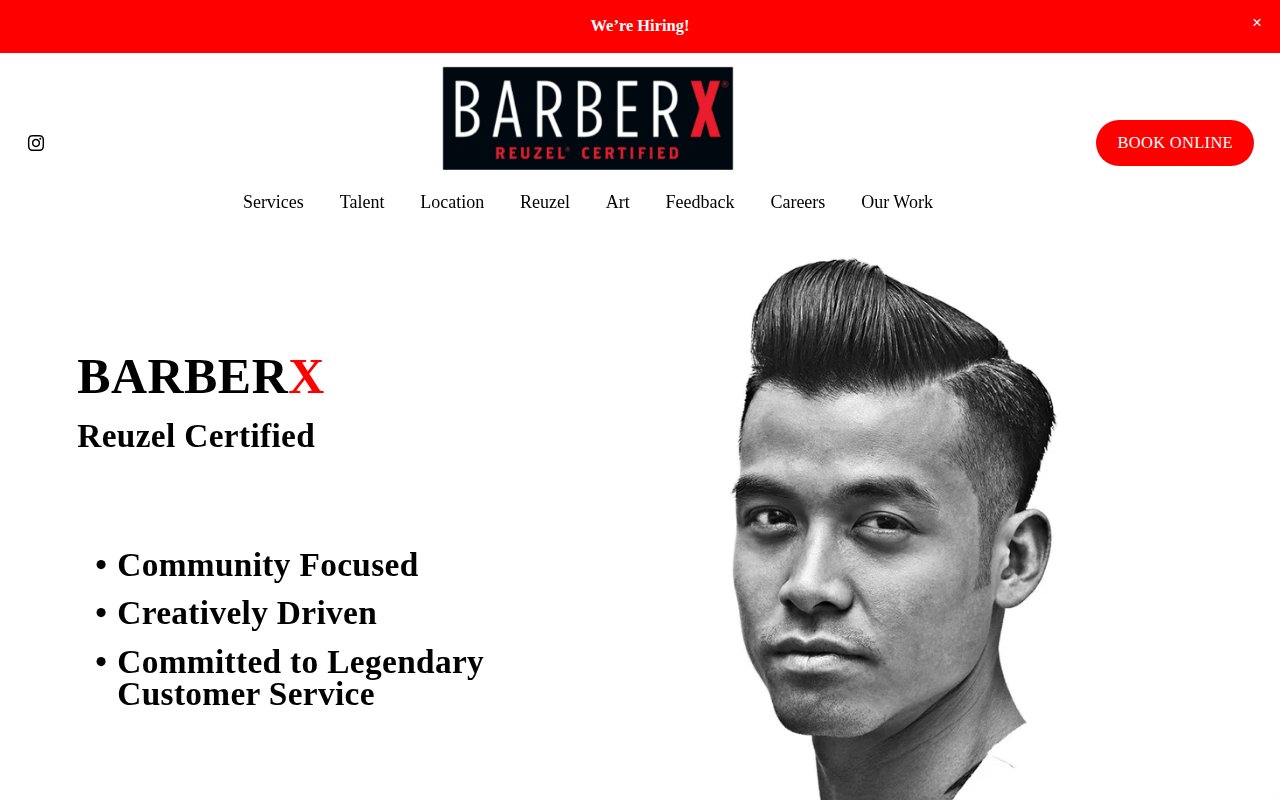
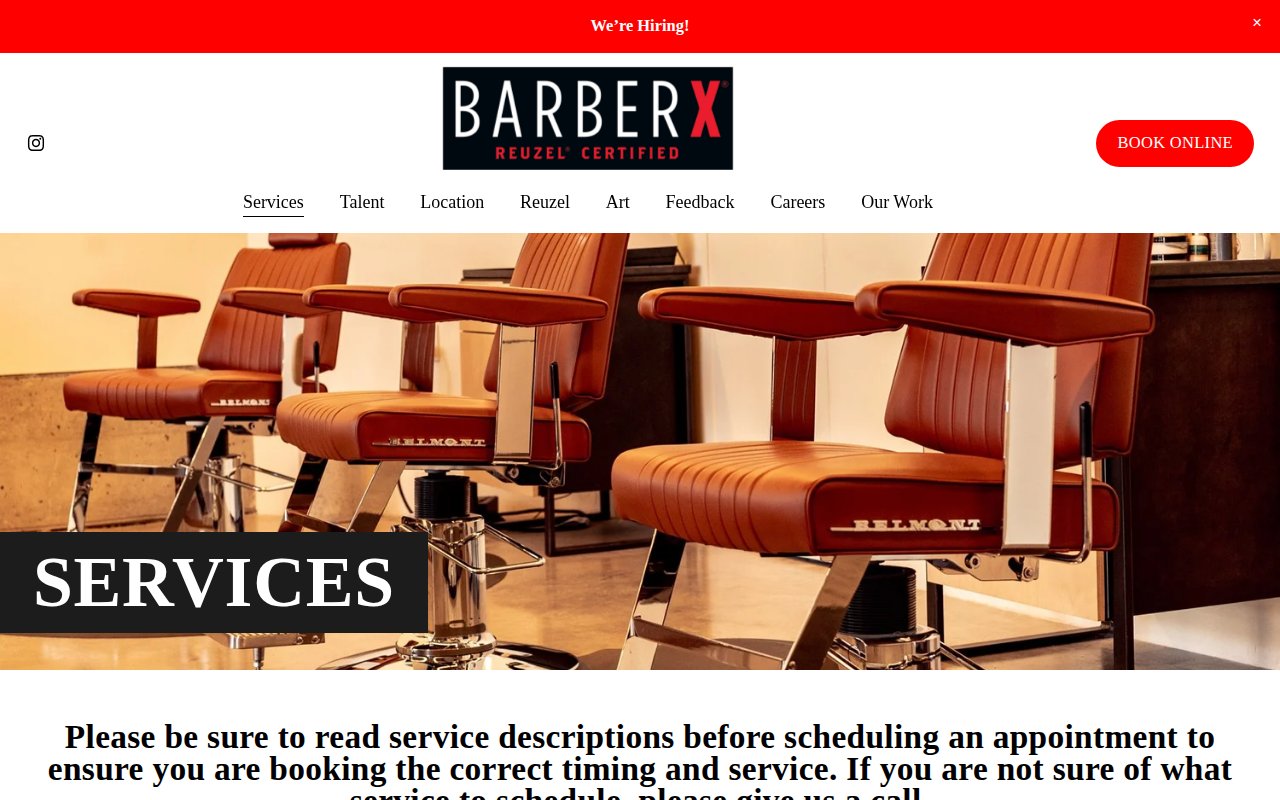
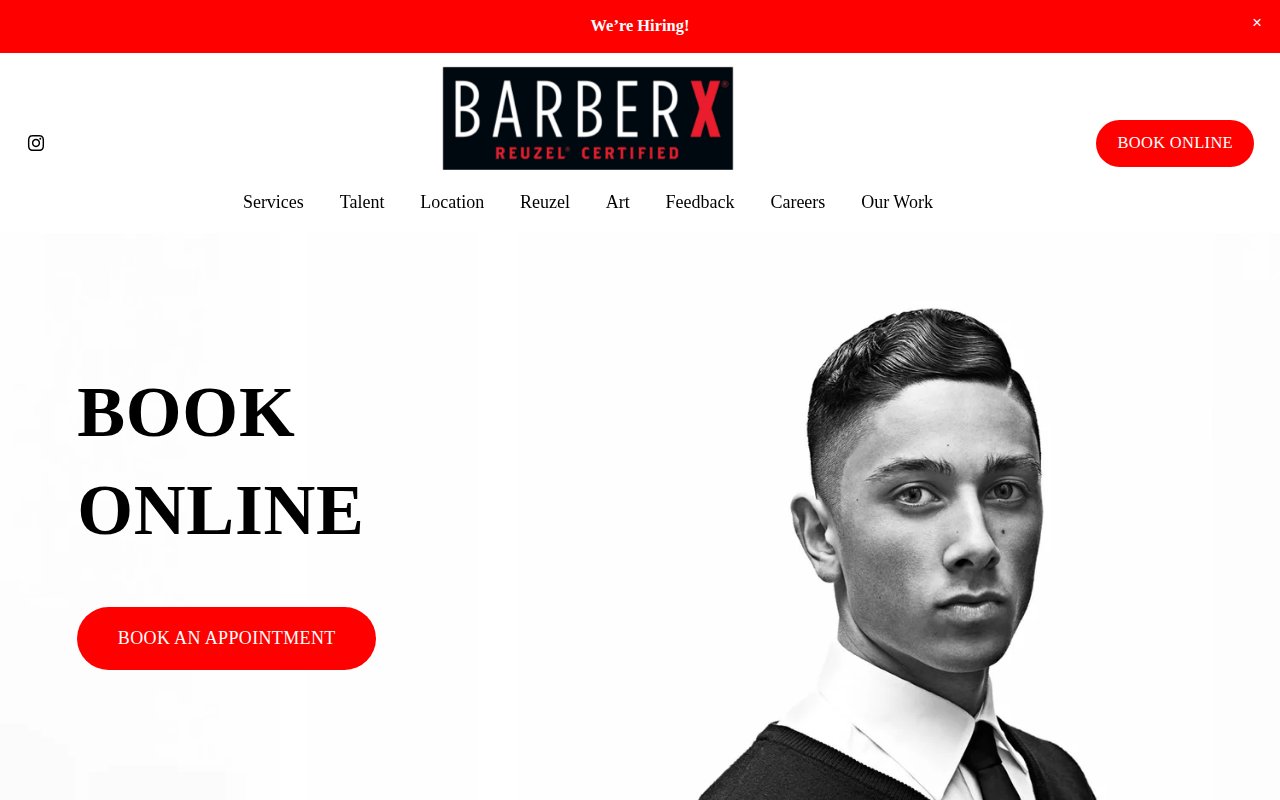
BarberX in Denver’s RiNo district at The Source Hotel is the only barbershop in Denver sending barbers to Europe for training. They put the credential above the fold: Reuzel Certified. The homepage also embeds live Google reviews, with 5-star ratings from regulars who mention returning for years.
Pricing is tiered: a standard cut at one price point and a deluxe option for skin fades, longer hair, or first-time guests who need extra consultation time. Free parking and a beer with every visit.
Rudy's Barbershop
30-year brand with custom booking subdomain
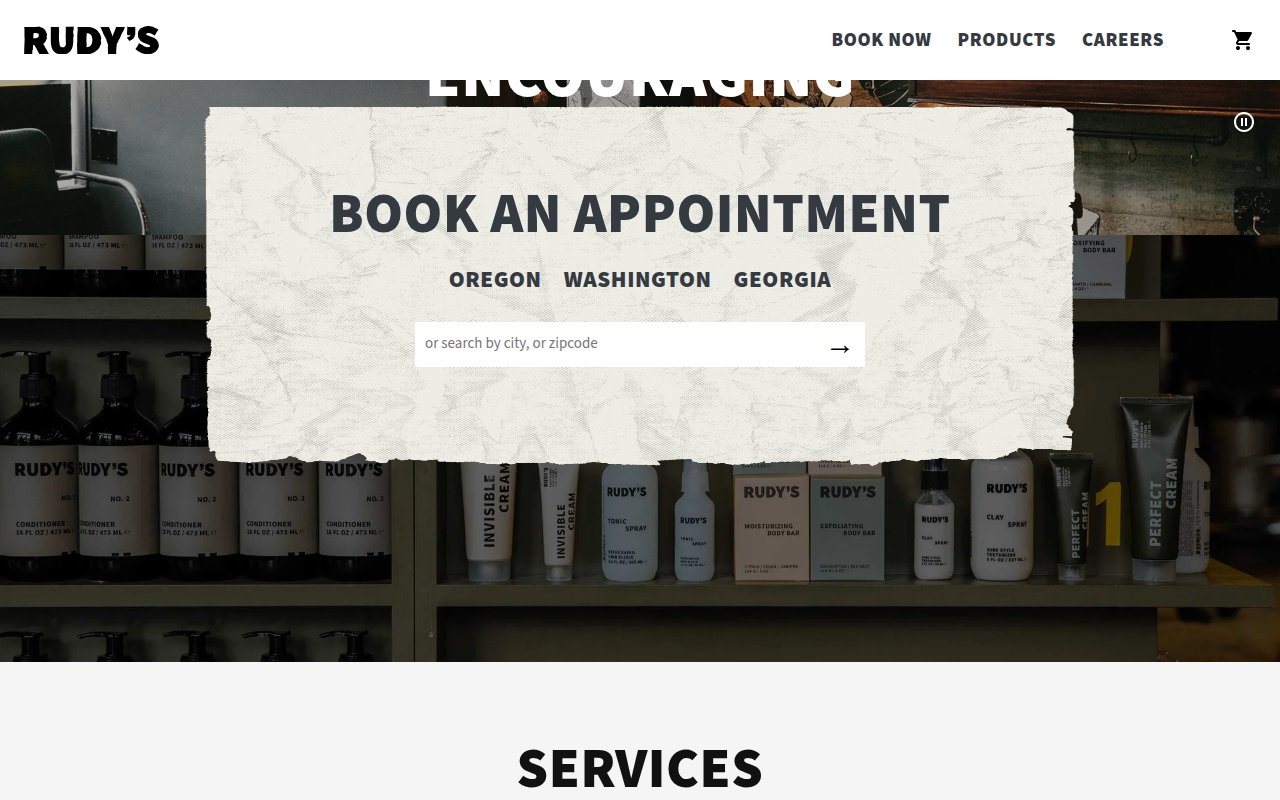
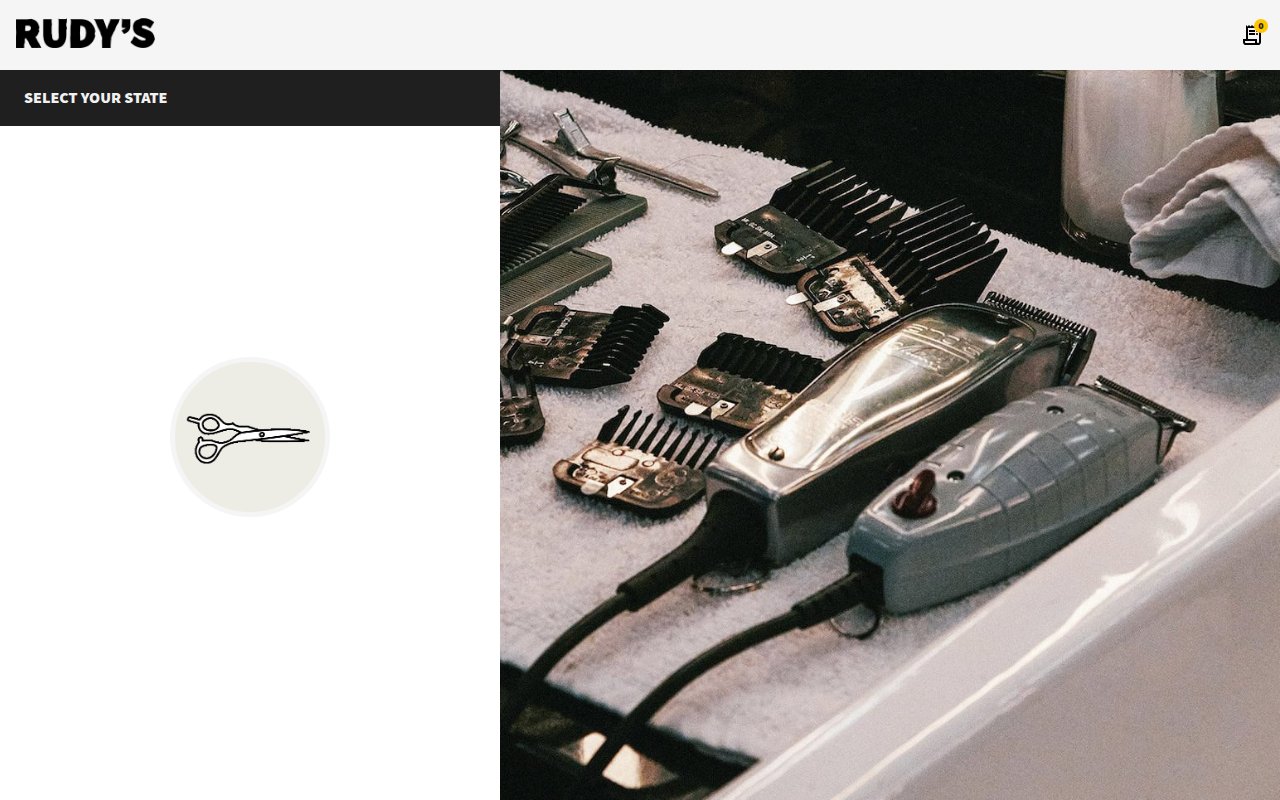
Rudy’s Barbershop has been open for 30 years across Oregon, Washington, and Georgia. The Shopify site leads with a video hero and integrates product sales alongside appointment booking. The brand positioning is “freedom of expression,” not precision grooming, and you can tell. The photography and copy both lean countercultural.
The booking flow uses a custom subdomain (book.rudysbarbershop.com) with a geographic flow: state, then location, then services. For a multi-state operation, that’s the right architecture. All haircut services include shampoo, mini scalp massage, and a hot towel. Walk-ins are welcome but booking is encouraged.
No individual barber profiles, though. For a brand built on individual expression over 30 years, showing the actual humans would reinforce the ethos.
Entourage Barbershop
VIP lounge for groups of three or more
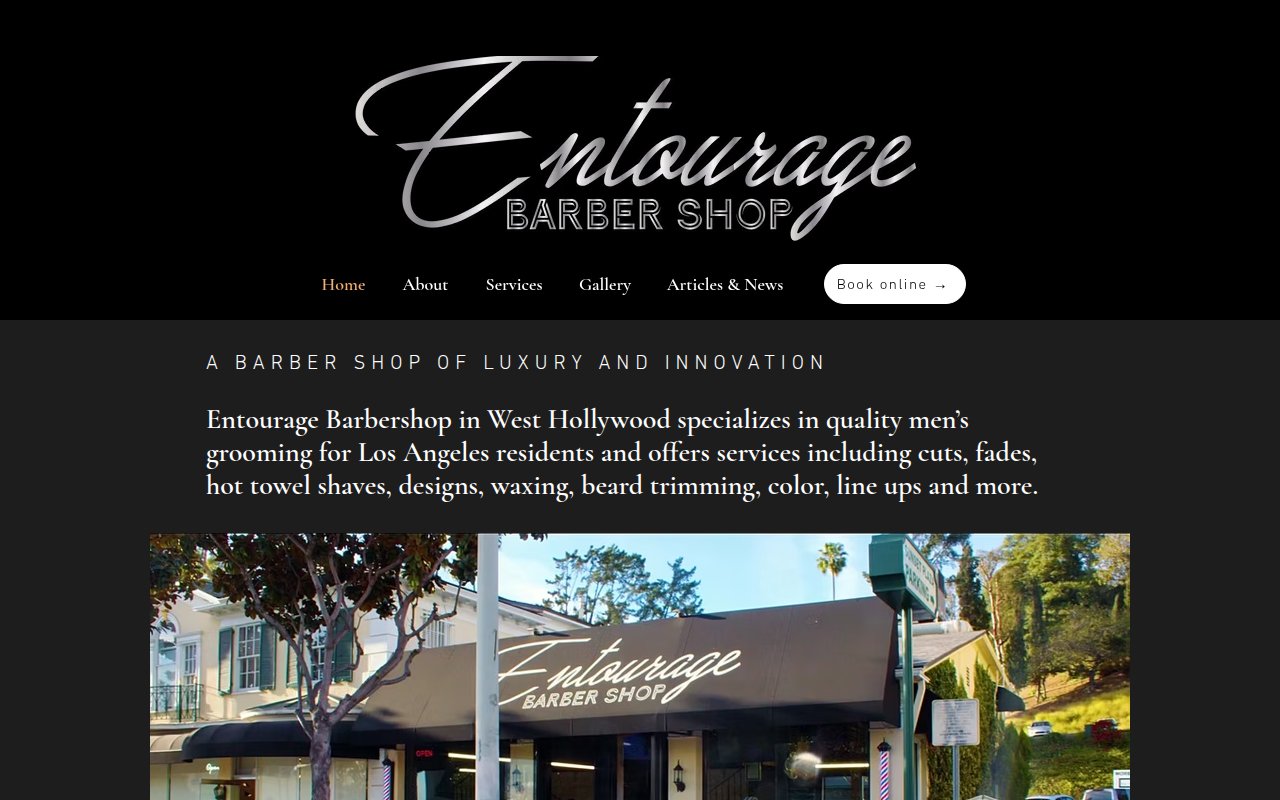
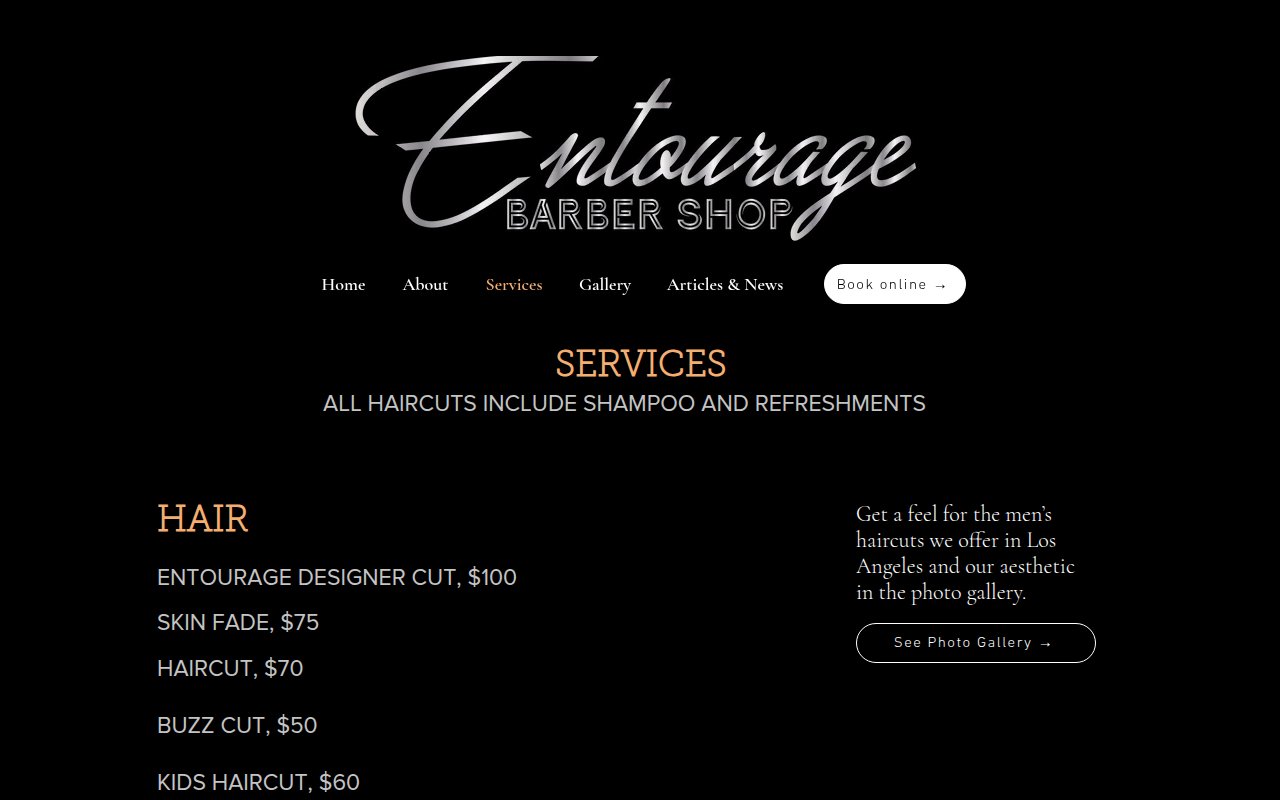
Entourage Barbershop in West Hollywood charges premium prices, and the VIP lounge concept justifies them: a private upper-level space with a secluded entrance for groups of 3+. Bachelor parties. Groomsmen prep. Corporate outings.
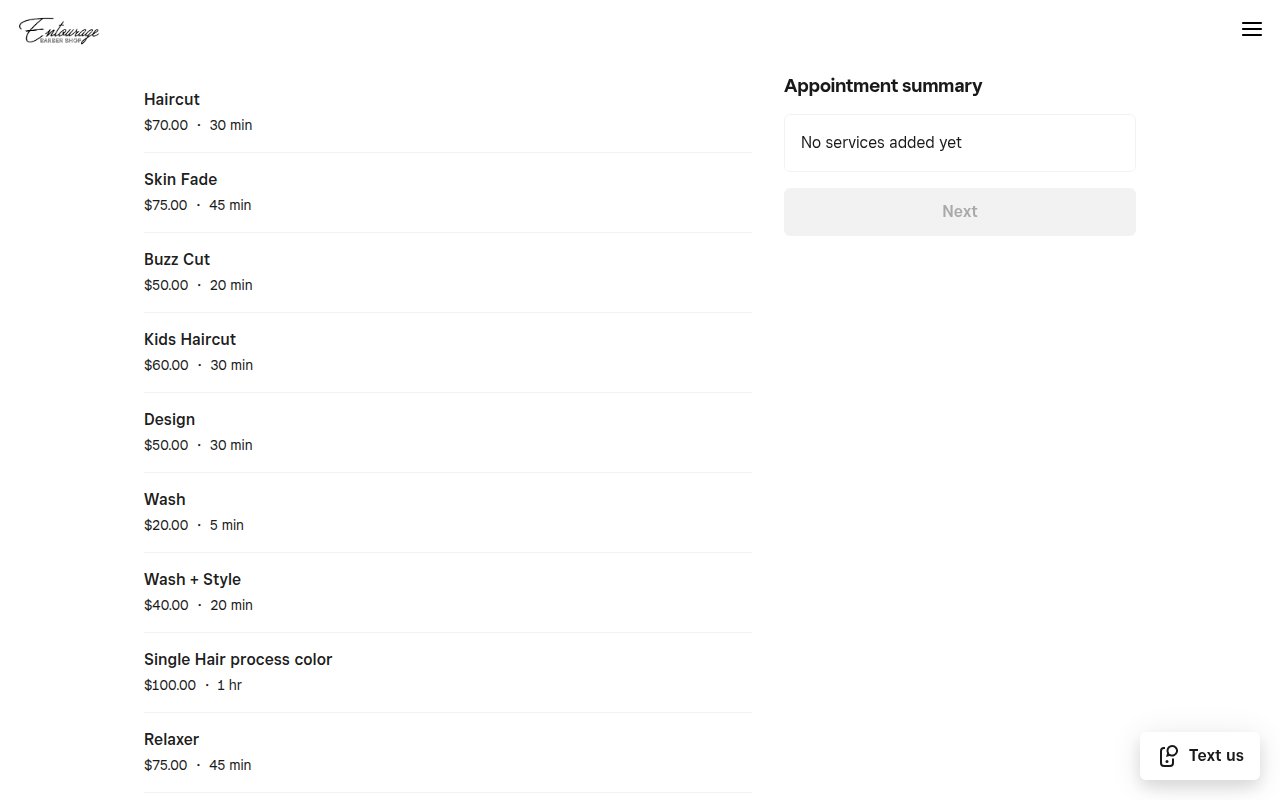
Square Appointments handles booking with each service showing price and duration before you commit. Complimentary parking and refreshments included with every service.
The tradeoff is credibility signals. No embedded reviews despite celebrity clientele. Recognizable names would help justify the price point.
Avenue Barbershop
Cutting hair on South Congress since 1933
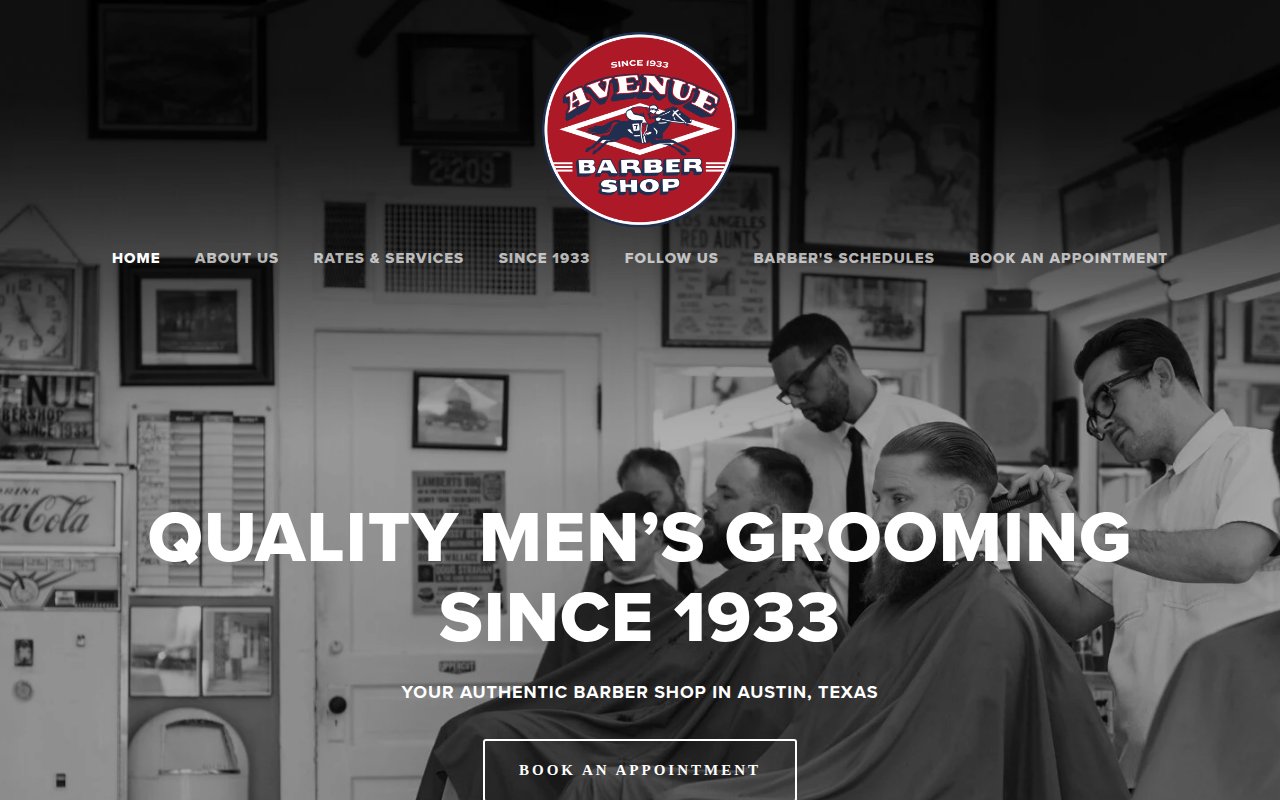
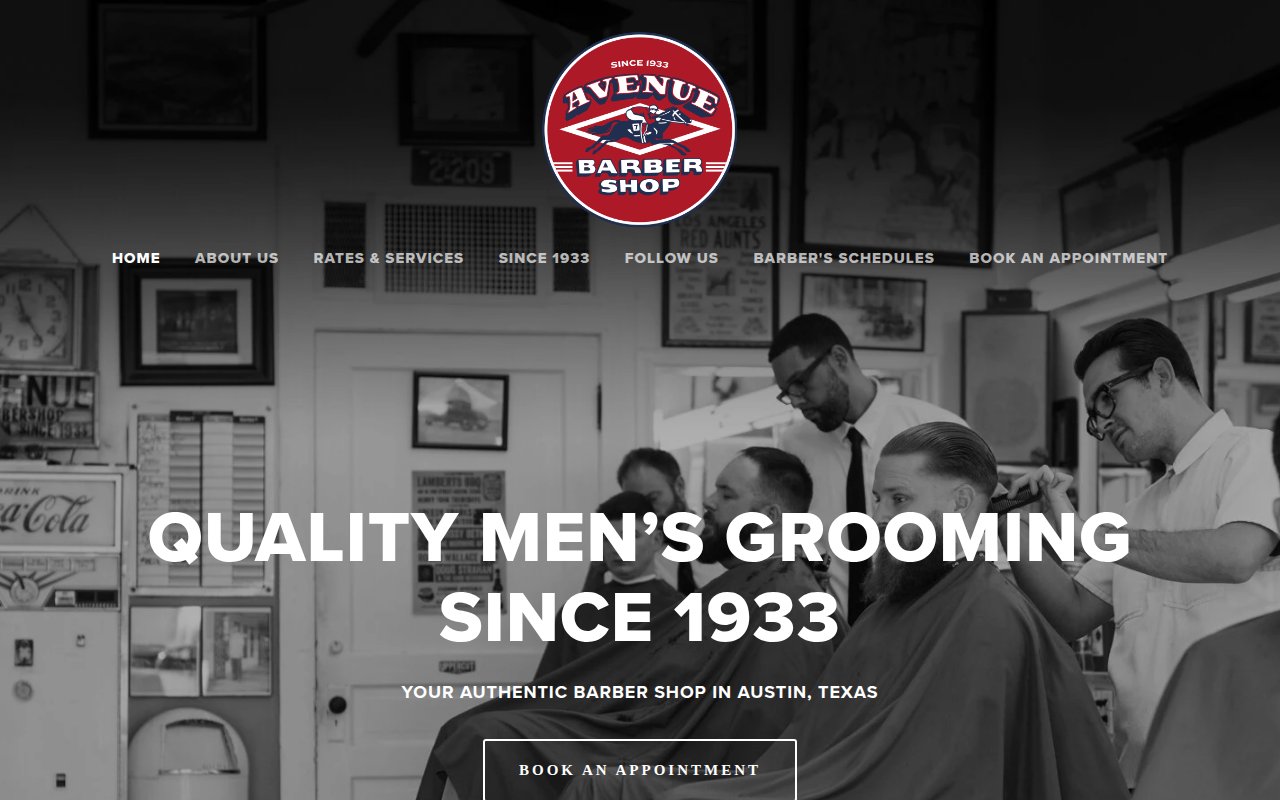
Avenue Barbershop on South Congress in Austin has been operating since 1933, when Mr. D.C. Woodland opened the original shop. Avenue leads with that heritage.
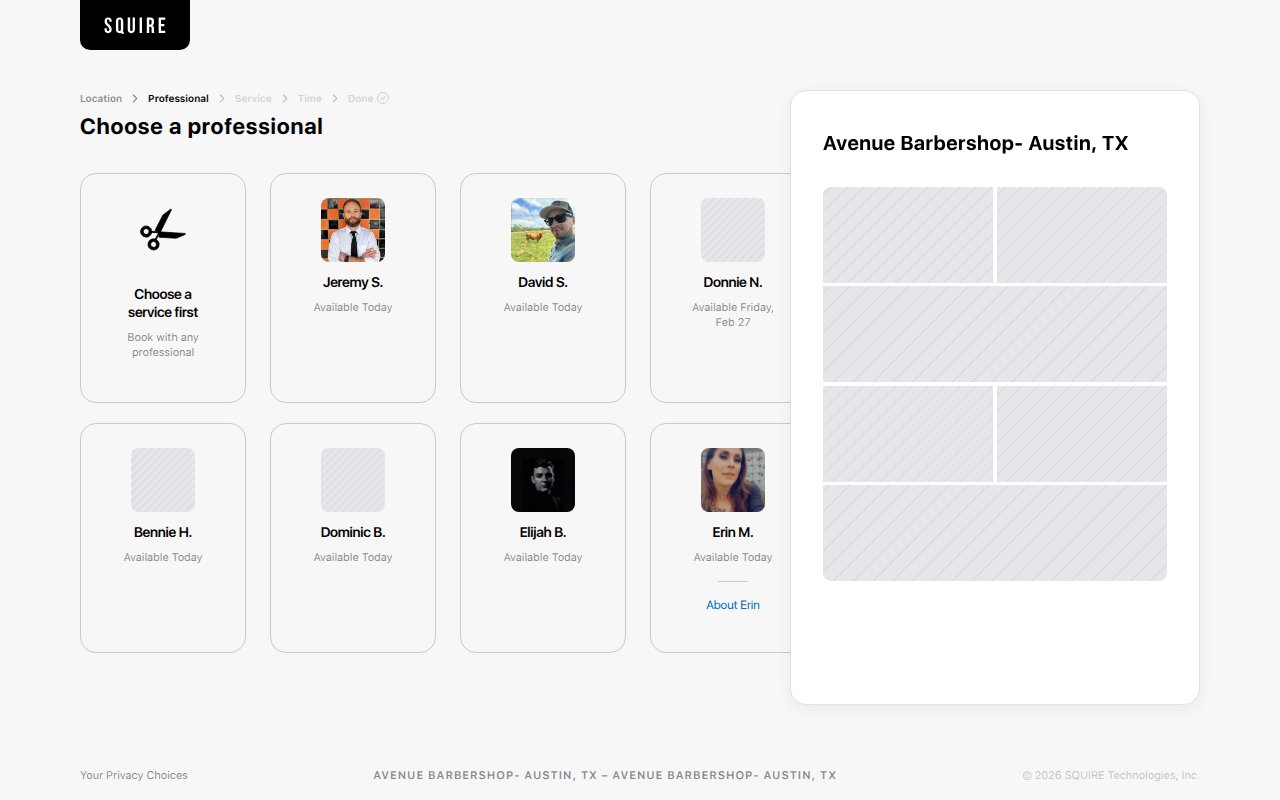
The booking flow lets you choose your barber first through Squire, then pick your service, then your time. Published barber schedules let regulars find their guy without calling. Cash only.
What’s absent is customer proof. No reviews on the site, and a few testimonials would help first-time visitors who don’t know the shop’s reputation.
Throne Barbershop
Three neighborhoods, three booking flows
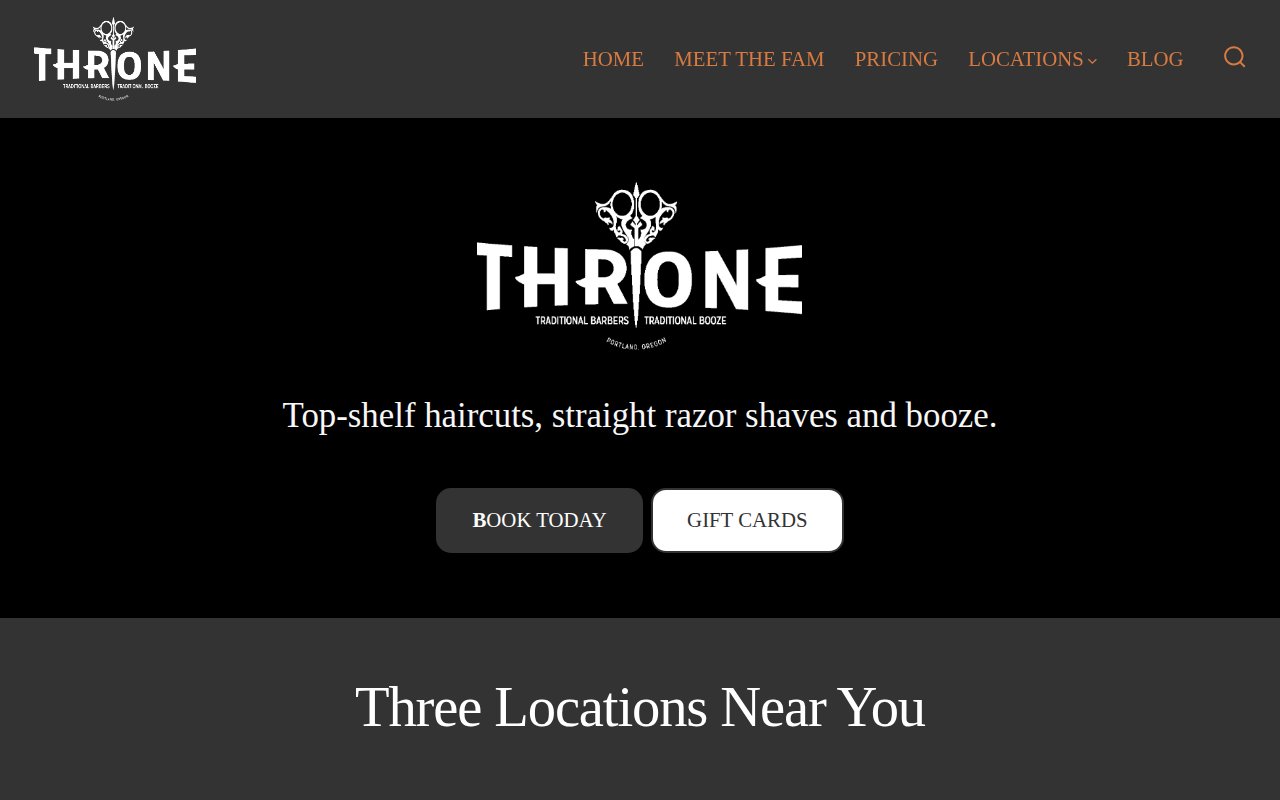
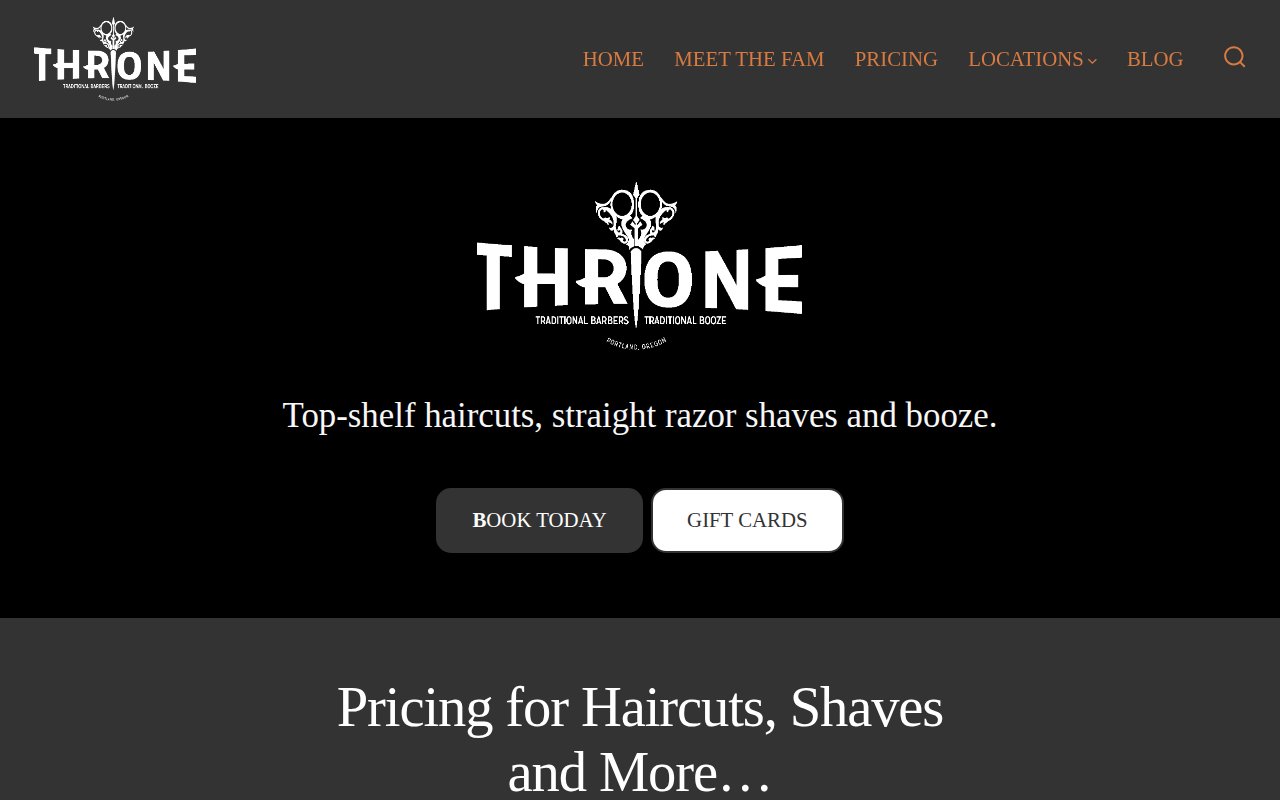
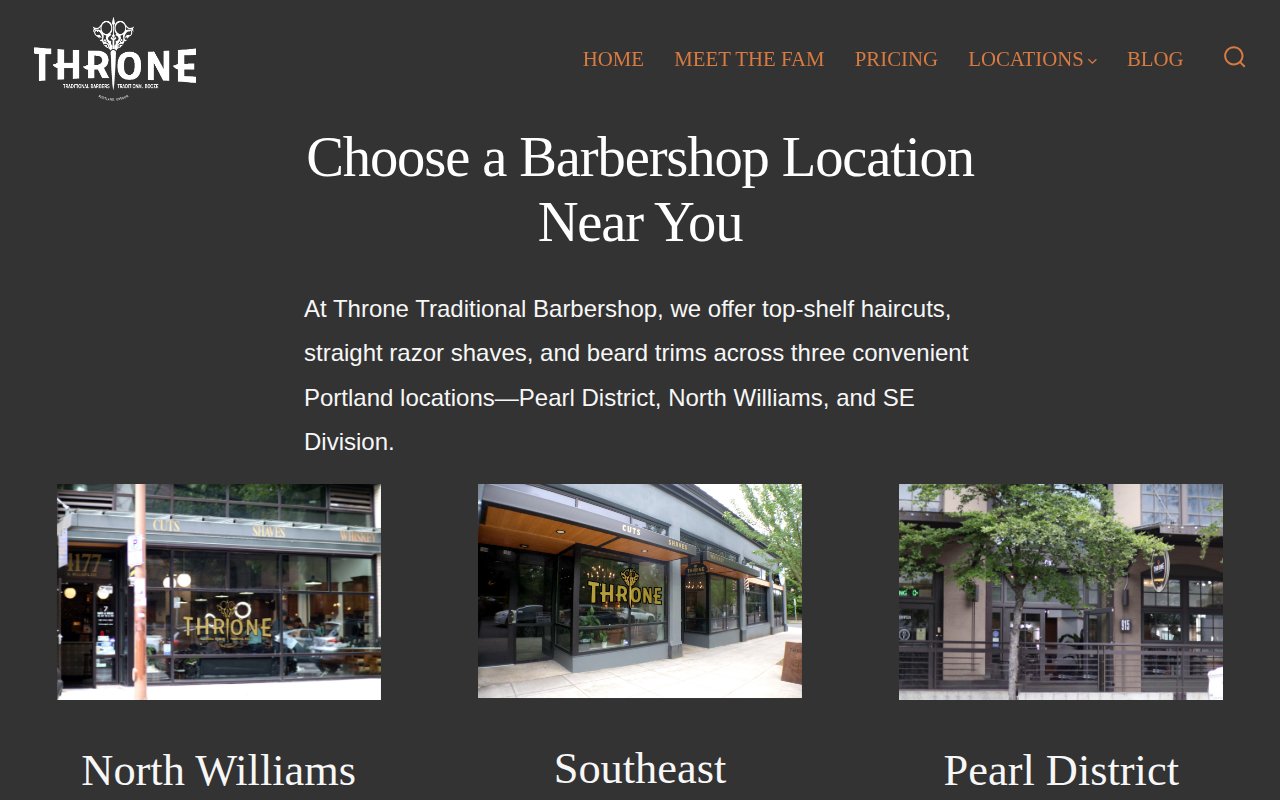
Throne Barbershop operates 3 Portland locations, and the homepage gives each one its own section with address, phone, hours, and a Book Today CTA. The concept blends premium grooming with a full bar, with custom-built leather chairs and local beer and top-shelf liquor included.
Pricing is published for every service, so visitors know before they book. The 19-person team is named on a Meet the Fam page. WordPress with a blog adds SEO coverage that most barbershop sites skip.
The weakness is social proof. No testimonials or embedded reviews anywhere. For a multi-location operation, third-party reviews would help visitors choose Throne over the shop closer to their house.
Church Barber & Apothecary
The world's first Botanical Barbershop
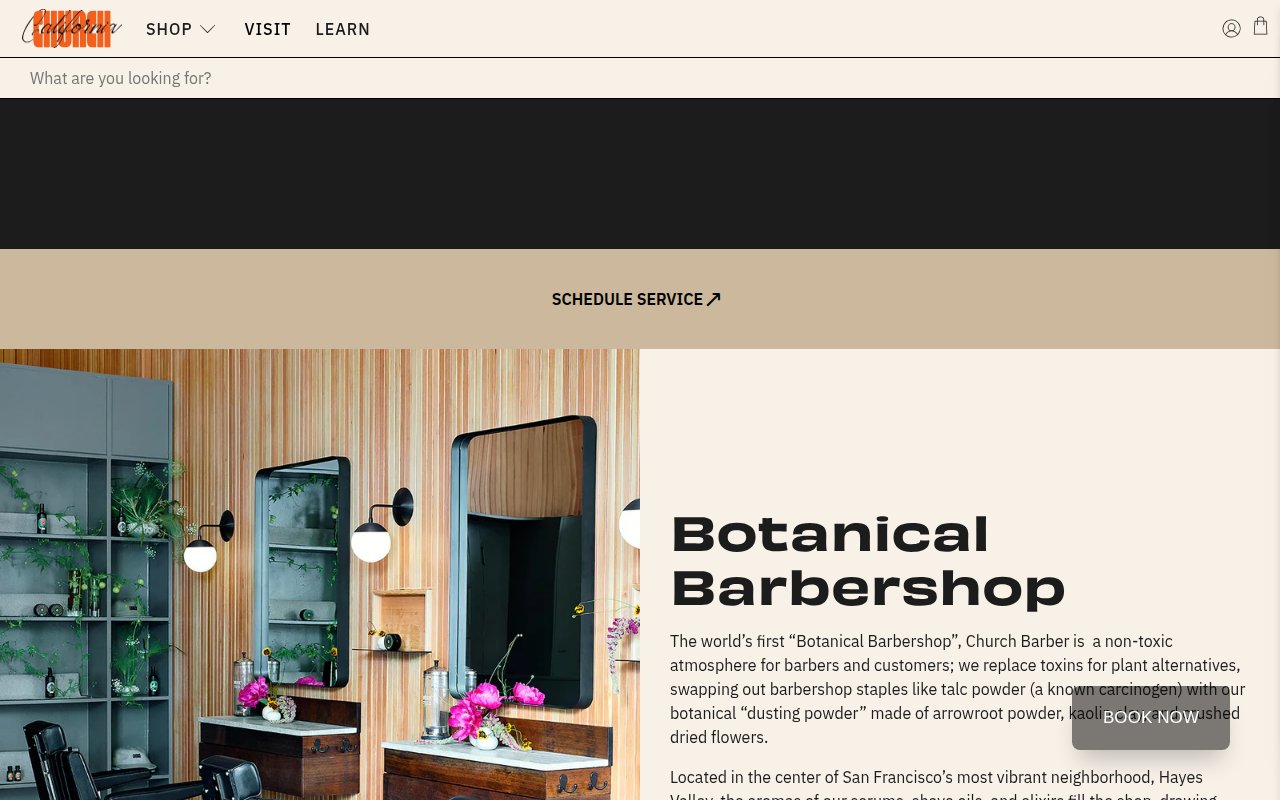
Church Barber & Apothecary in Hayes Valley, San Francisco is the “world’s first Botanical Barbershop,” replacing traditional barbershop chemicals with plant alternatives. They call out traditional barbershop chemicals (like talc powder) and substitute plant-based alternatives. It’s a clear niche and the site commits to it fully.
Ten barbers, each with a full profile covering favorite cuts, personal interests, and Instagram links. You can pick your barber before walking in and already feel like you know them. Built on Shopify as part of the Church California product brand, so customers can buy products and book a cut in the same session.
The Schedule Service link isn’t prominent, though, and the booking flow takes some digging to find.
The Rosemont Barbers
Longer slots for real consultations
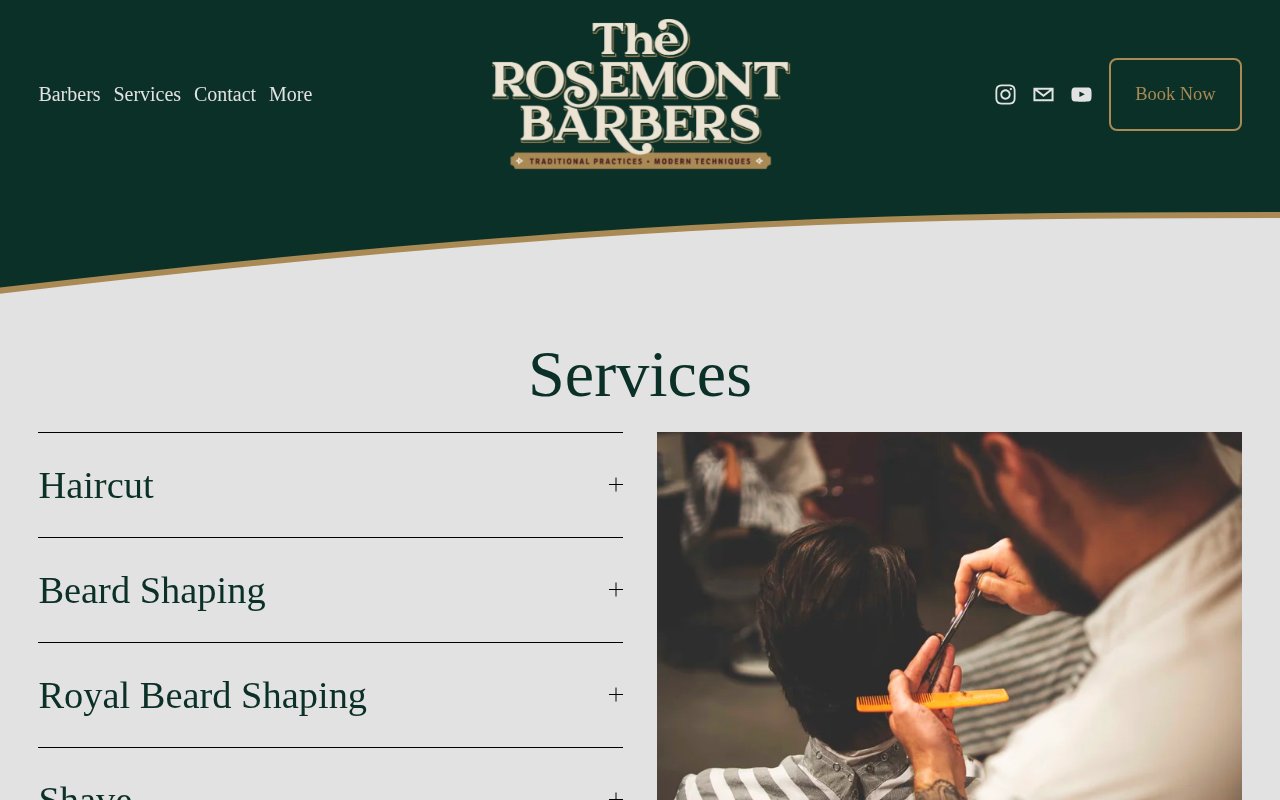
The Rosemont Barbers in Denver’s RiNo/Five Points takes the opposite approach from most shops: longer appointment slots that prioritize the consultation. Longer appointments mean the barber actually listens before cutting. They also offer personalized styling tutorials so you can replicate the look at home.
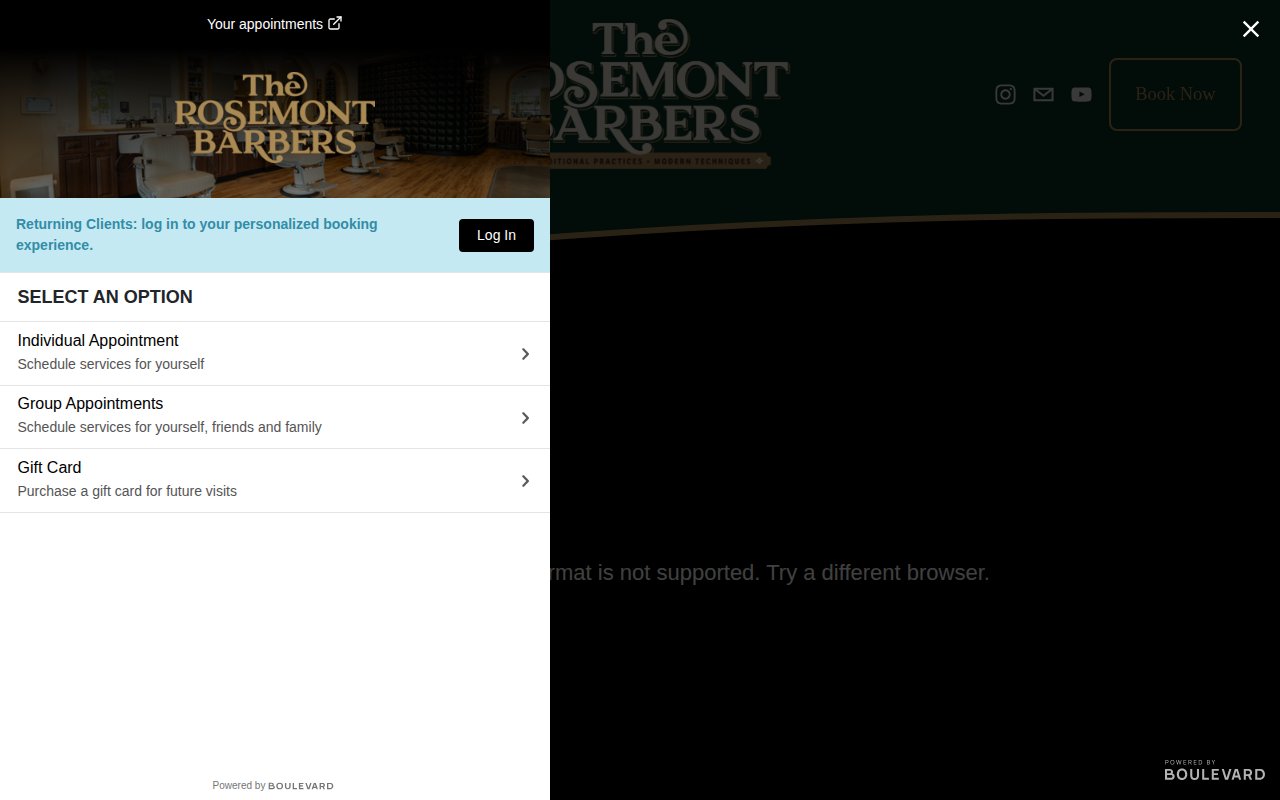
The booking flow requires reviewing shop policies before you can schedule. That extra step reduces no-shows and late arrivals by setting expectations upfront. Voted 5280 Top of the Town.
The odd omission is pricing. No prices on the website, which is unusual for this roundup and a missed opportunity for a shop that otherwise communicates so clearly.
Resident Barber
Full-service menu at neighborhood prices
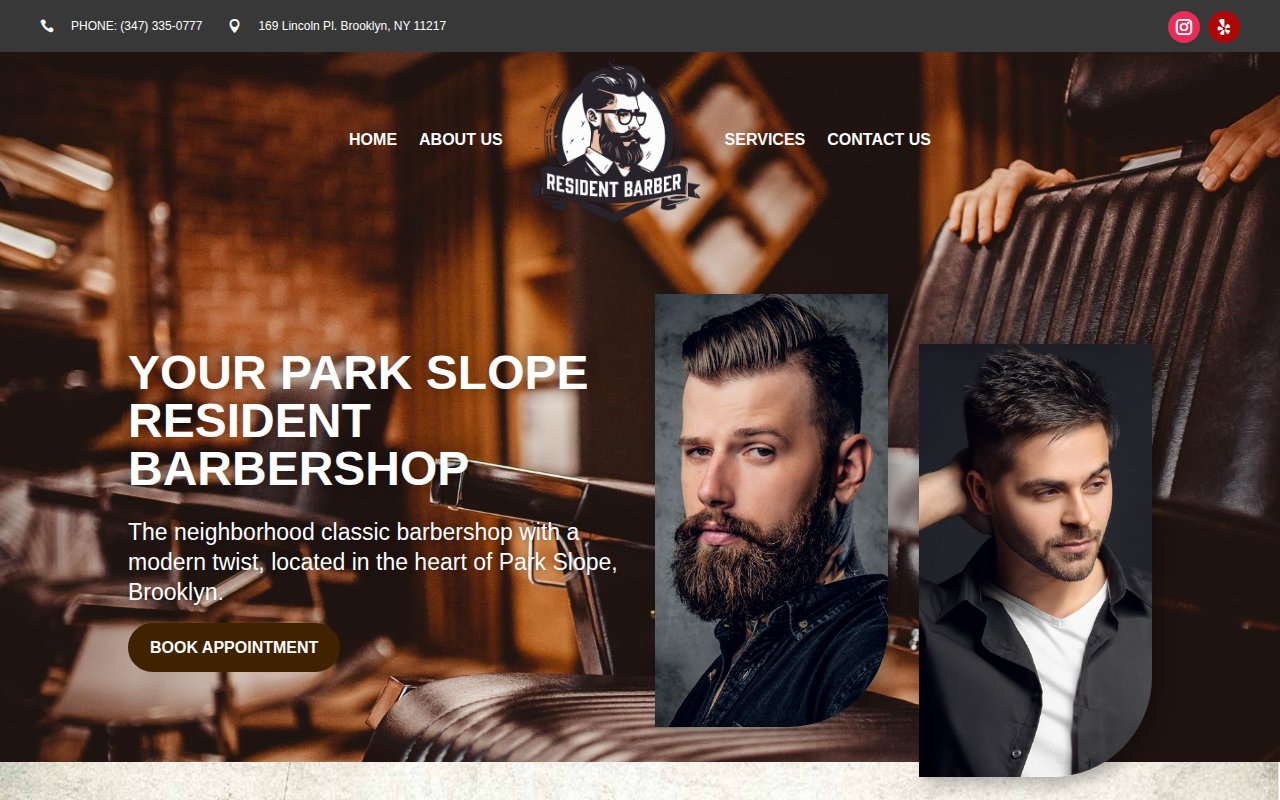
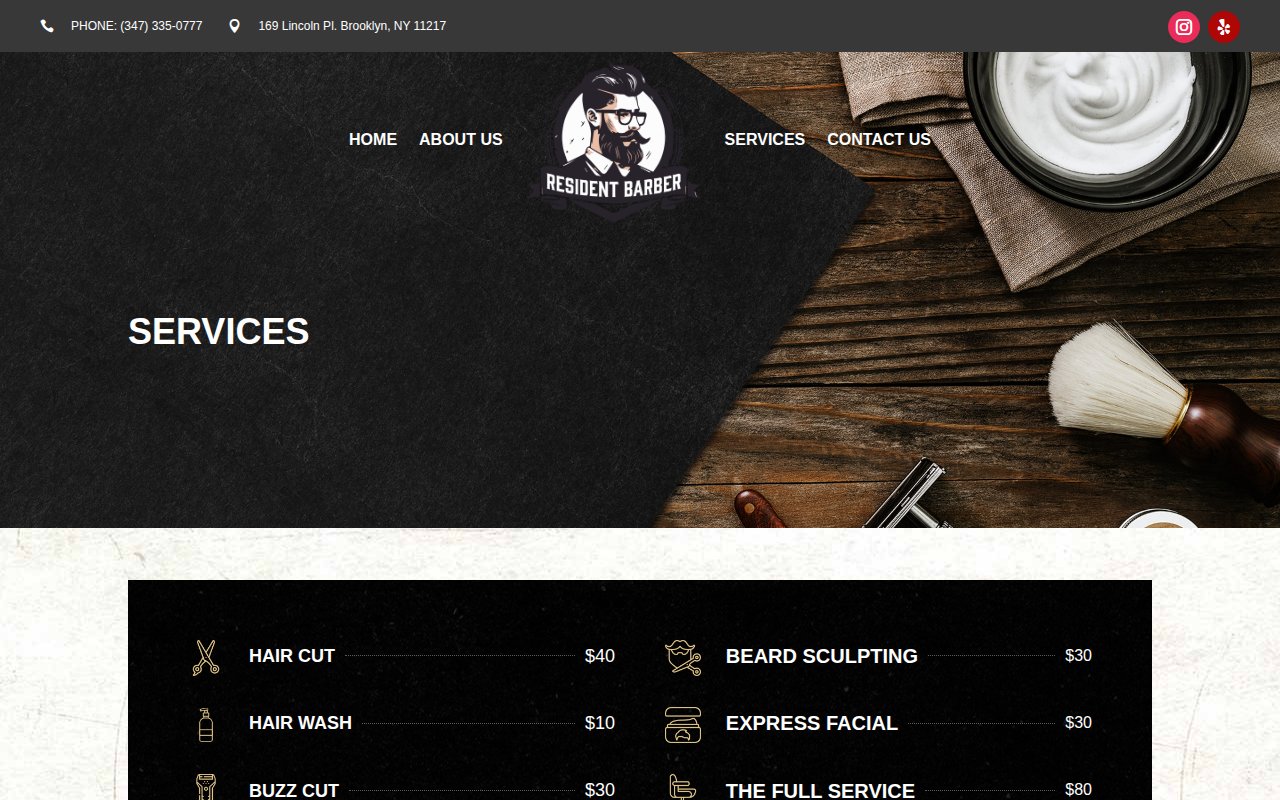
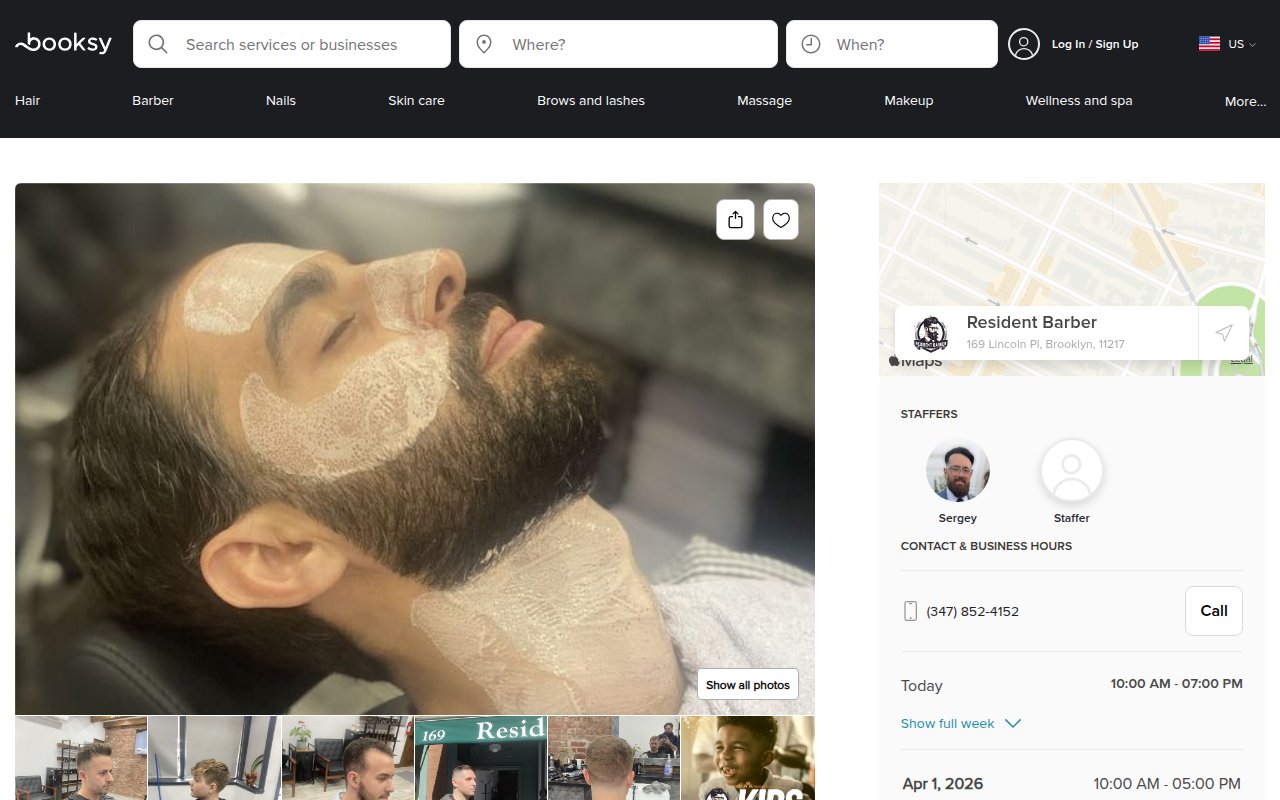
Resident Barber in Park Slope, Brooklyn is a neighborhood shop that does a lot of things right with a simple setup. The service menu covers 8 categories with clear pricing, and the named combo packages make upselling automatic. Three bundled options at different price points guide first-time visitors toward a higher ticket without a hard sell.
Phone number prominent in the header. Booksy handles scheduling. The WordPress/Divi design is clean but template-standard.
The thin spot is social proof. A single customer testimonial and a basic about section. For a shop in a competitive Brooklyn neighborhood, more customer stories would help differentiate.
Kutinfed
Award winner expanding into loctician services
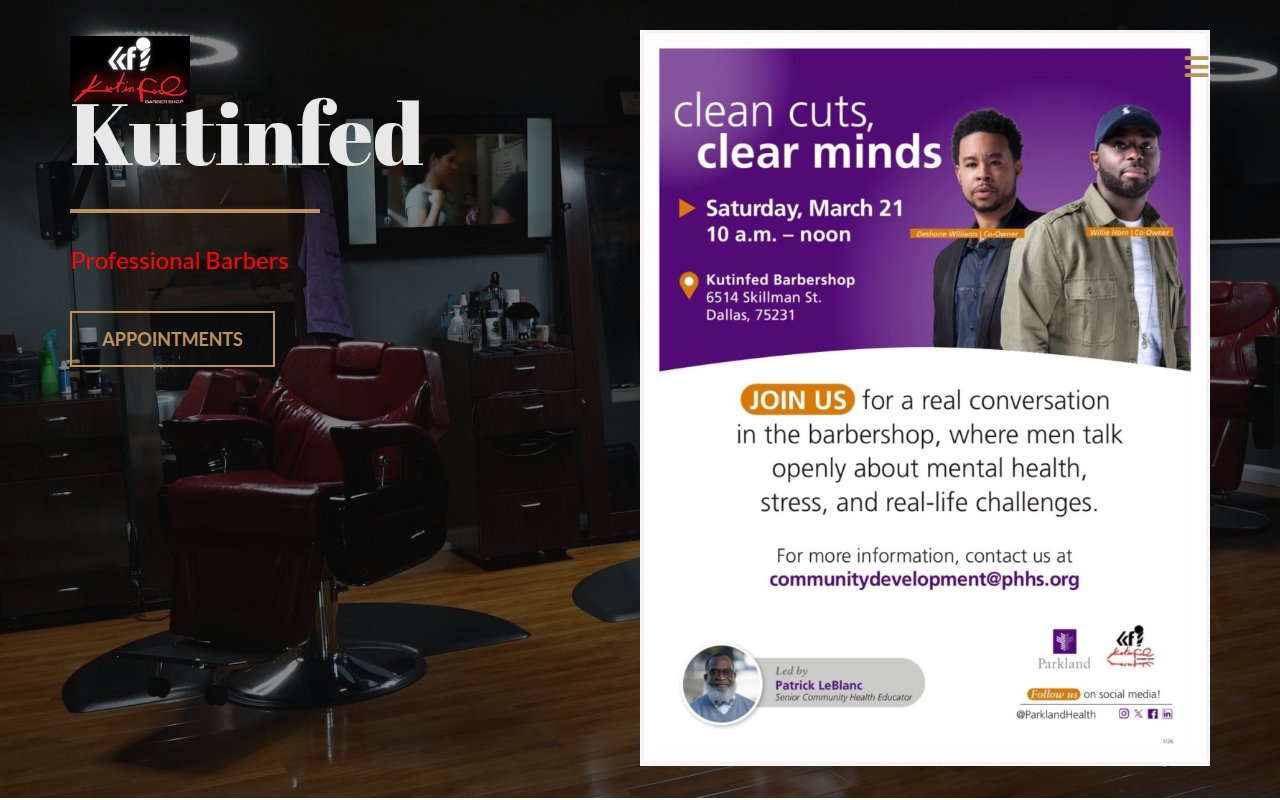
Kutinfed won the Dallas Observer Reader’s Choice for Best Barbershop and positions itself as a no-waiting barbershop for busy professionals. The 3-step booking process (select service, select barber, select time) through Appointy is designed for speed. Walk-ins are welcome too, but the on-time appointment promise is what appeals to the professional crowd.
The recent expansion into loctician services broadens the customer base beyond traditional fades and cuts. The copy leans into personality: “coldest fades in the game.”
Appointy showed Cloudflare bot verification during our testing, adding friction to the booking flow. A direct-embed scheduling widget would remove that barrier.
What the best barbershop websites have in common
How to build your barbershop website
-
Pick a platform with booking built in. The shops in this roundup use Squarespace with Acuity, Shopify with booking apps, and WordPress with scheduling plugins. Squire, Boulevard, and Square Appointments all performed well. The common thread: the booking flow stays on your site. Anything that redirects visitors to Facebook for scheduling is costing you appointments.
-
Photograph your actual space. Hire a photographer for 2 hours. Capture the chairs, the products, the barbers mid-cut, the details that make your shop yours. Most sites in this roundup lead with real interior photography, and the ones using stock images scored lowest. A barbershop is an atmosphere business, and the website has to prove it.
-
Give every barber a real profile. Name, photo, specialties, personality. Church Barber and Scotch Pine did this best. Customers want to know who they’re booking with before they walk in, and a personal bio turns “any available barber” into “I want to see Henry.”
-
Put your full pricing on the site. Heritage Barbershop and East Nashville show every service with price and duration. Hiding prices just sends visitors to the competitor who answers the question.
-
Embed your Google reviews. South Austin and BarberX both pull live Google reviews directly onto the homepage. If you have 50+ Google reviews at 4.5 stars or better, they should be on your site, not just on Google. Visitors trust reviews they know you can’t curate.
-
Define a concept. “We cut hair” is not a concept. The barbershops in this roundup that convert best have a specific hook: botanical products, scotch pairings, gender-free pricing, unlimited memberships. Your concept shapes your messaging, your photography, and your word-of-mouth.
If you’re still deciding on a name for your shop, our barbershop business name guide has 500+ ideas organized by positioning strategy.
Key Takeaways
- Keep booking on your site (popup, modal, or embedded widget). Every redirect to Facebook or a third-party page loses visitors at the moment they're ready to commit.
- Show prices and durations for every service in the booking flow. No surprises at checkout.
- Name every barber with a photo and personality. Customers book people, not time slots.
- Embed your Google reviews on the homepage. Third-party proof you can't edit is more credible than curated testimonials.
- Sell the experience, not the haircut. Video heroes, interior photography, and brand voice do more than a list of services.
- Have a concept that makes you referable. "You have to try this place" only works when there's something specific to describe.
How we picked these sites
We started with a broad scan of hundreds of barbershop websites, filtering for shops with strong third-party signals: high Google Business Profile ratings, verified reviews, meaningful organic search traffic, and recent site updates. We also reviewed industry publications like BarberEVO Magazine, Modern Barber Magazine, and Barbers Only Magazine to find shops worth evaluating that don’t necessarily rank on page one.
From that pool, we selected dozens of the top sites and scored each on five criteria: UX quality, conversion optimization, social proof integration, team authenticity, and SEO coverage. Every site got a multi-page review covering the homepage, services page, booking flow, and any standout pages.
The sites featured here earned the highest overall scores. Each one made the cut because it does something specific well, not because it’s the “best” at everything. The goal is a collection where every site teaches a different lesson.
Frequently Asked Questions
What booking platform works best for a barbershop website?
In our review of the top barbershop websites as measured by traffic, ranking, and number of reviews, Boulevard and Squire were the most common choices for booking. Facebook redirects were common in sites that appeared to have less traction, suggesting that moving users off-site for booking is less optimal than an embed experience.
How much does a barbershop website cost to build?
Most barbershop websites we reviewed run on Squarespace, WordPress, or Shopify, which cost $15-$50/month for hosting. With a designer, expect $1,500-$5,000 for a polished site like Heritage Barbershop or Scotch Pine. Custom builds like Scissors & Scotch cost significantly more but are not necessary for most independent shops. The biggest cost is not the platform but professional photography of your actual space, which runs $300-$800 and makes more difference than any template upgrade.
Should my barbershop website show pricing?
Yes. The barbershop sites in our review that show full pricing with service durations (like Heritage Barbershop's Acuity integration or Entourage's Square Appointments) scored higher on conversion optimization. Visitors comparing shops will default to the one that answers their questions without making them call. The exception is premium shops like Fellow Barber that compete on experience rather than price, but even they list services with time estimates so customers know what to expect.
 How to Develop an Effective Content Marketing Strategy