
Business Definition of "WBR"
The acronym "WBR" stands for "Weekly Business Review." A WBR is a recurring, data-driven meeting where a team reviews performance metrics, flags exceptions, and decides on corrective actions in a fixed, repeatable format. Popularized by Amazon and documented in the book Working Backwards, the WBR has become a best practice for operations teams that want to manage by data rather than gut feel.
What does WBR stand for?
WBR stands for Weekly Business Review. It’s a structured meeting format where a team reviews performance metrics at a fixed cadence, discusses exceptions, and assigns follow-up actions.
The practice was codified at Amazon in the early 2000s when Jeff Bezos needed a way to monitor hundreds of business lines without drowning in ad hoc reports. Former Amazon executives Colin Bryar and Bill Carr documented the process in Working Backwards, which turned the WBR into one of the most imitated operational practices in tech.1
At Amazon’s executive level, the WBR covers 400-500 metrics every Wednesday morning in 60 minutes. But the format is fractal: every department and team runs their own version. Each level’s WBR feeds into the one above it, creating a chain of accountability from individual contributors to the C-suite.
How a weekly business review works
The WBR follows a rigid structure by design. Consistency is the point. You review the same metrics, in the same order, every week. No surprises in format means your attention stays on the data.
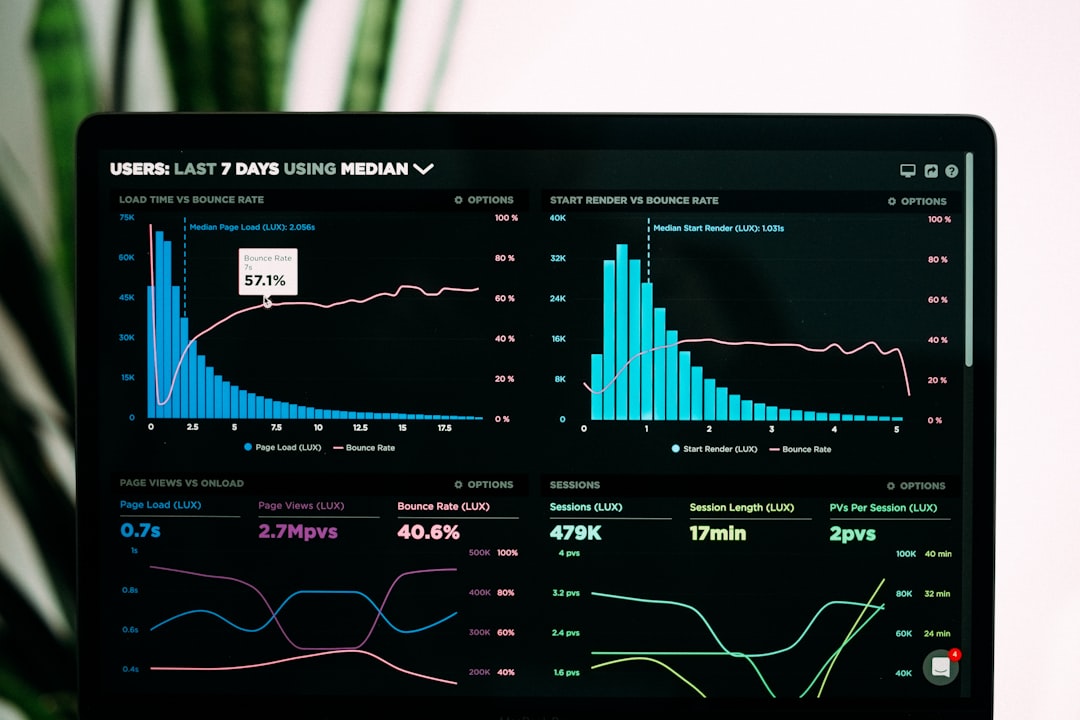
A typical WBR deck contains three types of visualizations:
- 6-week / 12-month graphs. Six weeks of data on the left (recent movement) and twelve months on the right (the trend). This dual view builds what Amazon calls “fingertip feel” — the ability to glance at a chart and immediately spot anomalies.
- Comparison tables. Side-by-side context for metrics across regions or product lines.
- Exception notes. Brief annotations where a metric owner explains a variance.
The meeting is exception-driven. If a metric is on track, the owner says so and the group moves on. Discussion time goes to variances: What happened? Why? What’s the fix?
What the WBR is not: a strategy session. Its power is in the operational present tense. What happened last week, and what are we doing about it?
Input metrics vs. output metrics
The most useful idea embedded in the WBR framework is the distinction between input metrics and output metrics.
Output metrics are the results you want: ARR, MRR, NRR, customer satisfaction scores, churn rate. They tell you how the business is doing. But by the time an output metric moves, the cause is already in the past. You can’t fix last quarter’s churn this quarter.
Input metrics are the controllable activities that drive outputs. Pipeline created per week. Demos booked. Onboarding calls completed. These are the levers your team can actually pull.
Why does this matter for a weekly review? Because input metrics are actionable now. If demo bookings dropped 20% last week, you can investigate and correct before it shows up as a revenue miss next month. If you only watch output metrics, you’re always reacting to the past.
Amazon’s internal insight: the right input metrics aren’t always obvious.2 The initial set you pick may be wrong. The WBR acts as a weekly feedback loop: if you’re moving inputs but outputs aren’t following, the causal model is broken and you need different inputs. That iterative refinement separates a WBR from a generic status meeting.
WBR for revenue operations teams
You don’t need 500 metrics or an Amazon-scale org to run a WBR. A RevOps team can get value from the format with 15-30 metrics and a 30-minute meeting.
Here’s a practical starting point for a revenue team’s WBR:
Pipeline metrics (input). New MQLs generated, SQLs accepted, demos booked, proposals sent. These are your controllable inputs.
Conversion metrics (process). MQL-to-SQL conversion rate, SQL-to-opportunity rate, win rate by stage. These tell you where the funnel is leaking.
Revenue metrics (output). New ARR booked, expansion revenue, churn. The outcomes you’re ultimately optimizing for.
Structure the deck so that input metrics come first, conversion metrics second, and output metrics last. This mirrors the causal chain: if inputs are healthy but conversions are dropping, you know where to look.
The most important habit is consistency. Run the WBR every week, even when things look fine. Especially when things look fine. The value compounds as the team builds intuition for normal variation versus real signals. Skip a few weeks and that intuition erodes.
One common failure mode: turning the WBR into a blame session. The meeting needs to feel safe enough that metric owners flag problems honestly. If people hide bad numbers or game their inputs, the system breaks. The most senior person in the room sets this tone.
-
Bryar, C. & Carr, B. (2021). “Working Backwards: Insights, Stories, and Secrets from Inside Amazon.” St. Martin’s Press. https://us.macmillan.com/books/9781250267597/workingbackwards/ Chapter 7 covers the WBR process in detail, including metric selection, deck format, and meeting cadence. ↩
-
Chin, C. (2024). “The Amazon Weekly Business Review.” Commoncog. https://commoncog.com/the-amazon-weekly-business-review/ A detailed analysis of Amazon’s WBR practice based on interviews with Colin Bryar, connecting it to Deming’s process control principles. ↩
Frequently Asked Questions
What does WBR stand for?
WBR stands for Weekly Business Review. It is a structured, recurring meeting where a team reviews key performance metrics against targets and prior periods, discusses exceptions and variances, and assigns corrective actions. The format was codified at Amazon in the early 2000s and described in detail by former executives Colin Bryar and Bill Carr in their book Working Backwards. While Amazon runs its WBR across hundreds of metrics at the executive level, the practice scales down to any team that tracks KPIs and wants a disciplined cadence for reviewing them.
Is the WBR only for Amazon, or can any company use it?
The WBR originated at Amazon, but the underlying principles are not Amazon-specific. Any team that tracks metrics weekly can run a WBR. The core idea is simple: review the same set of data, in the same order, every week, and only spend time discussing what looks abnormal. Startups, mid-market SaaS companies, and revenue operations teams have all adopted the format. The practice works because it builds pattern recognition over time. When you see the same metrics every week, you develop an intuition for what normal looks like, and exceptions jump out immediately.
What is the difference between input metrics and output metrics in a WBR?
Output metrics are the results you care about: revenue, retention, customer satisfaction. Input metrics are the controllable activities that drive those results. In a WBR, input metrics get the most discussion time because they are the levers you can actually pull. For example, ARR is an output metric. The number of qualified demos booked per week is an input metric that influences it. If output metrics are slipping, the WBR helps you trace the problem back to which input went off track.
 Value-Add: Term Meaning and Usage in Business