Your website needs to look clean and professional. But looking good doesn’t matter if visitors can’t figure out how to book.
The visitor has three browser tabs open, they’re price-shopping, and they’ll commit to whichever company answers two questions first: “Do you serve my area?” and “How do I schedule?”
We reviewed dozens of cleaning company websites across five criteria to find the ones that nail both. Here are the 14 worth studying:
AspenClean
Eco-certification trifecta above the fold
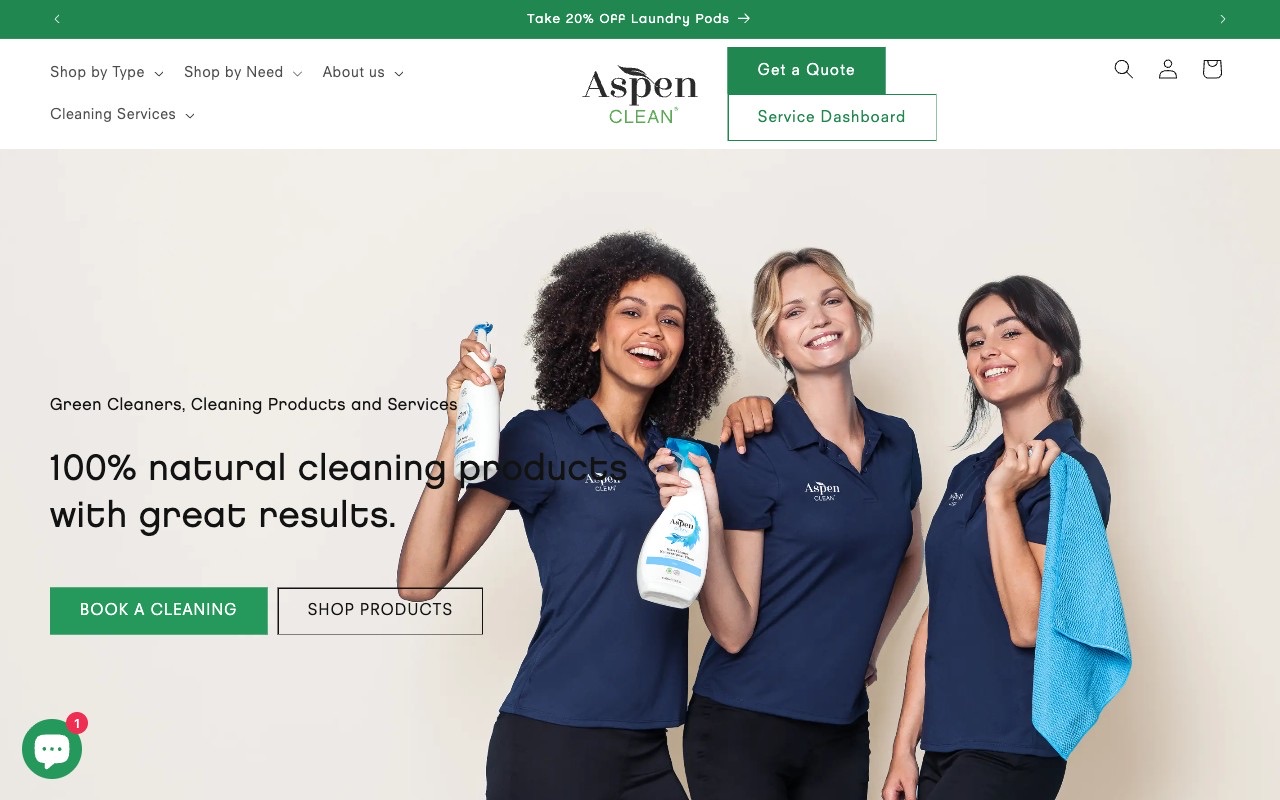
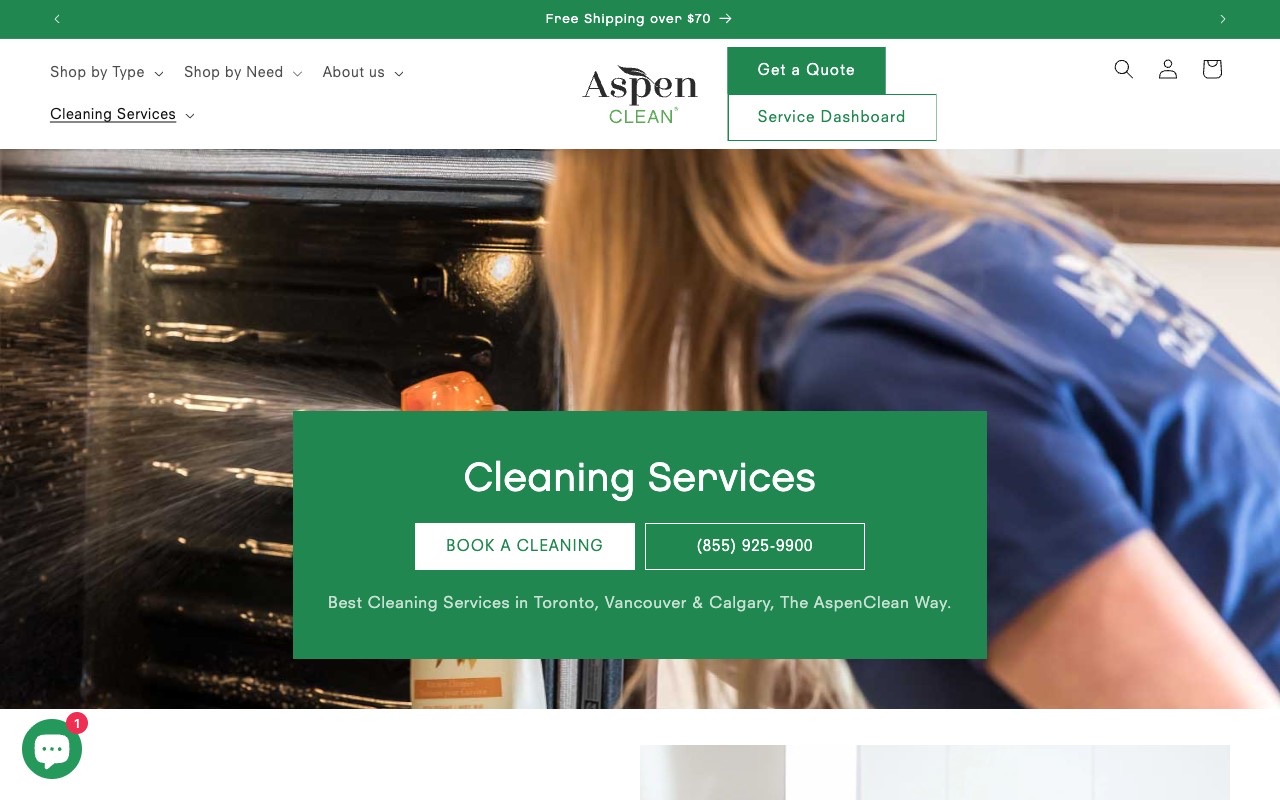
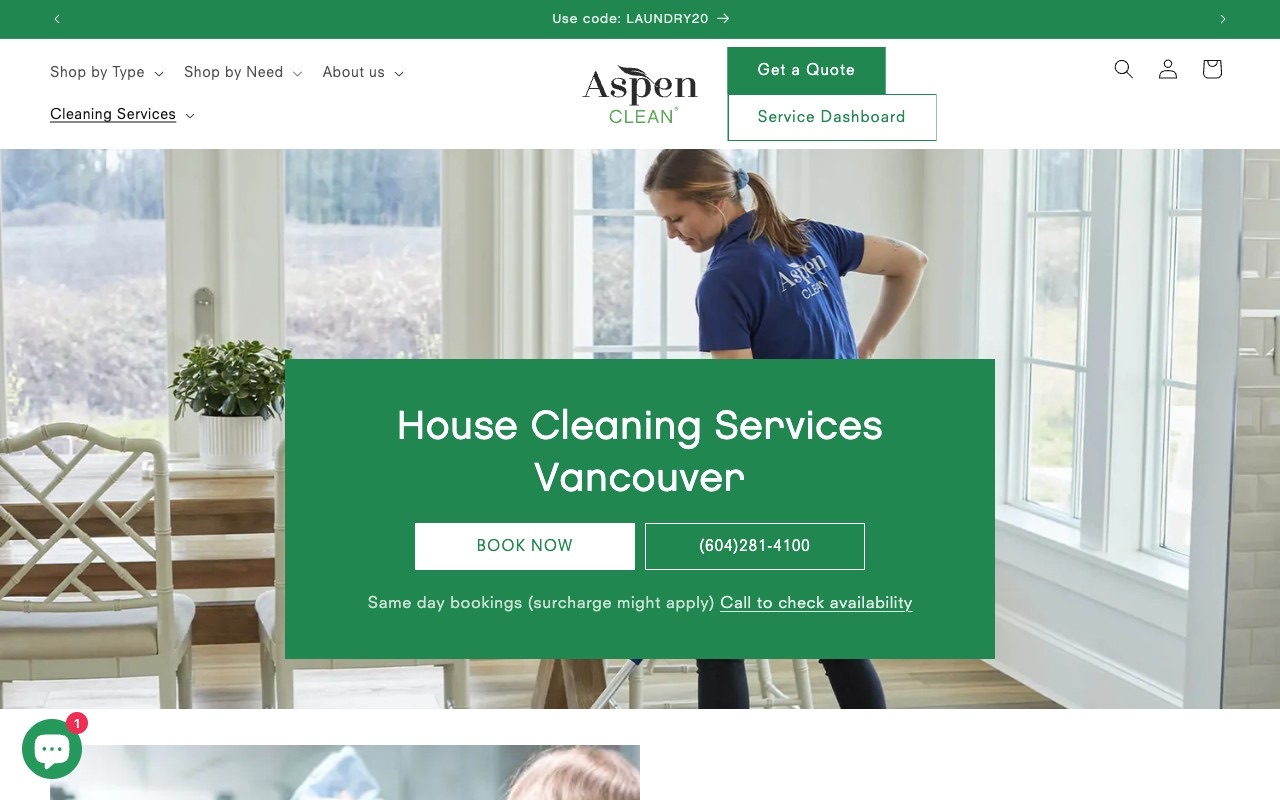
AspenClean shows three third-party certification badges above the fold: EcoCert, EWG Verified, and Leaping Bunny. These are claims visitors can actually verify, which sets them apart from the usual “green cleaning” tagline.
A founder video with Chris and Alicia, plus real team photos in branded uniforms, give the site a personal feel. They also run a Shopify store selling cleaning products alongside the service. Product reviews sit at 4.9-5.0 stars, though the catalog adds clutter for visitors who just want to book.
Maid Marines
Competitor pricing comparison as a power move
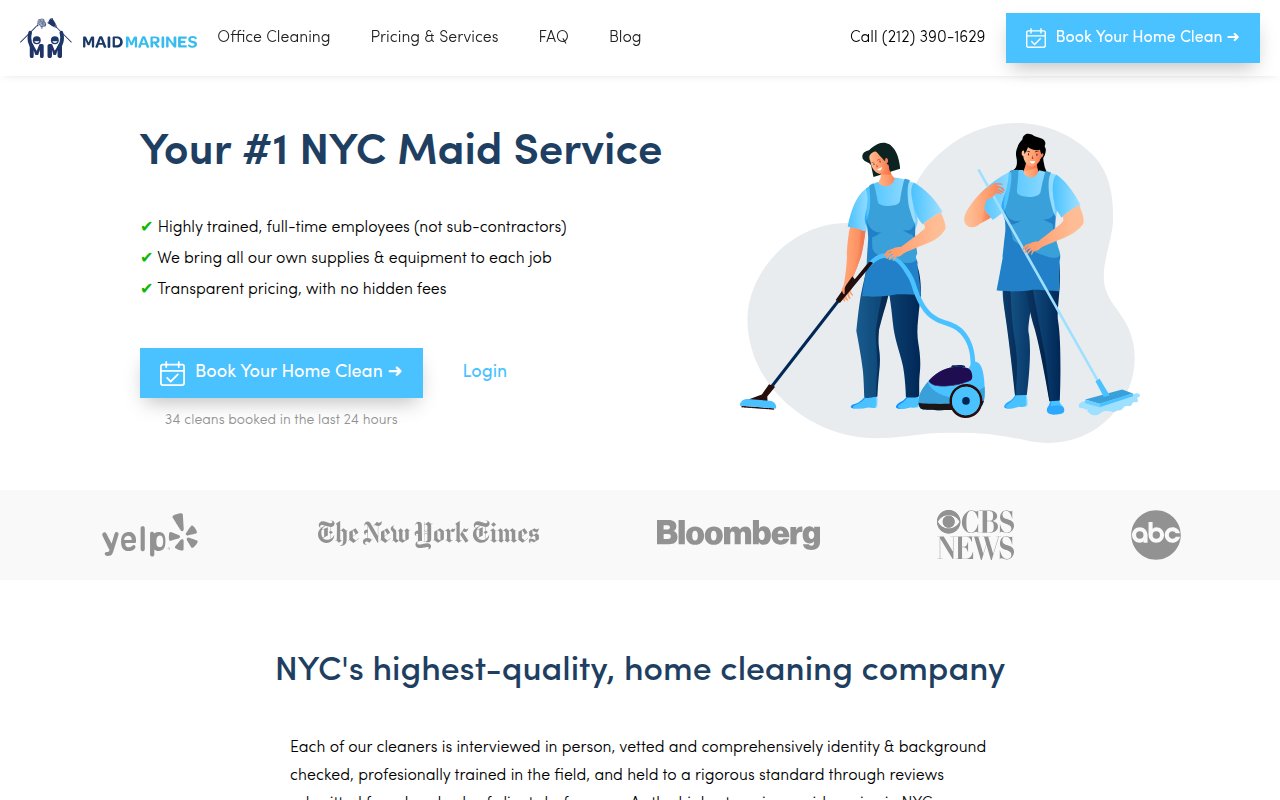
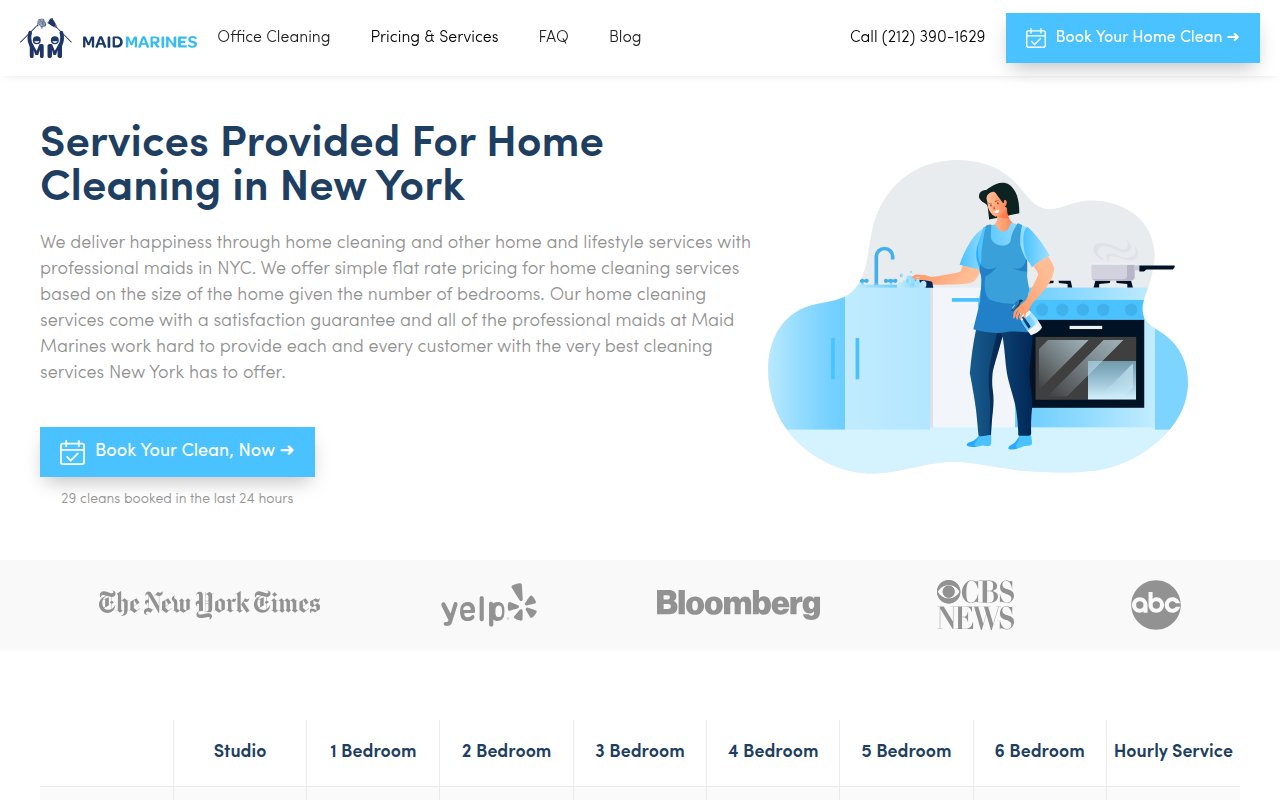
Maid Marines publishes exact pricing on the homepage. Most cleaning companies hide rates behind a form or phone call, so this is an immediate differentiator.
The 55-point cleaning checklist spells out exactly what you’re paying for. They also offer a same-cleaner guarantee, which addresses a common concern most visitors won’t bring up directly.
The gap is content. The blog has 3 posts and SEO coverage stops at Manhattan, Brooklyn, and Queens. For a company with 10,000+ customers, the content investment is thin.
The Maids
Vanity number plus embedded Google reviews
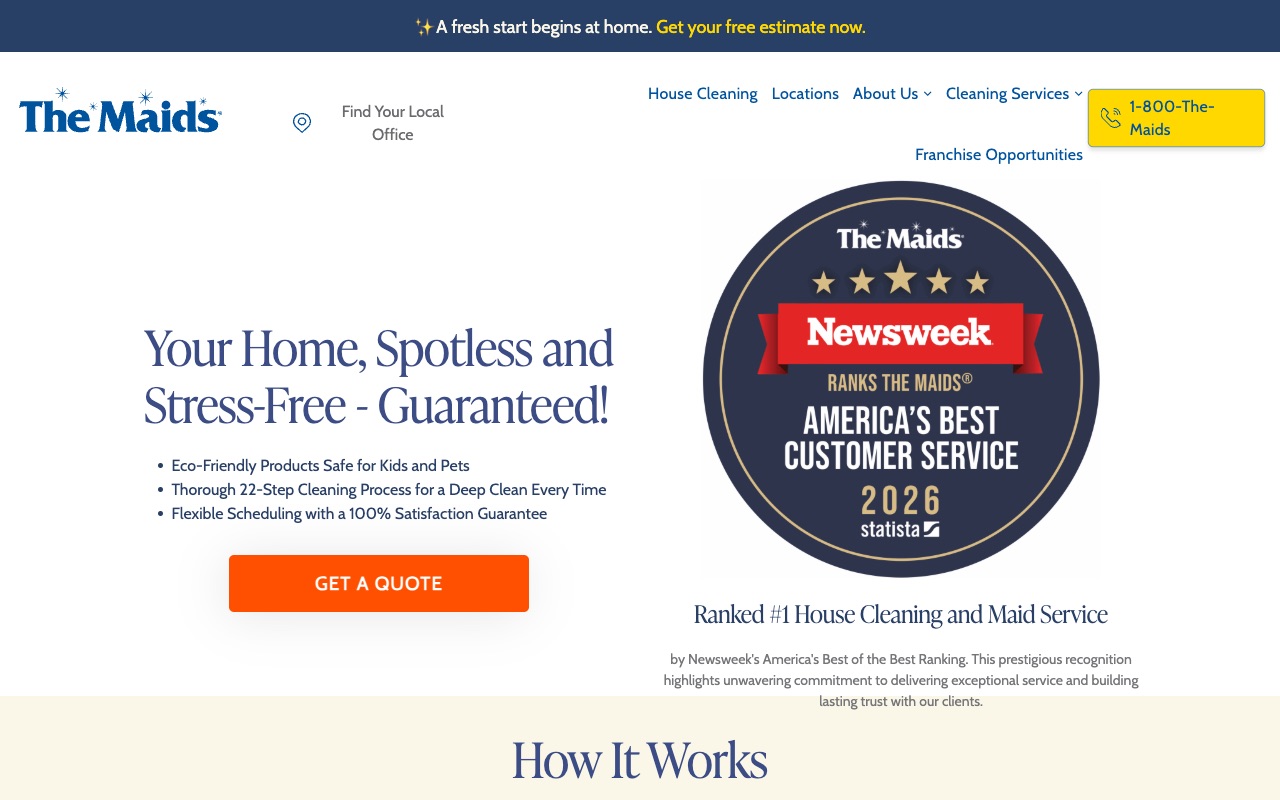
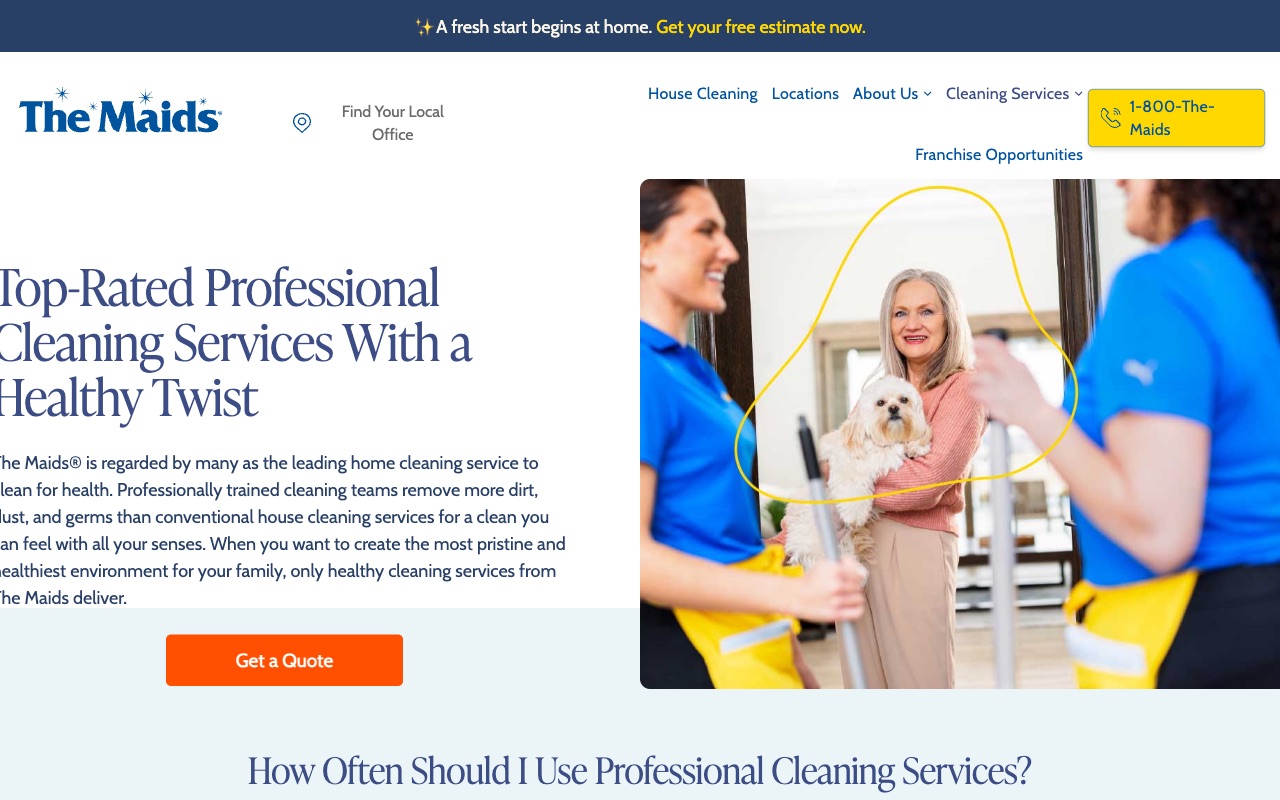
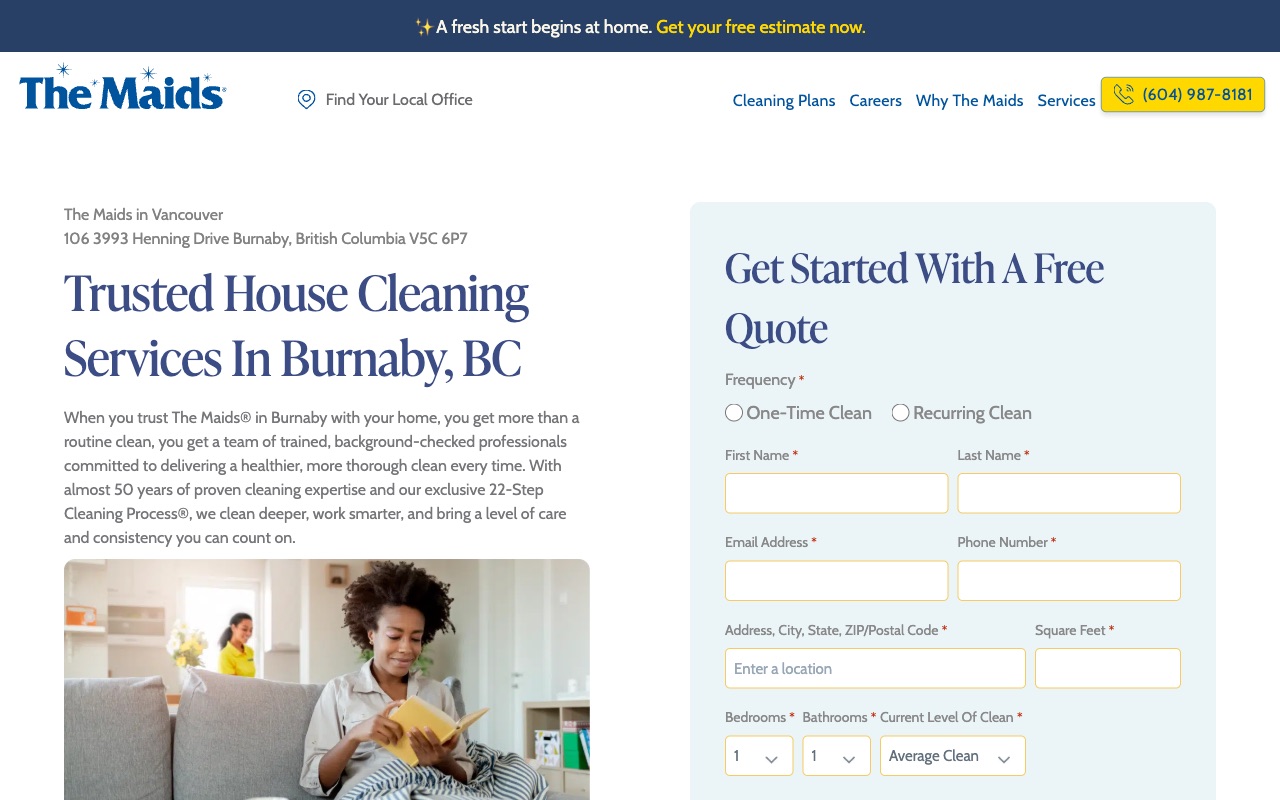
The Maids leads with a vanity phone number (1-800-THE-MAIDS) in the header on every page, paired with a three-field quote form: ZIP code, frequency, home size.
Each franchise location page has a “Meet the Owner” section with a real photo and background, plus embedded Google reviews with full attribution. 22+ service-type pages and state-level location pages give the site organic reach most independents can’t match.
The homepage hero leans on a Newsweek #1 ranking badge as its primary visual, which helps credibility but doesn’t make much of a first impression.
Better Life Home Cleaning
Founder-led indie with instant pricing
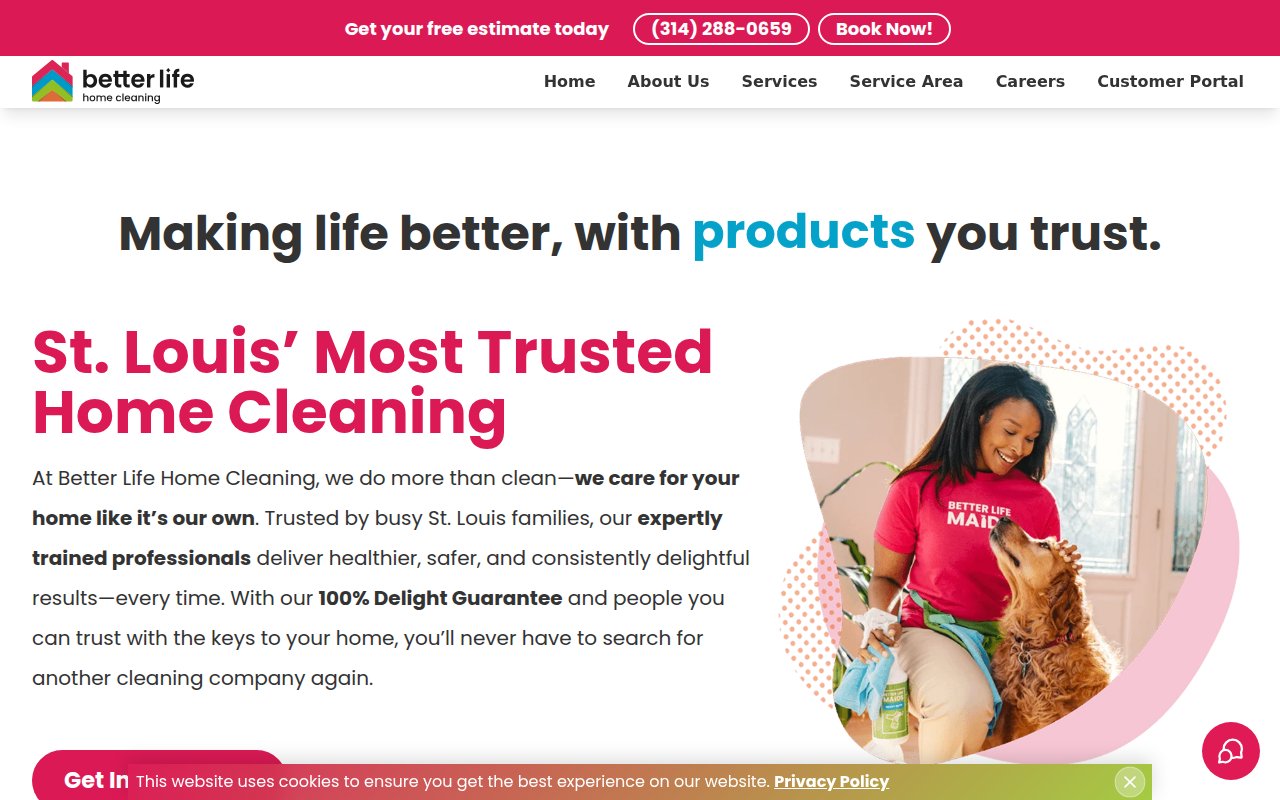
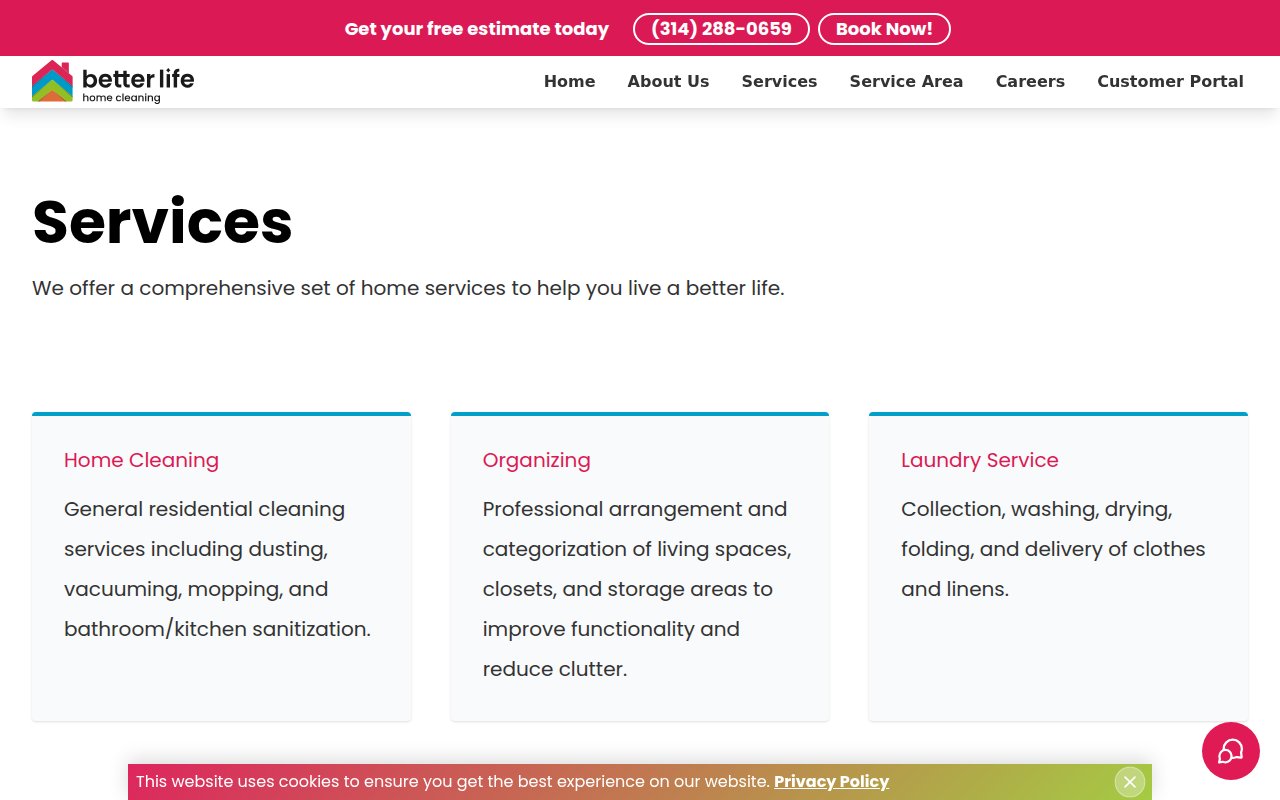
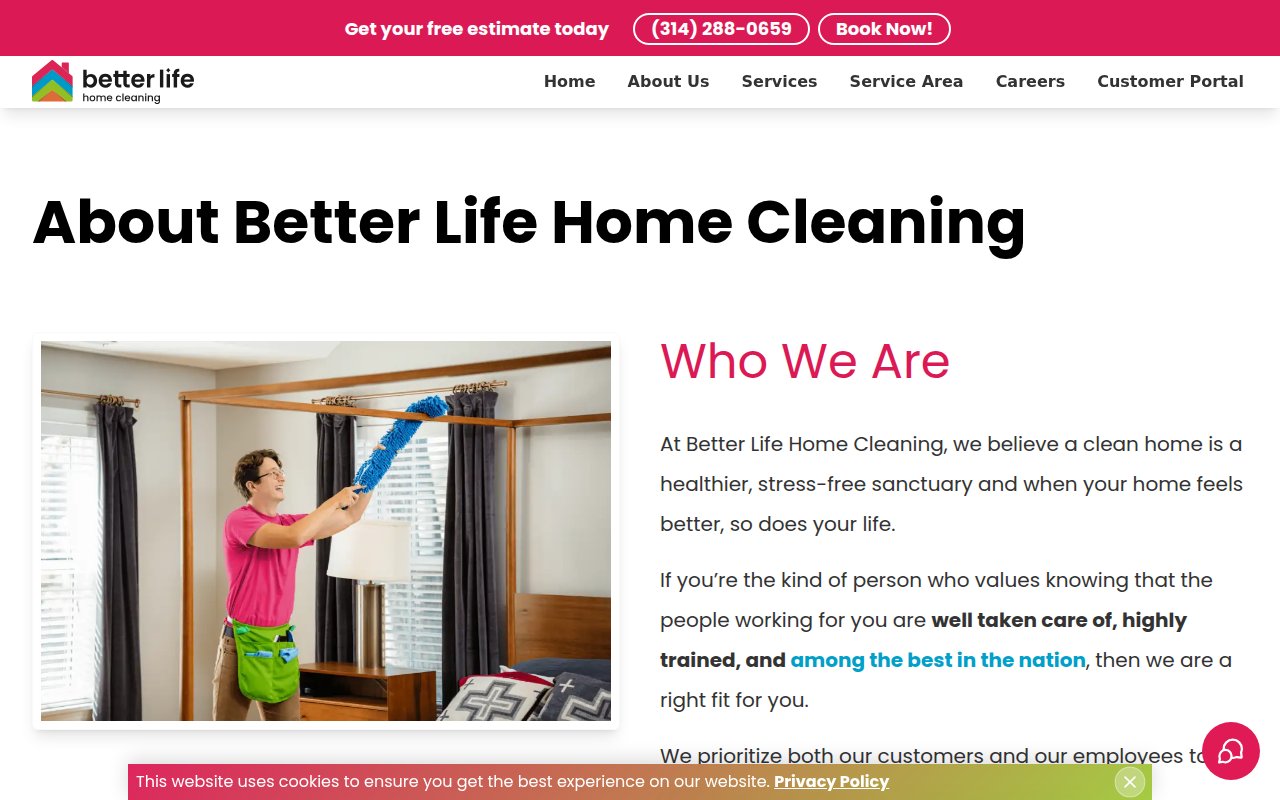
Better Life Home Cleaning puts founder Angela Ricketts on the homepage, not buried in an about page. Her name, face, and story sit alongside an “Award Winning Service” badge and a Top Workplace Award.
The booking modal lets you get a price and schedule without leaving the page. They partner with Cleaning For A Reason (free cleaning for cancer patients), and 28+ municipality service area pages give solid local SEO depth. Reach is limited to two Missouri counties, so visitors outside the area hit a dead end.
Molly Maid
Chat widget with a speed promise
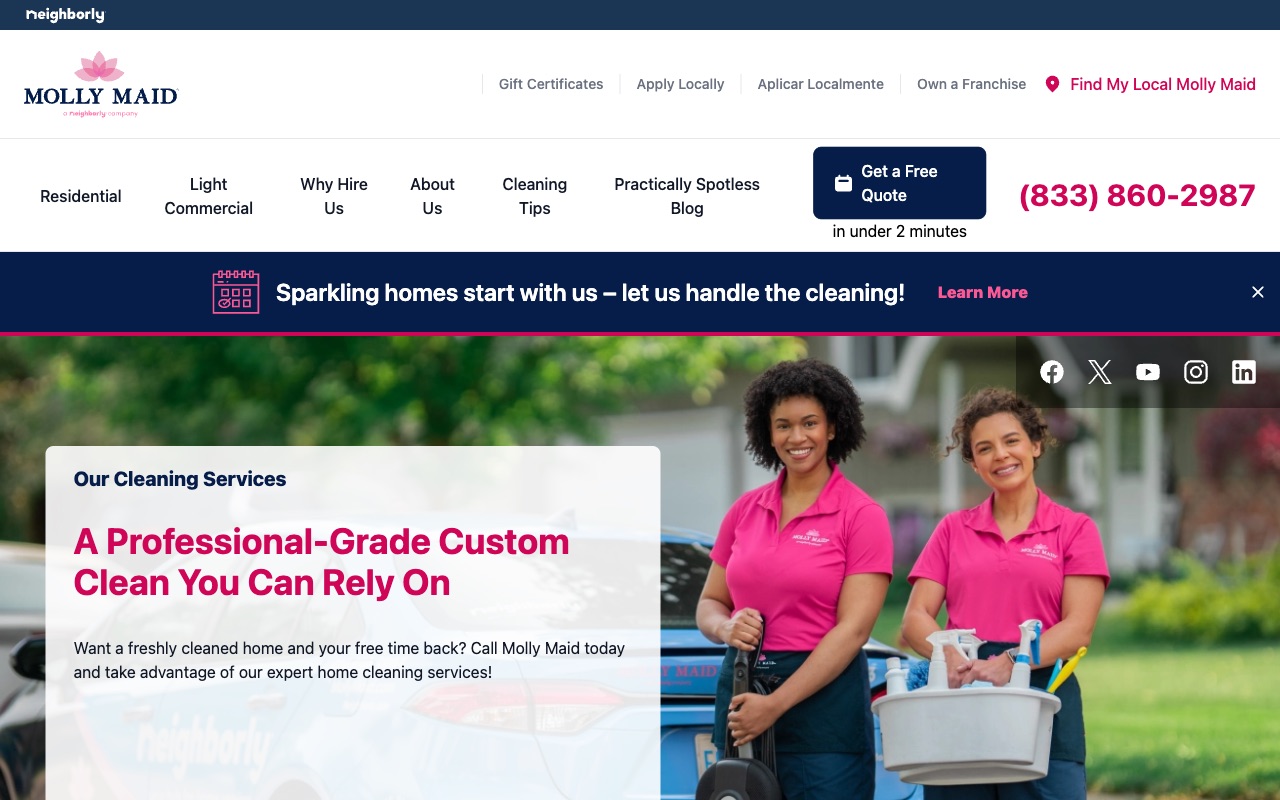
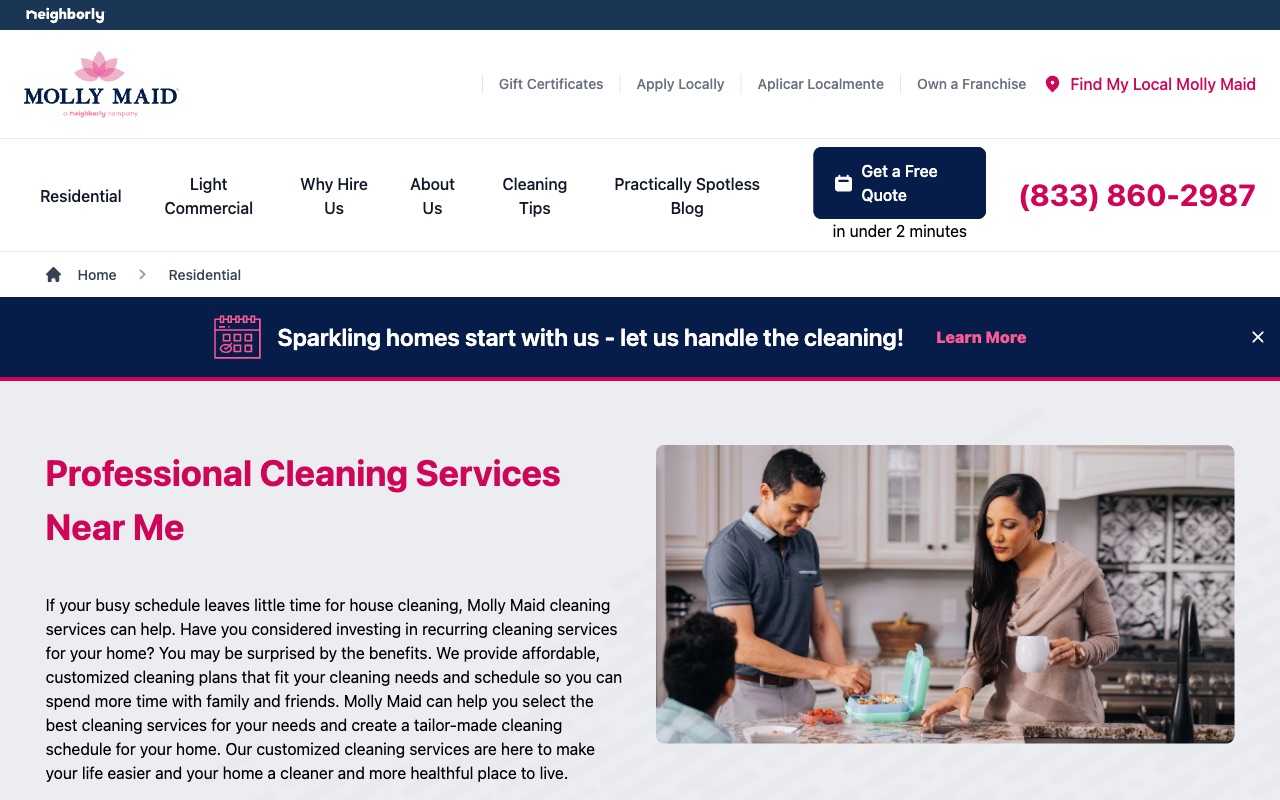
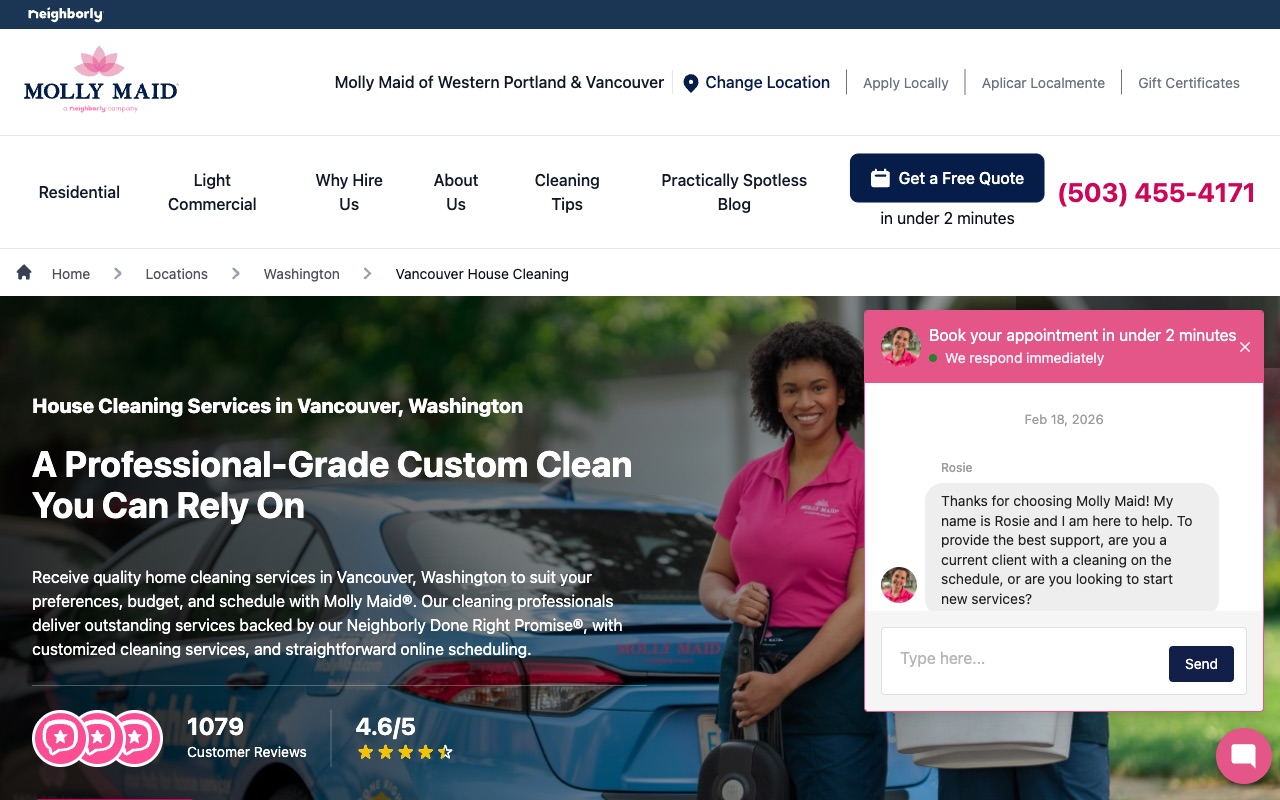
Molly Maid’s chat widget promises “Book in under 2 minutes” on every location page. Combined with a phone number and “Get a Free Quote” button in the header, visitors have three ways to convert on every page.
Location pages show 1,079 reviews at 4.6 stars before you scroll. The tradeoff is personality: every location page looks identical, with no franchise owner bios or local team introductions.
Seattle Green Cleaning Fairy
Memorable branding plus 70+ neighborhood pages
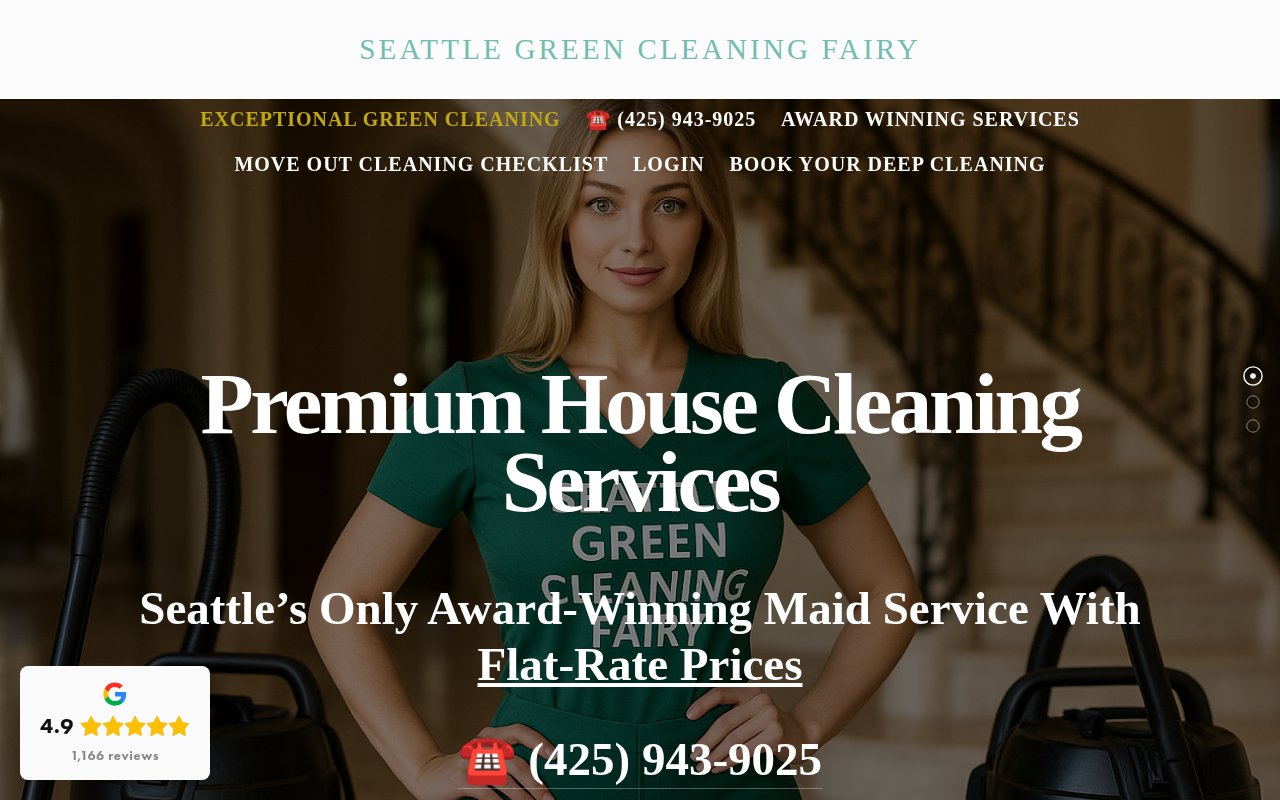
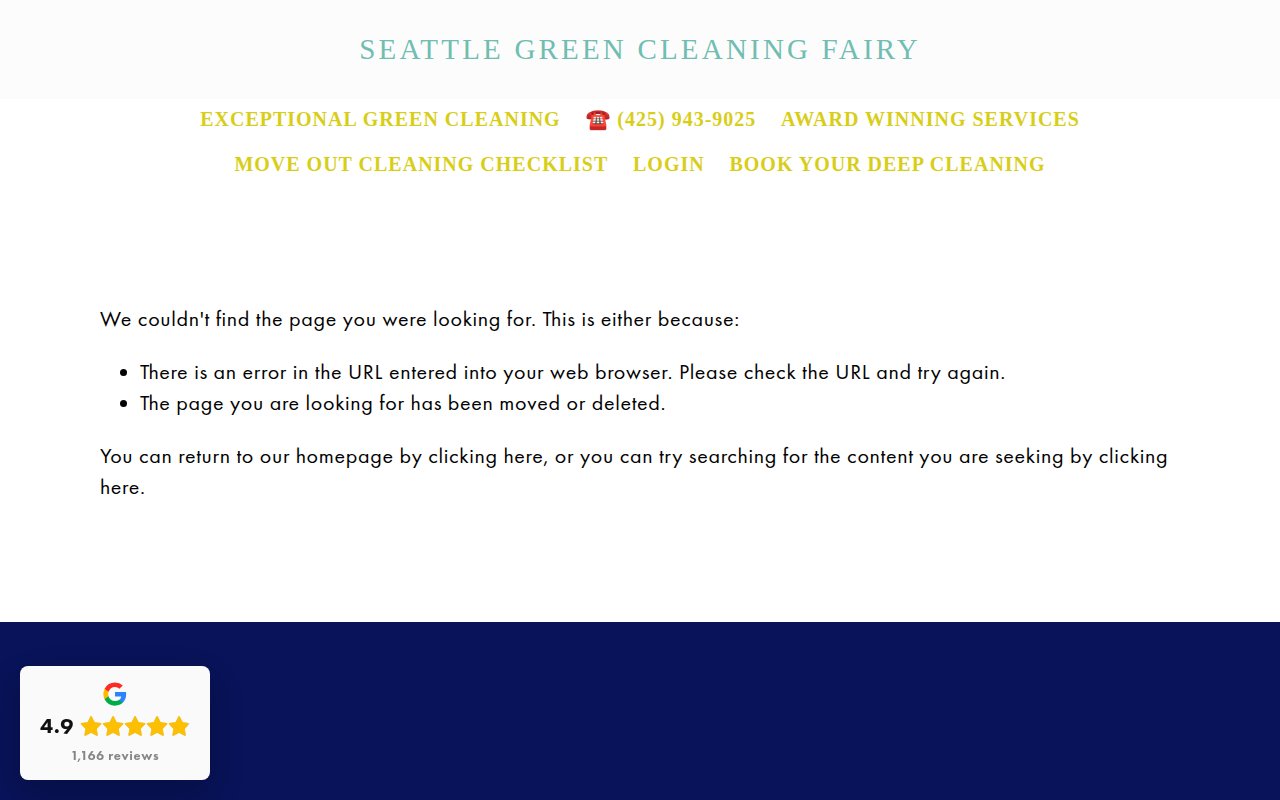
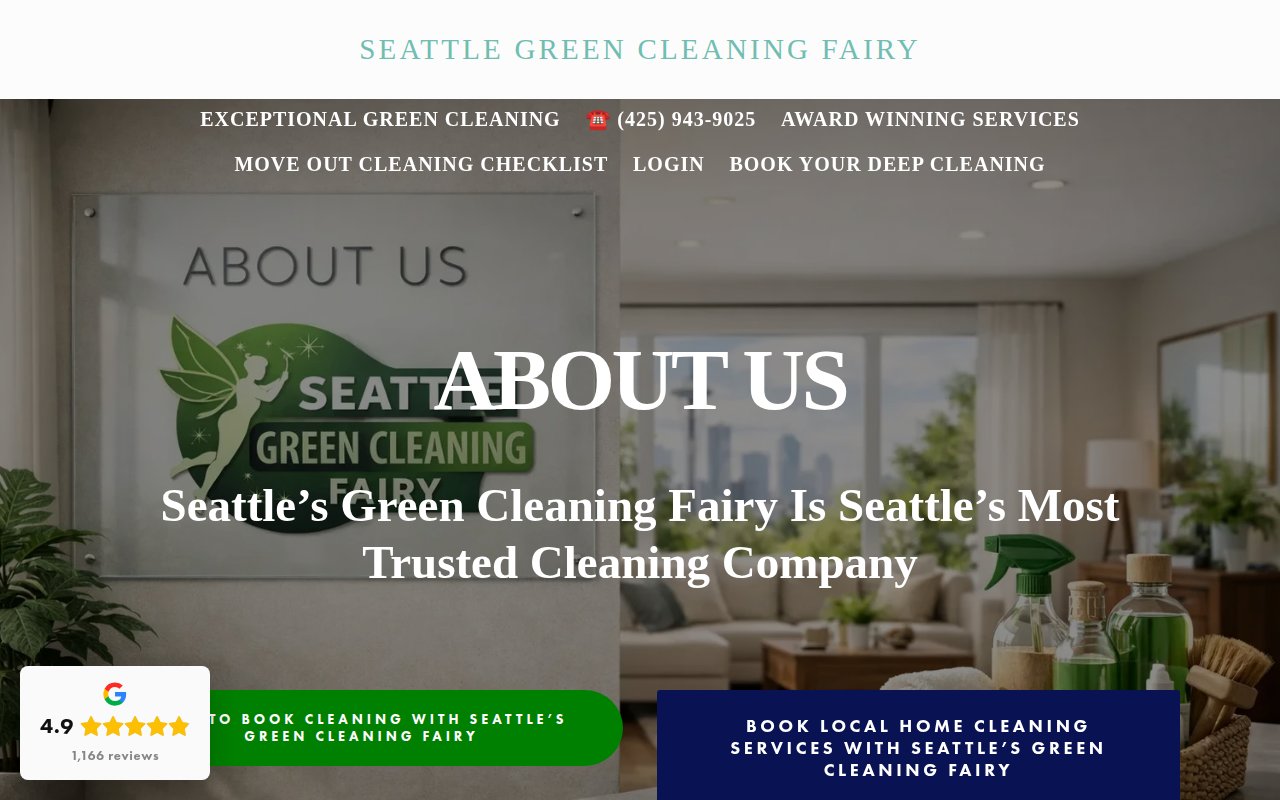
Seattle Green Cleaning Fairy committed to a whimsical brand identity that’s hard to forget. An immigrant founder story and minority-owned designation make it personal in a way franchises can’t match.
The reviews are strong: 4.7/5.0 from 1,323 reviews, with 2,777+ total across Google, Facebook, Yelp, and Trustpilot. The bigger SEO play is 70+ Seattle neighborhood pages targeting searches like “house cleaning Ballard.” Built on Squarespace.
The booking flow (“Book Your Deep Cleaning” with an integrated form) lacks the instant pricing or chat widgets that stronger-converting sites in this list offer.
Two Maids
Dual CTAs for buyers and researchers
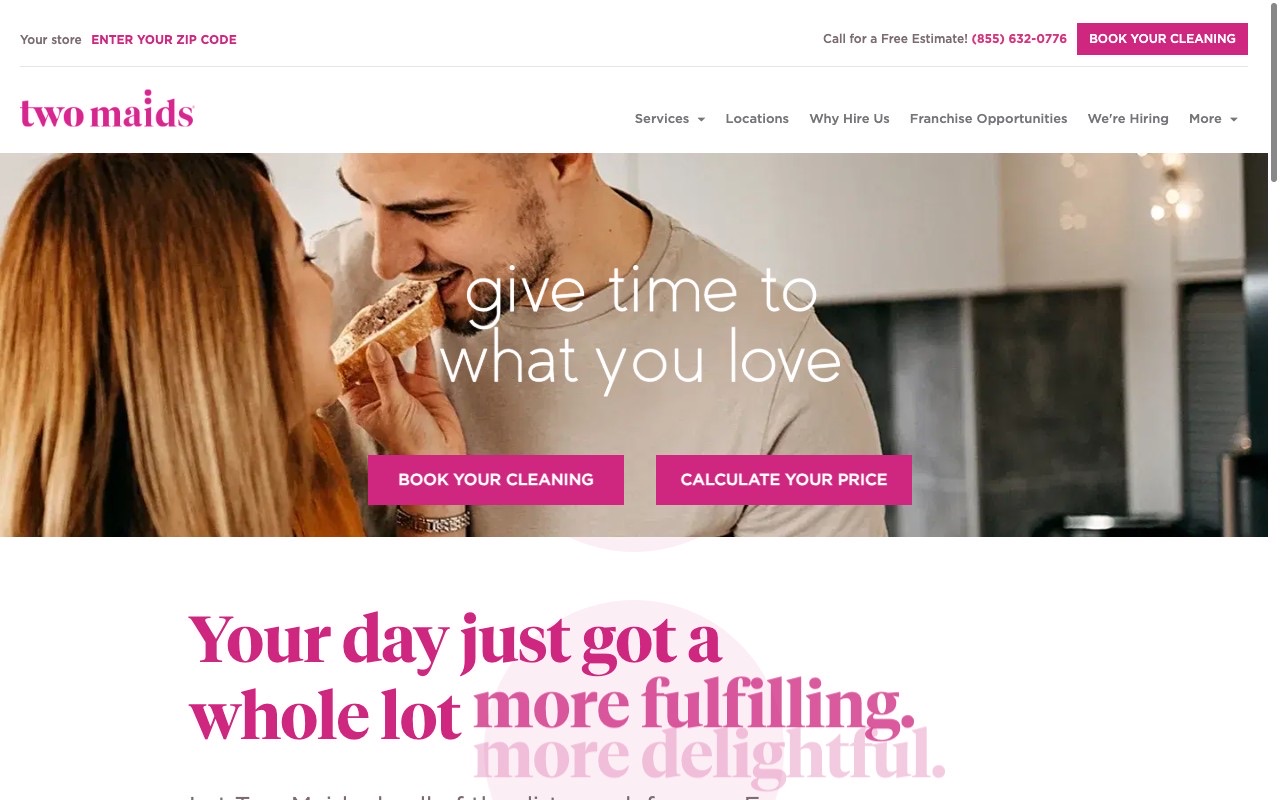
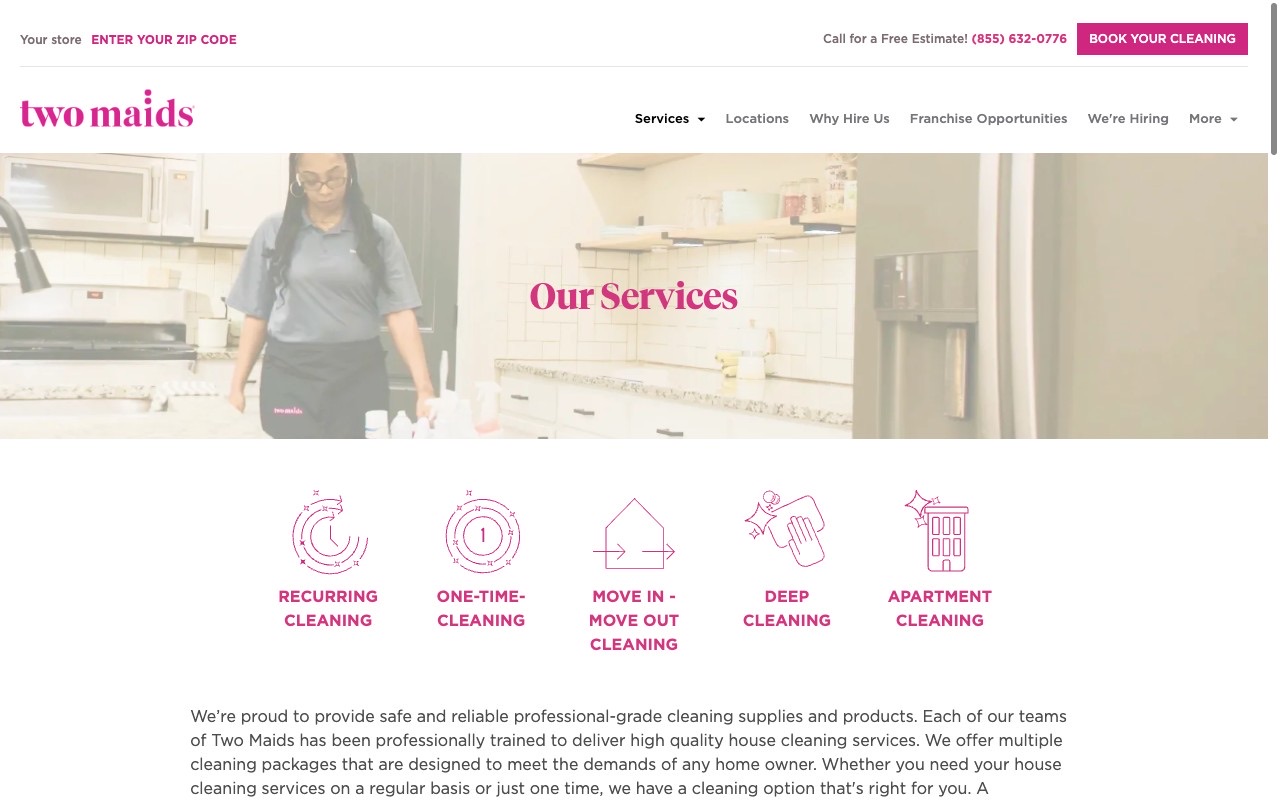
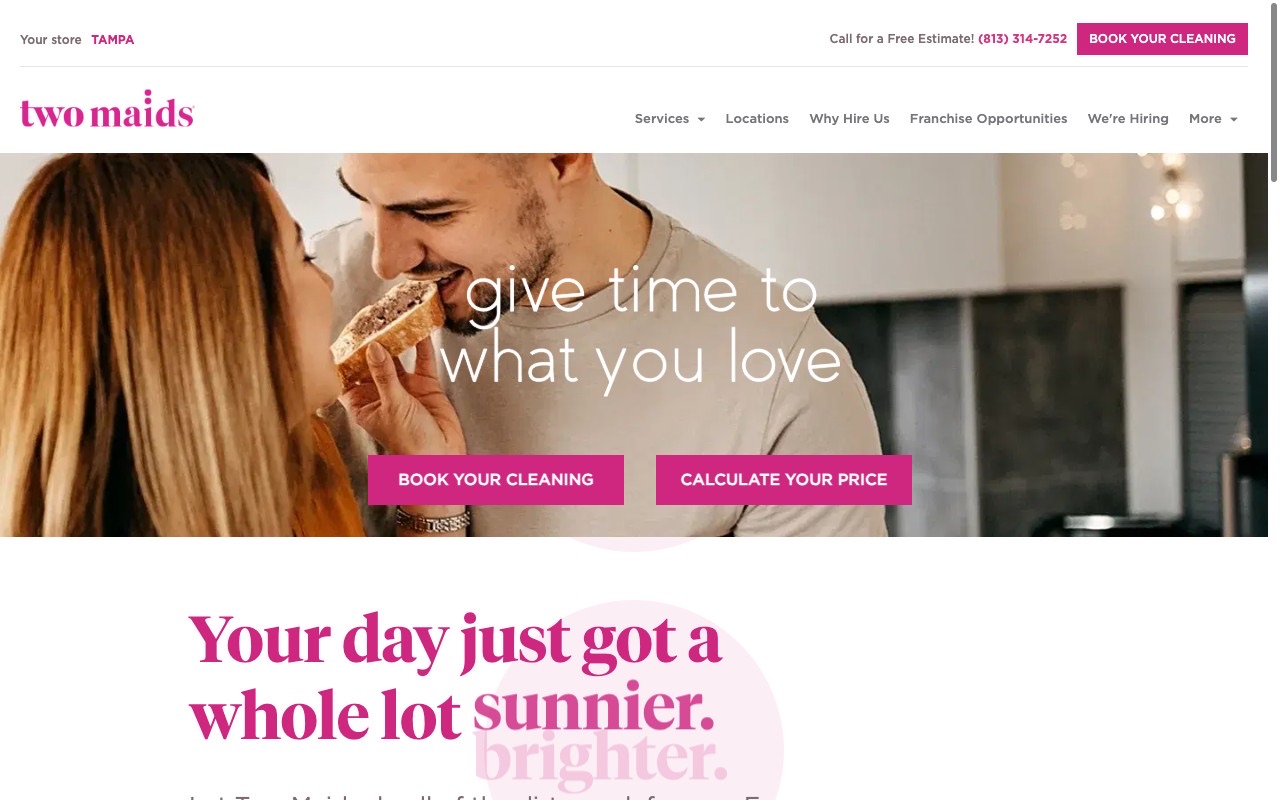
Two Maids puts two CTAs in the hero: “Book Your Cleaning” and “Calculate Your Price.” One for ready buyers, one for comparison shoppers. Media logos from major outlets sit below.
The franchise footprint is large: 90+ location pages across all 50 states, each with a local phone number and neighborhood lists. No founder story, no staff bios, no team photos. It’s the most polished site in this group and also the most anonymous.
Emily's Maids
Hiring standards as a trust signal
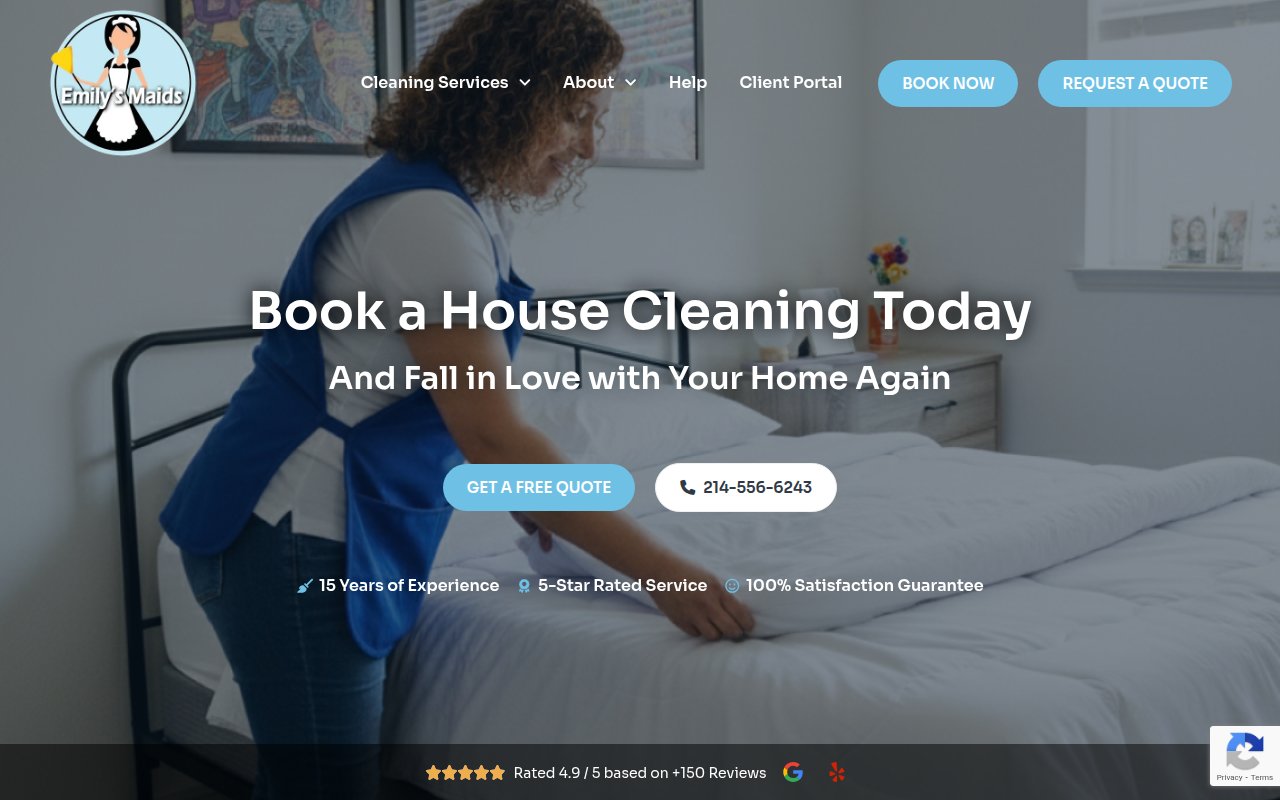
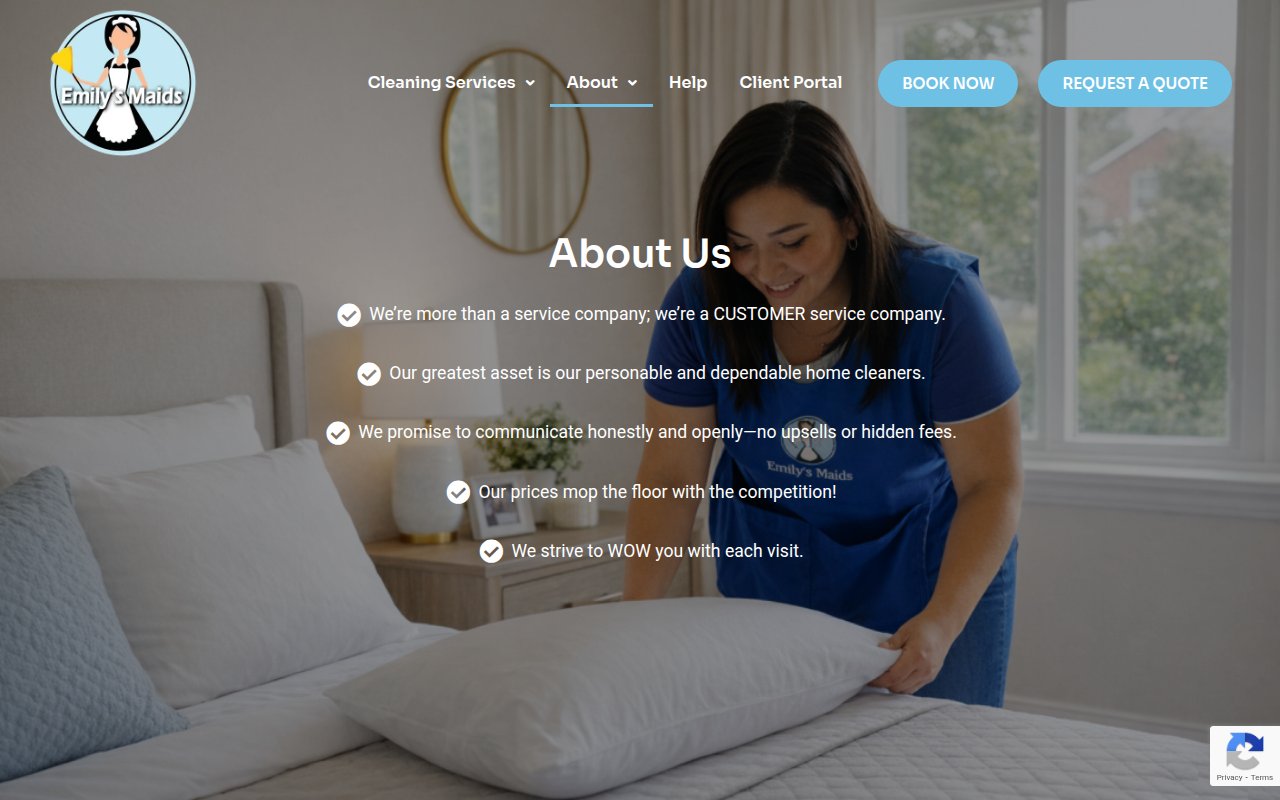
Emily’s Maids publishes a specific hiring acceptance rate: 1-3% of applicants. That’s a concrete answer to the question every visitor is thinking but won’t ask: “who are you sending into my house?”
Launch27 handles booking with a client login for easy rebooking. 120+ Google reviews at 4.9/5 and a CBS DFW feature. City-level pages for DFW suburbs cover the local SEO.
The tradeoff is design. The site (WordPress with Elementor) is clean but generic.
Maid Bright
Retention rate as the hero stat
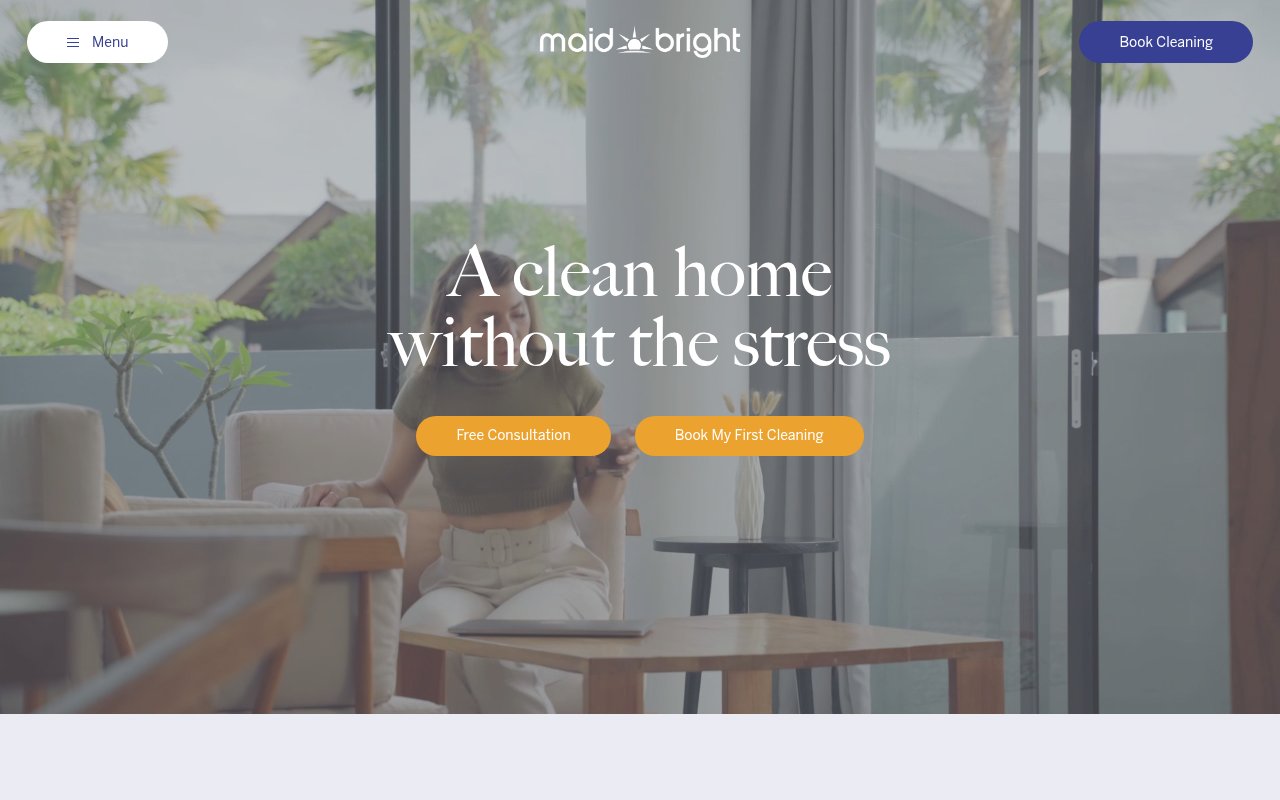
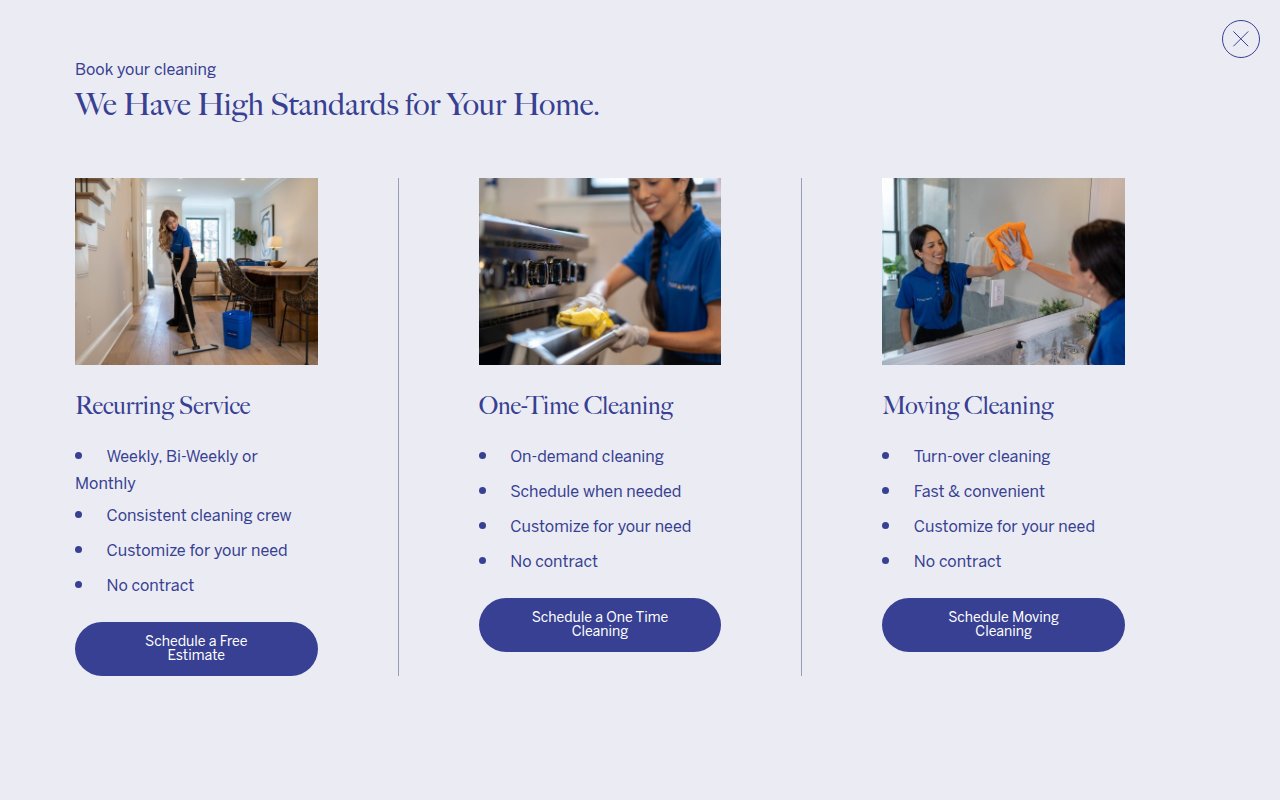
Maid Bright leads with a 95% repeat client rate over 21 years. It’s a strong number to put in the hero, and it reframes the pitch around retention rather than acquisition.
This is the best-looking site in the group, and one of the few where the design matches the price point. The Nextdoor Neighborhood Faves badge is worth noting because it comes from actual neighbors rather than a media outlet.
Room-by-room cleaning checklists detail exactly what’s included for each space, so visitors know what they’re paying for before they book.
MoreHands Maid Service
A guarantee with a dollar amount attached
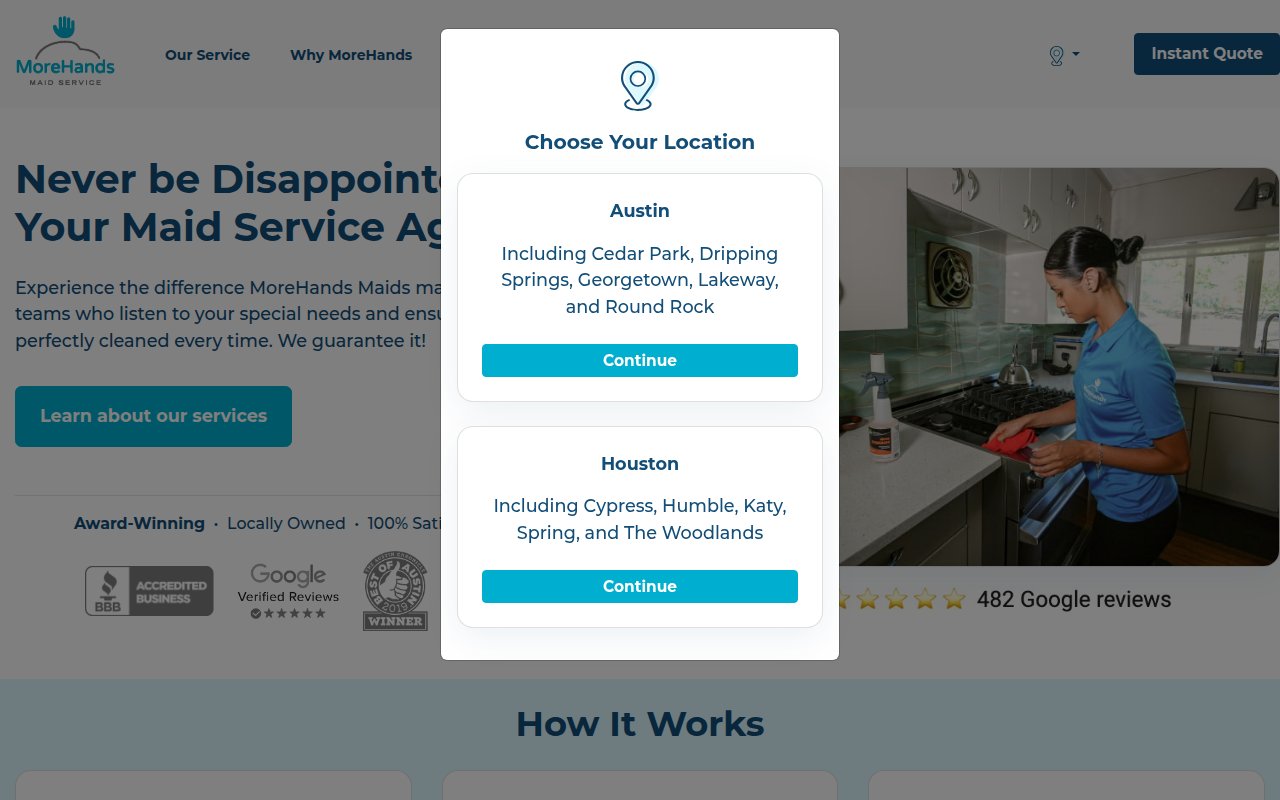
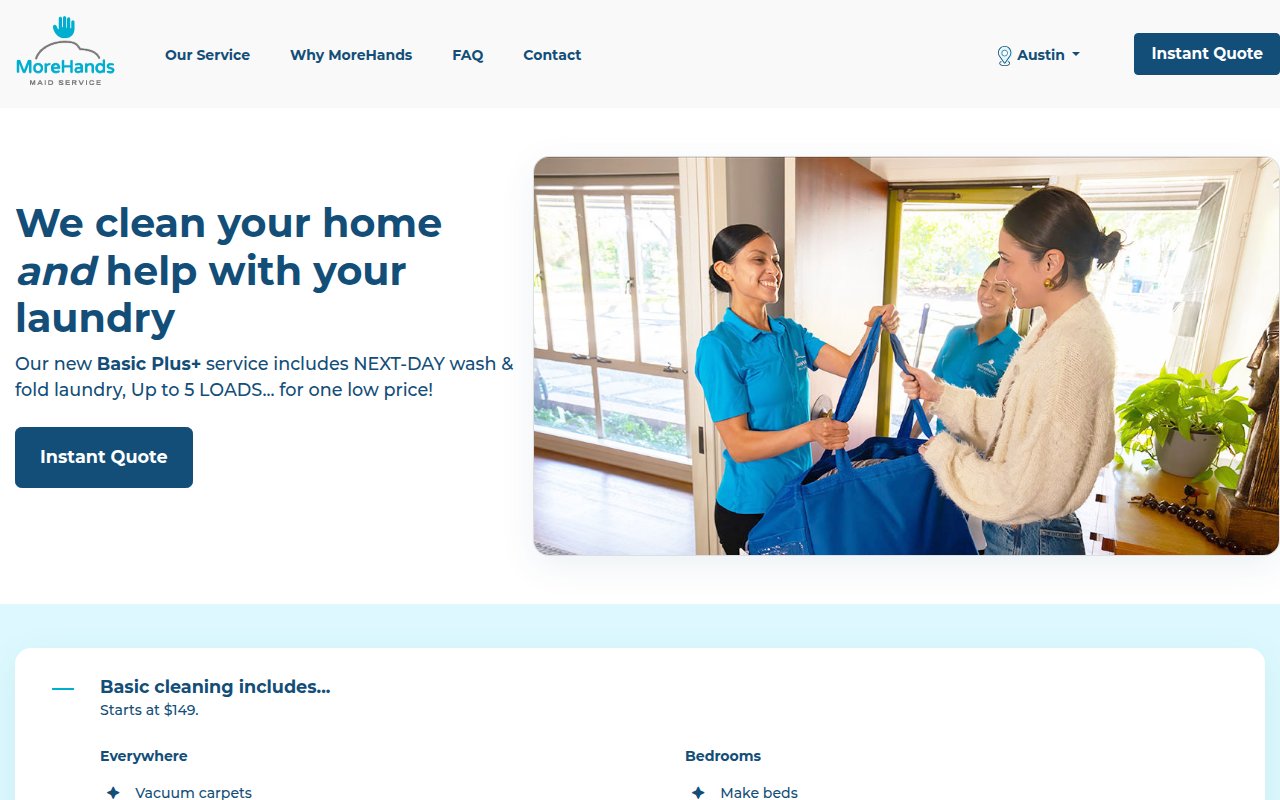
MoreHands backs their no-cancellation promise with a $100 penalty if they break it. Attaching a dollar amount to a specific failure condition is more convincing than a generic “100% satisfaction guaranteed.”
25 years of family ownership, dedicated teams instead of rotating strangers, and service area pages covering Austin and Houston suburbs. Built on custom PHP.
Homeaglow
Tech marketplace with A/B-tested funnels
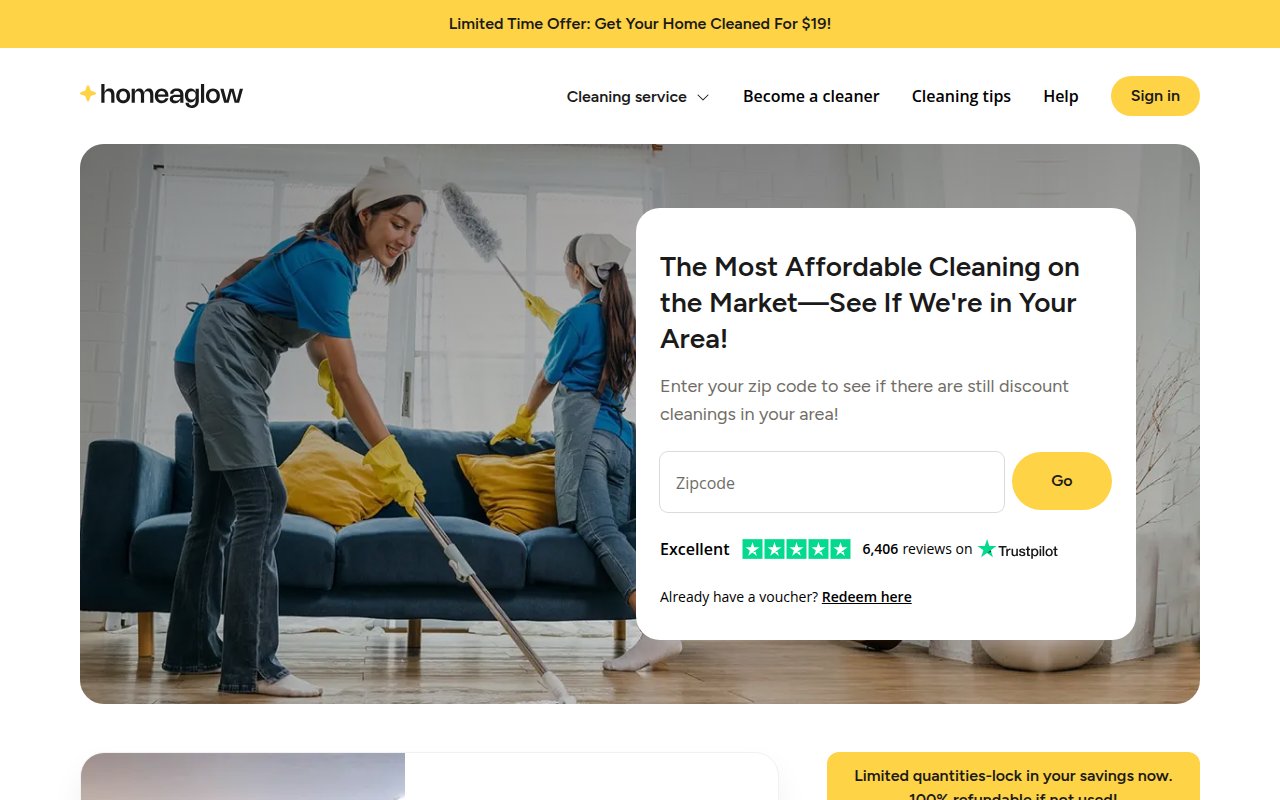
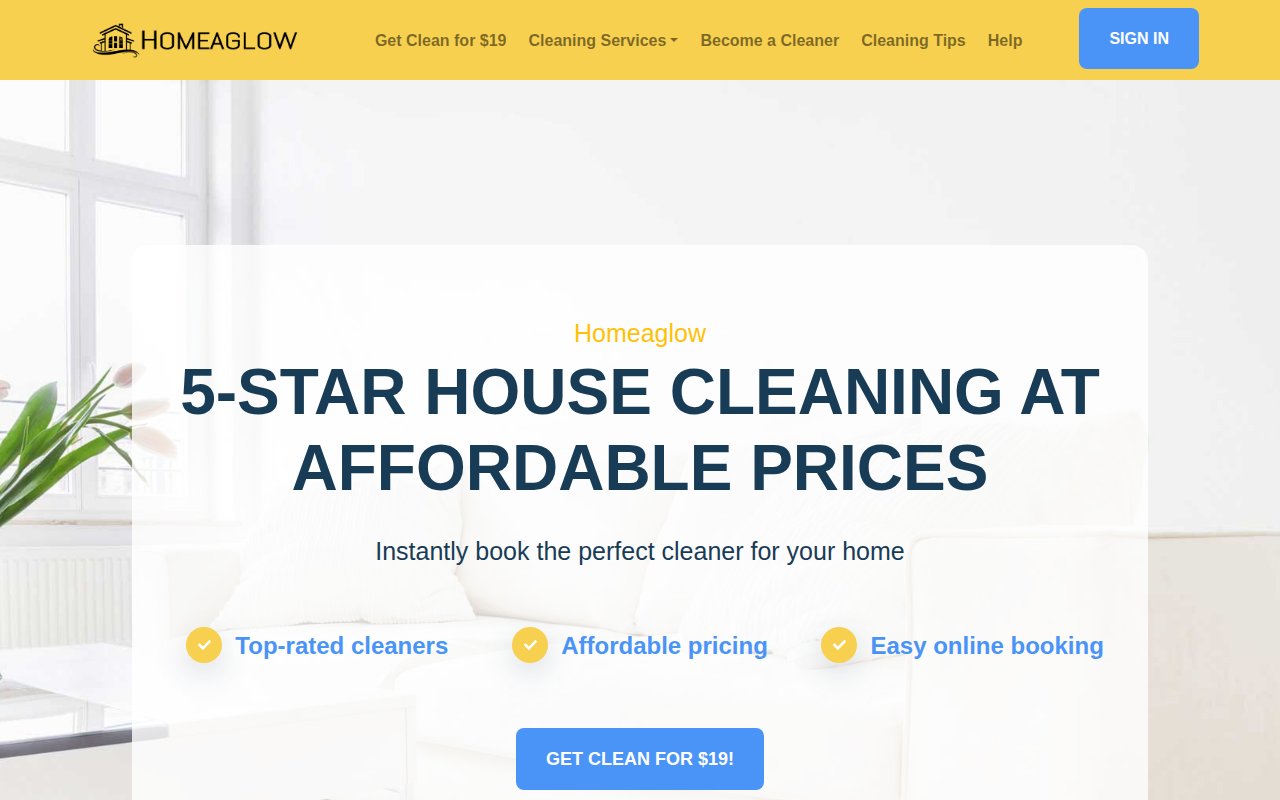
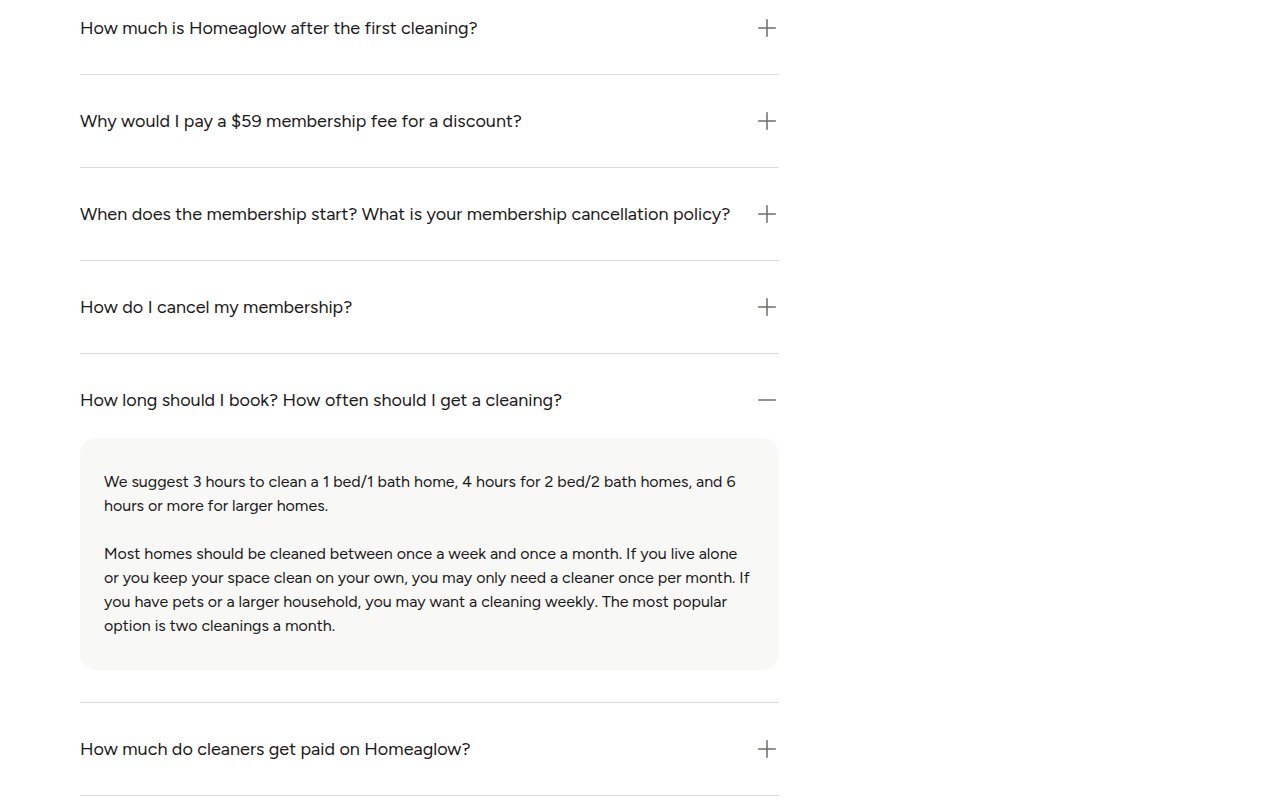
Homeaglow is a tech marketplace connecting customers to independent cleaners, not a cleaning company itself. The conversion funnel is aggressive: promotional pricing, ZIP code availability checks, and A/B-tested flows.
Social proof here is volume-based: 4.8/5 with 4,849 Trustpilot ratings (all verified), Forbes and other major media features, and 200,000+ customers served. The marketplace model means no company story or founder narrative.
Dash of Clean
Transparent matchmaker model
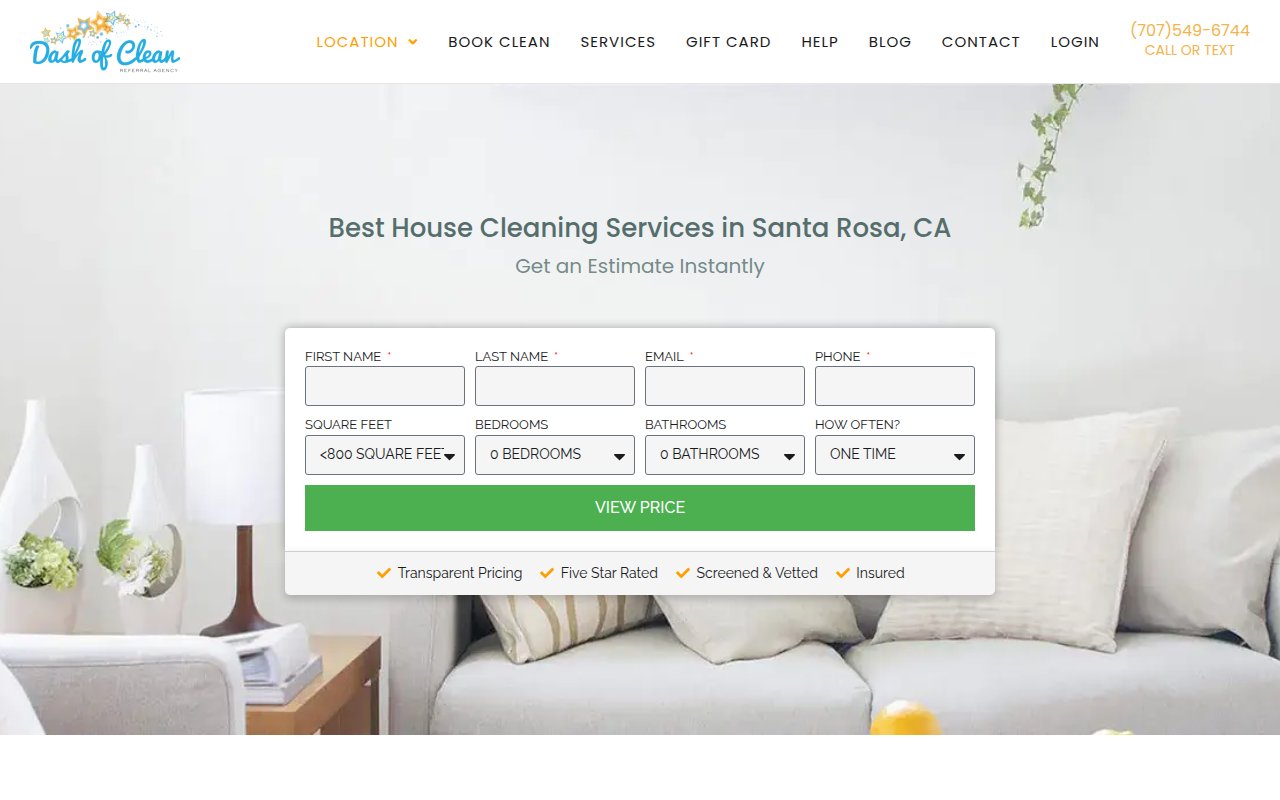
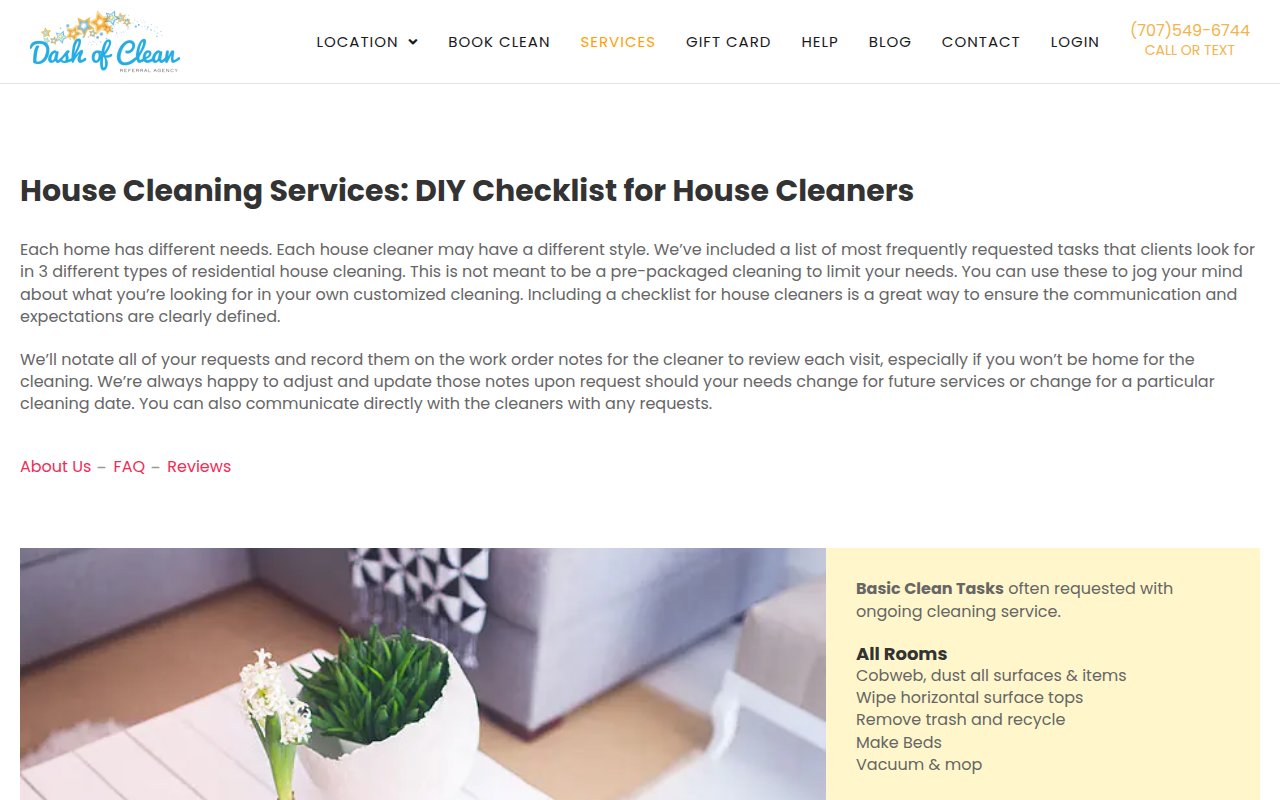
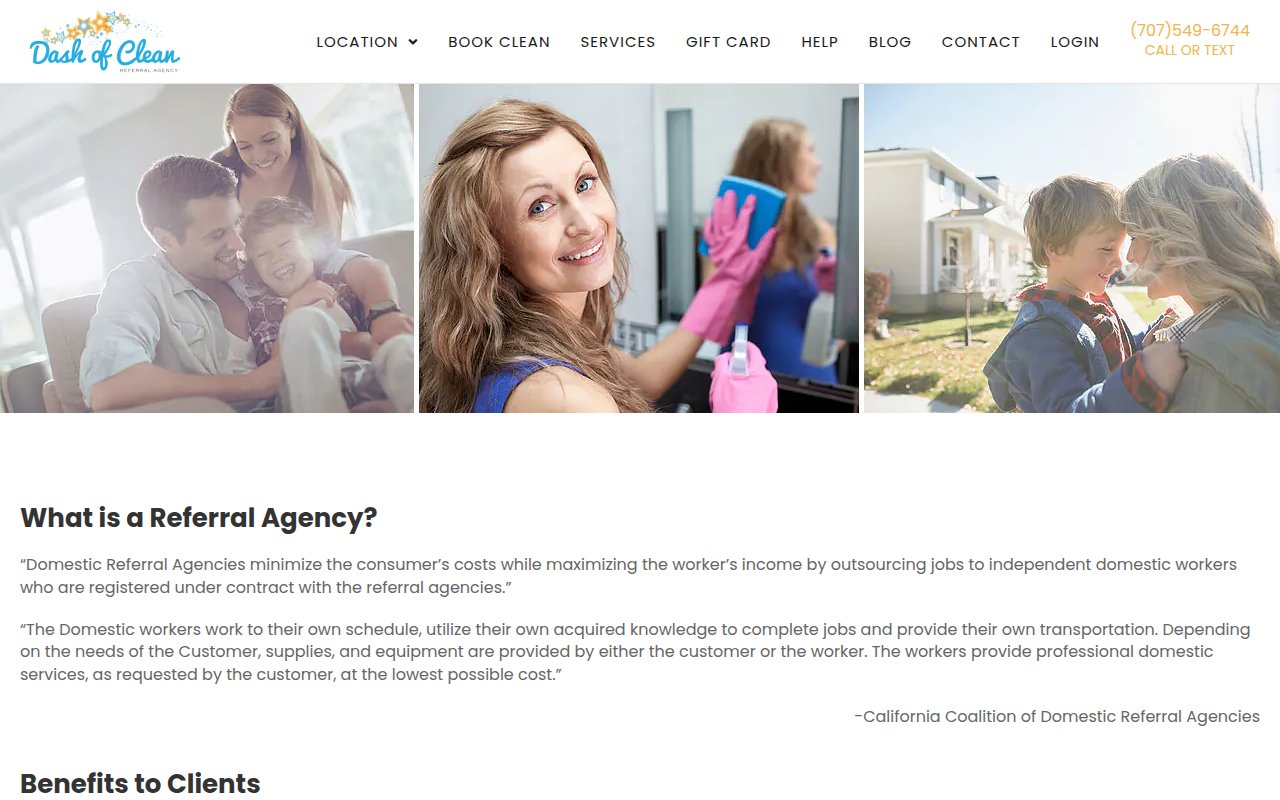
Dash of Clean doesn’t employ cleaners. It matches clients with vetted, independent maids in Sonoma County and is upfront about the model.
The homepage estimate form asks only what matters: home size, room count, and cleaning frequency, with Screened & Vetted and Insured badges next to it. Testimonials link directly to reviewer profiles on Google, Facebook, and Yelp. No blog and a thin page count beyond service areas, but for a small local referral business, that may not matter.
Tidy Casa
Frictionless room-count-to-booking flow
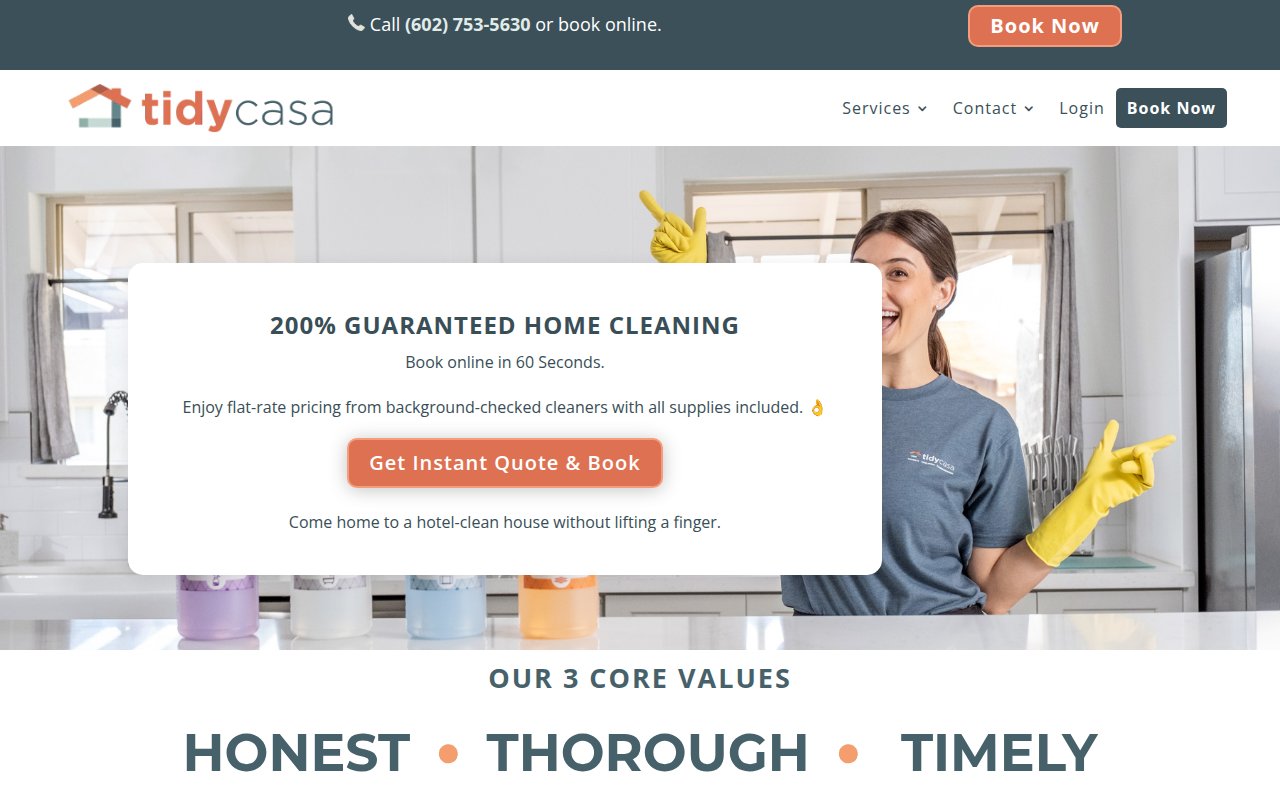
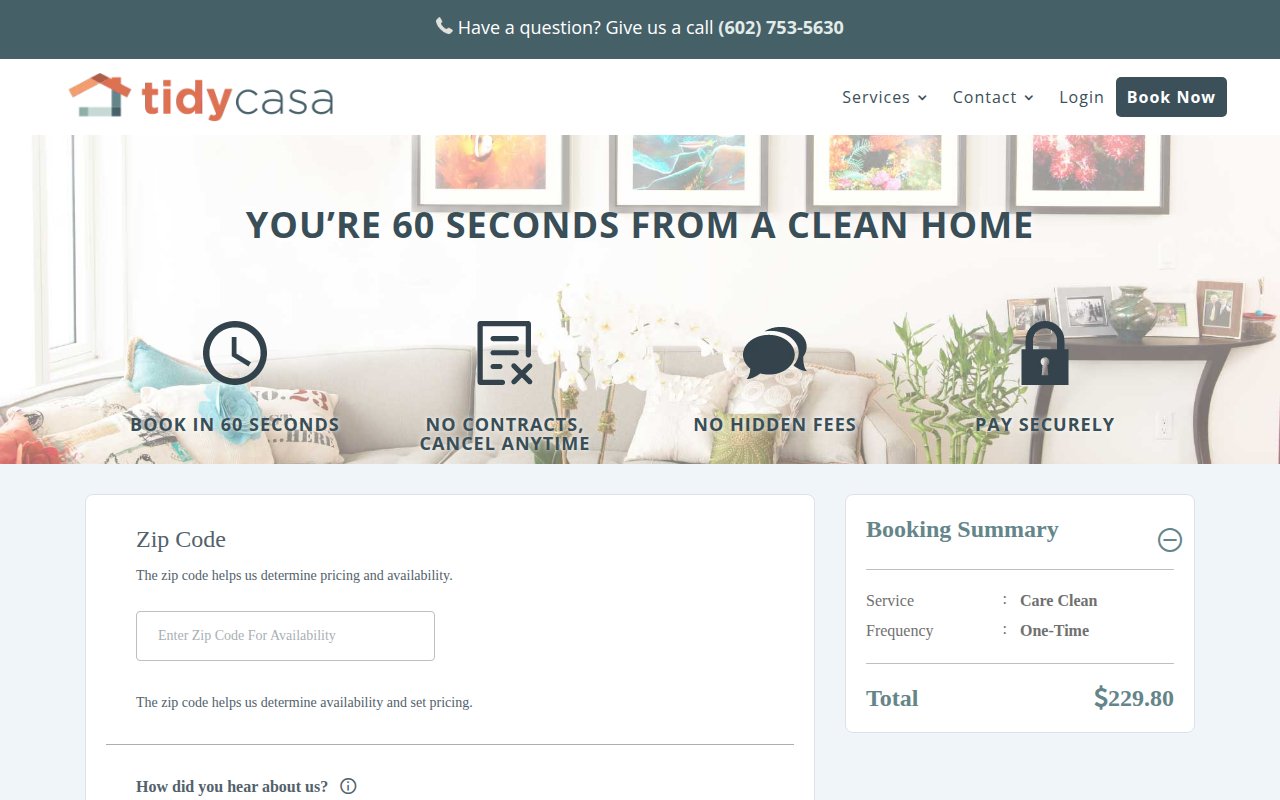
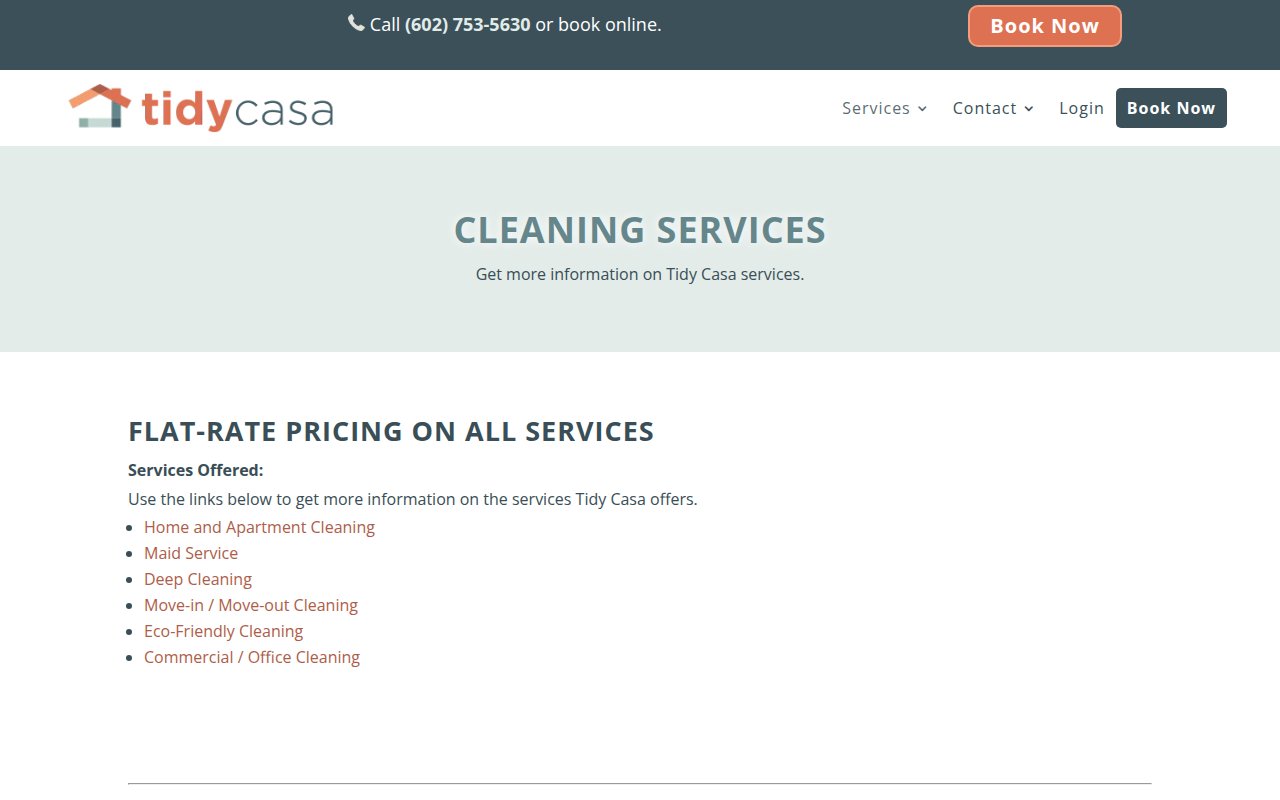
Tidy Casa stripped booking to the minimum: the page calculates a price from room count and frequency, with no in-home estimates, phone calls, or quote emails. It’s the fastest path to a booked cleaning in this group.
A 200% satisfaction guarantee and background-checked cleaners across nine Phoenix-area cities. No founder story or team photos. The site bets entirely on speed, which works for convenience buyers but leaves nothing for visitors who want to trust a person.
New York's Little Elves
Designer referrals instead of homeowner reviews
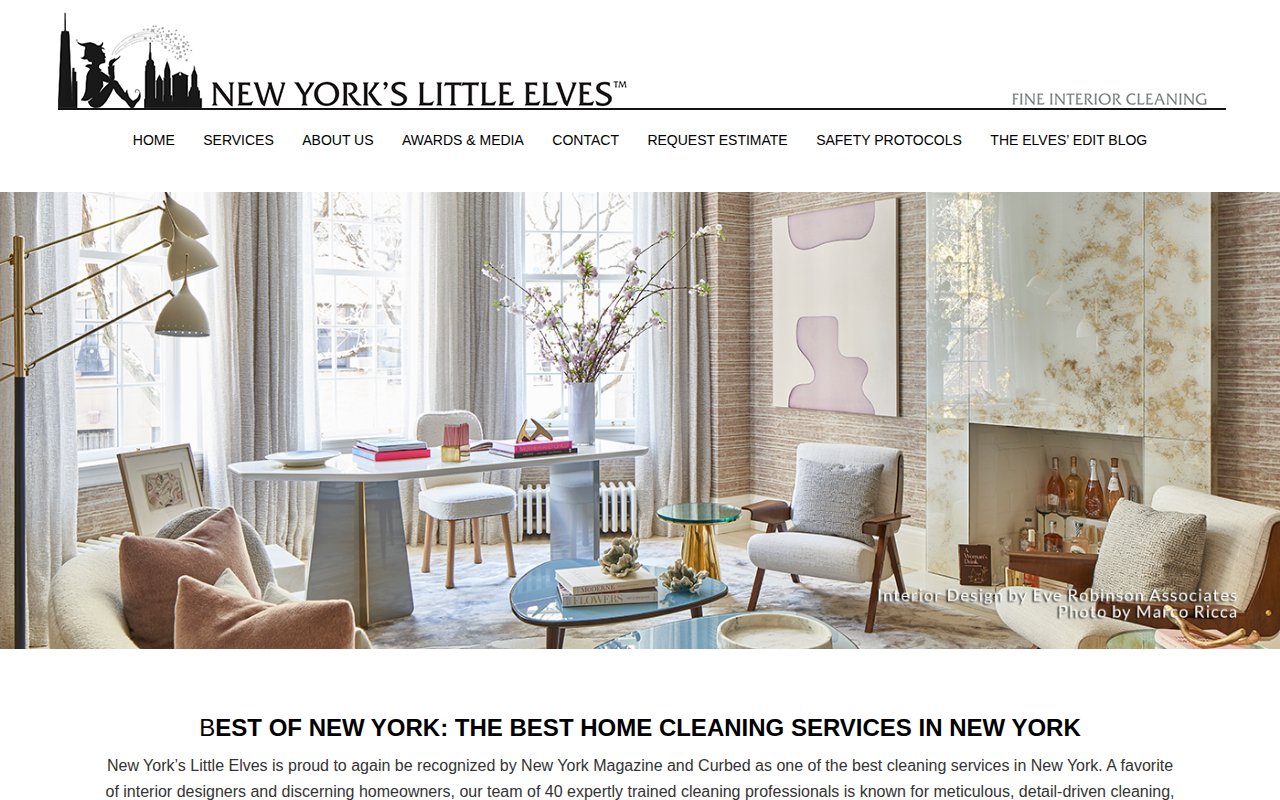
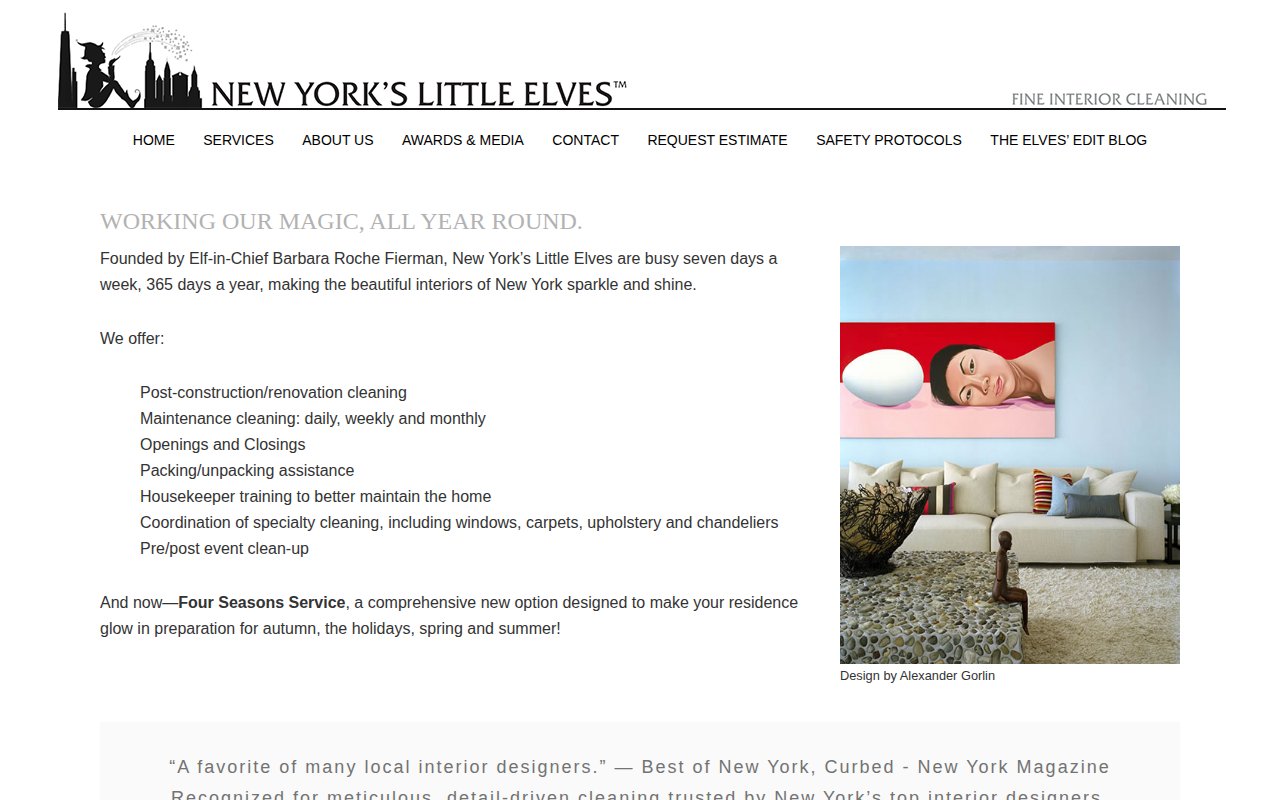
New York’s Little Elves serves a luxury niche: post-renovation cleaning for high-end Manhattan apartments and Sag Harbor homes. Their referrals come from interior designers and architects, not homeowners.
40 cleaning professionals, a minimum 10-year experience requirement for supervisors, Best of New York from Curbed/New York Magazine, and 20+ years in operation. Photography shows luxury interiors instead of stock cleaning images.
The technology is dated: WordPress with Genesis, Contact Form 7, no automated scheduling. SEO coverage is minimal, but for a company that runs on designer referrals rather than Google traffic, that may be intentional.
What the best cleaning company websites have in common
Phone number visible on every page
Nearly every top-performing site puts a phone number in the header, with local numbers on location pages. The Maids uses a vanity number (1-800-THE-MAIDS) that doubles as branding. If you do one thing after reading this article, put your phone number where visitors can see it without scrolling.
Multiple conversion paths above the fold
The strongest sites offer three or more ways to convert on every page: phone, chat, quote form, booking button. Two Maids' dual CTA approach (book vs. calculate price) captures visitors at different stages of the buying decision.
Transparent pricing or instant quoting
The sites that convert fastest show numbers upfront: Maid Marines publishes competitor comparisons, Better Life offers instant pricing, MoreHands shows quotes before you commit, Tidy Casa prices from room count alone. Transparency wins the three-tab race.
Location pages with local content
The best location pages include local phone numbers, neighborhood lists, embedded reviews, and franchise owner bios. A page that just swaps the city name in a template isn't fooling anyone. Seattle Green Cleaning Fairy's 70+ neighborhood pages are the most aggressive version of this strategy.
Embedded third-party reviews over curated testimonials
The Maids embeds raw Google reviews with dates and attribution. Molly Maid shows 1,079 reviews at 4.6 stars. Homeaglow has 4,849 Trustpilot-verified ratings. Visitors can verify these independently, which hand-picked quotes can't offer.
Founder or owner visibility
Better Life puts Angela Ricketts on the homepage. AspenClean has a founder video. Seattle Green Cleaning Fairy leads with an immigrant founder story. Franchises can't compete on personal connection, which makes this the indie operator's biggest advantage.
How to build your cleaning company website
If you’re building a cleaning company website from scratch, here’s where to focus first:
-
Put your phone number and a booking CTA in the header, on every page. This is non-negotiable. Every site that converts well does this. If you serve specific cities, show the local number on location pages rather than a national line.
-
Show your pricing or offer instant quotes. The visitor has three tabs open. The company that shows numbers first wins. If you can’t show exact pricing, build a calculator that estimates from home size, room count, and frequency. Maid Marines’ competitor comparison table and Tidy Casa’s room-count pricing are the two best approaches we found.
-
Build a location page for every city or neighborhood you serve. Include your local phone number, physical address (if applicable), a list of neighborhoods covered, and a quote form or booking widget. Seattle Green Cleaning Fairy has 70+ neighborhood pages. It’s the single highest-ROI SEO investment for a local service business.
-
Embed real reviews, not curated quotes. Connect a Google Reviews widget or embed your Yelp/Trustpilot reviews with full attribution. Visitors trust third-party review platforms more than testimonials you selected yourself. If you can show a review count (like Molly Maid’s 1,079 reviews or Homeaglow’s 4,849), do it. Volume is its own social proof.
-
Show your team and tell your story. Real photos of real people in uniforms. Ideally with names. Founder story on the homepage, not buried in an about page. The biggest gap across every cleaning site we reviewed was anonymous teams. If you run an independent operation, this is your advantage over franchises.
-
Create a page for each service type. Recurring cleaning, deep cleaning, move-in/move-out, one-time, office cleaning. Each gets its own page with a description, what’s included, and a CTA. Maid Bright’s room-by-room checklists show how detailed you can get. This captures search traffic for specific queries and gives visitors a clear picture of what they’re buying.
If you’re still choosing a name for your cleaning business, our cleaning business name guide covers 500+ options organized by trust signals and pricing psychology.
Key Takeaways
- The visitor has three tabs open and will book whichever company makes scheduling easiest.
- Show pricing upfront. Maid Marines, Better Life, MoreHands, and Tidy Casa all show that transparency converts faster than "call for a quote."
- Build location pages for every city or neighborhood you serve, with local phone numbers and embedded reviews.
- Embed real Google, Yelp, or Trustpilot reviews with full attribution. Visitors can verify them independently, and high review counts carry weight that curated testimonials can't.
- Show your team with real photos and names, and put your founder story on the homepage. This was the biggest gap across the sites we reviewed, and the easiest differentiator for independents.
- Publish room-by-room cleaning checklists and a page for each service type. Visitors know what they're paying for, and you capture search traffic for specific cleaning queries.
How we picked these sites
We started with a broad scan of hundreds of cleaning company websites, filtering for companies with strong third-party signals: high Google Business Profile ratings, verified reviews on Yelp, Trustpilot, and Google, meaningful organic search traffic, and recent site updates. We also reviewed coverage from Cleaning & Maintenance Management, Cleanfax, and ISSA (the cleaning industry association) to find independent operators worth evaluating that don’t rank on page one.
From that pool, we selected dozens of the top sites and scored each on five criteria: UX quality, conversion optimization, social proof integration, team authenticity, and SEO coverage. Every site got a multi-page review covering the homepage, services page, about page, and any standout pages like location pages, booking flows, or cleaning checklists.
The sites featured here earned the highest overall scores. Each one made the cut because it does something specific well, not because it’s the “best” at everything. The goal is a collection where every site teaches a different lesson about what works for cleaning company websites.
Frequently Asked Questions
What makes a cleaning company website convert visitors into clients?
The cleaning company sites that convert best share three traits: a phone number visible on every page, an online booking or quote form above the fold, and embedded reviews with real names and star ratings. Speed matters more than aesthetics. The visitor has three tabs open and will book whichever company makes scheduling easiest.
Should a cleaning company website show pricing?
The strongest indie sites we reviewed show pricing upfront. Maid Marines publishes upfront rates on the homepage. Better Life Home Cleaning offers instant pricing. MoreHands shows quotes before you commit. Tidy Casa lets you book from a room count alone. Transparency builds trust faster than 'call for a quote' ever will. If you can't show exact pricing, at minimum show the factors that affect cost (home size, frequency, service type) so visitors know what to expect.
What platform should I use to build a cleaning company website?
WordPress, Squarespace, and Webflow were by far the most common platform choices among the 100+ sites we initially reviewed to compile this page. WordPress with Elementor is the most common choice for independents because of plugin availability and cost.
 Home Care Websites: 10+ Design Examples (2026)