
A marketing consultant’s website is their first case study. Every CTA, headline, and piece of proof is either evidence for or against hiring them.
We reviewed dozens of independent consultant sites. The ones winning clients aren’t the prettiest. They’re the most specific about who they serve, what results they’ve delivered, and how to start a conversation.
Taylor Scher
Published pricing and anti-agency positioning

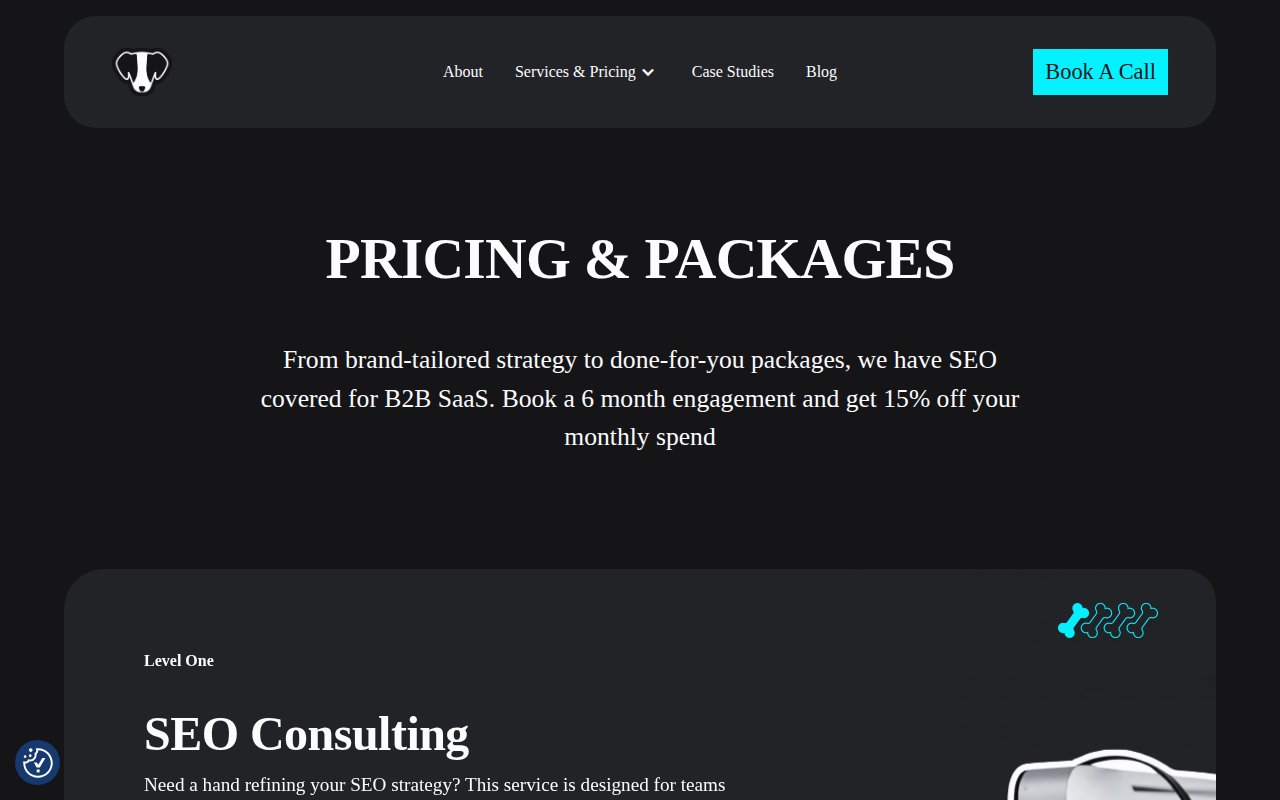
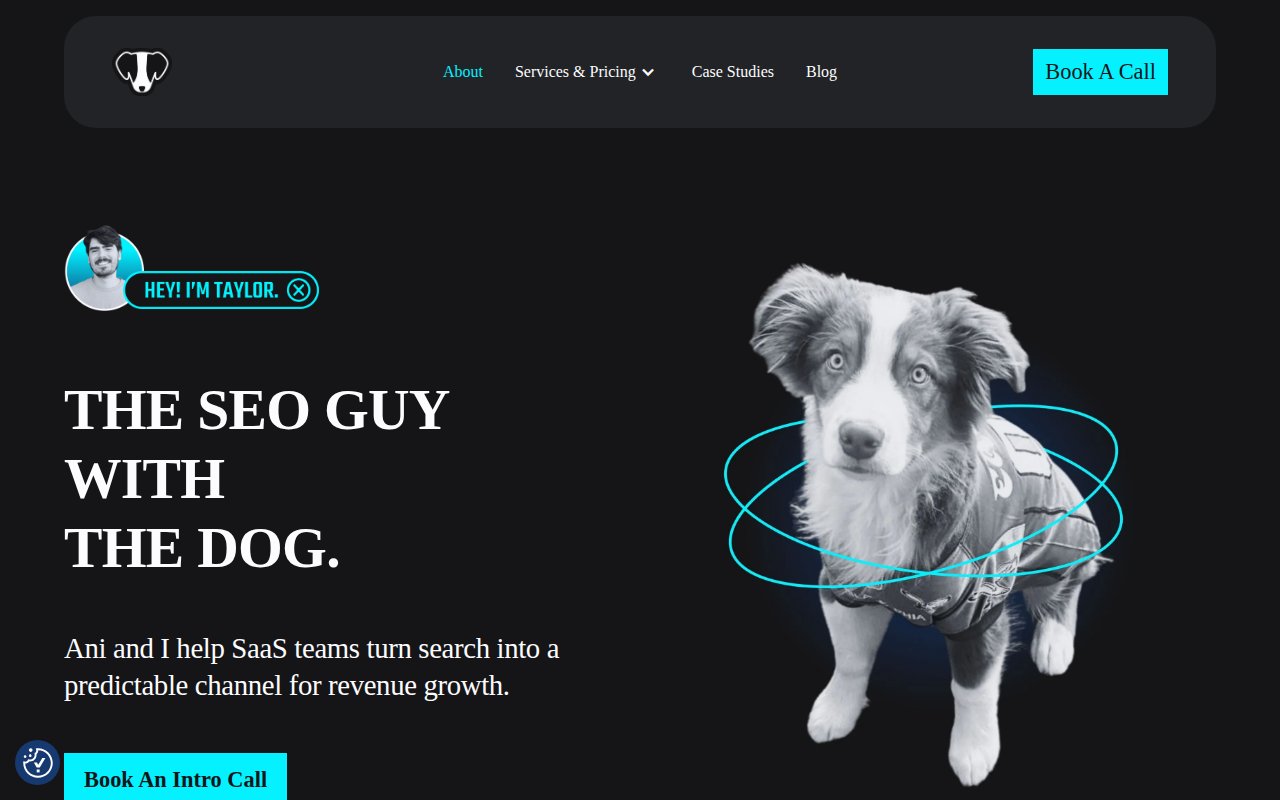
Taylor Scher’s homepage opens with a direct anti-agency pitch, promising results where agencies have failed. The dark design stands out, and the homepage puts real numbers front and center: +$132K ARR, +150% demos, +333% bookings, all above the fold.
His pricing page is equally direct. Four tiers from $3,500 to $10,000/month, each precisely scoped. Month-to-month contracts, no lock-in. “The SEO Guy With The Dog” personal brand (his Australian Shepherd appears as “CBO” throughout) makes a two-person operation feel intentional.
The all-caps aesthetic won’t appeal to conservative B2B buyers. He knows his audience and doesn’t care about the rest.
Ward van Gasteren
Three-time Best Growth Freelancer
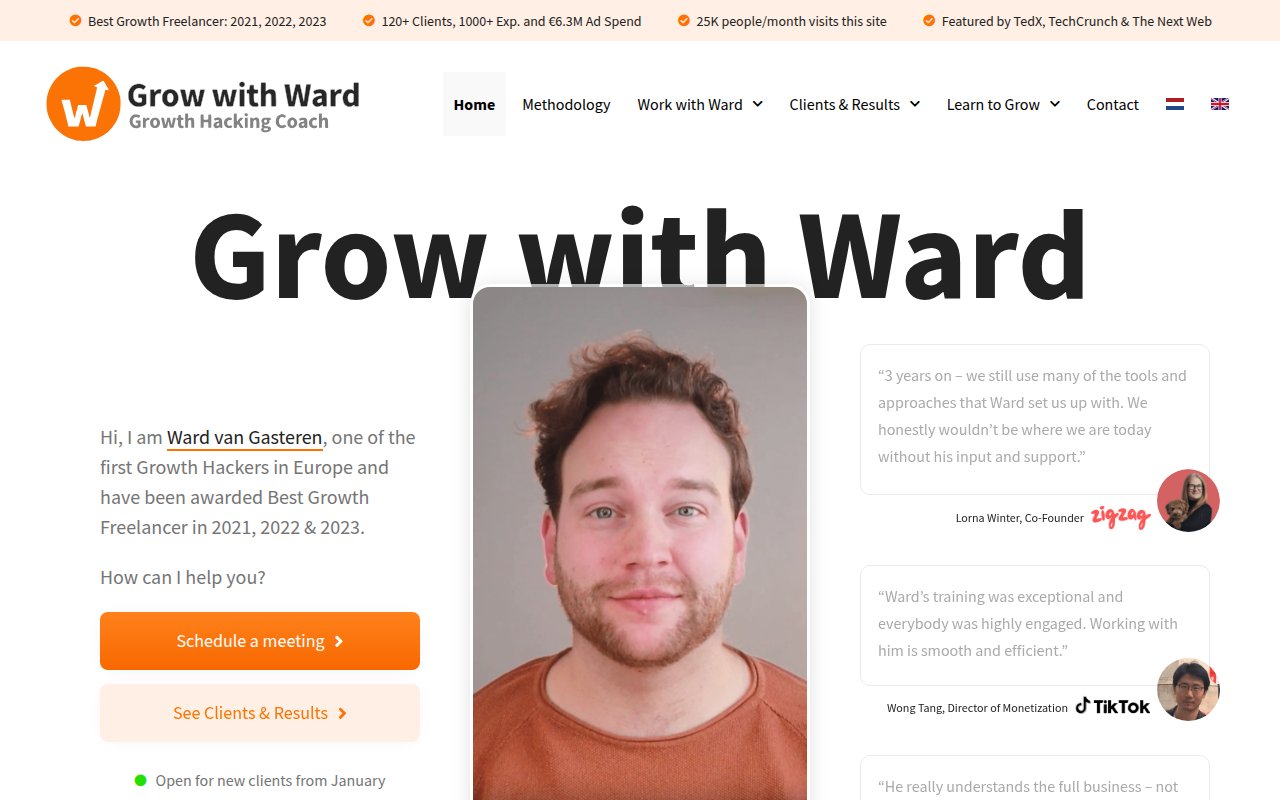
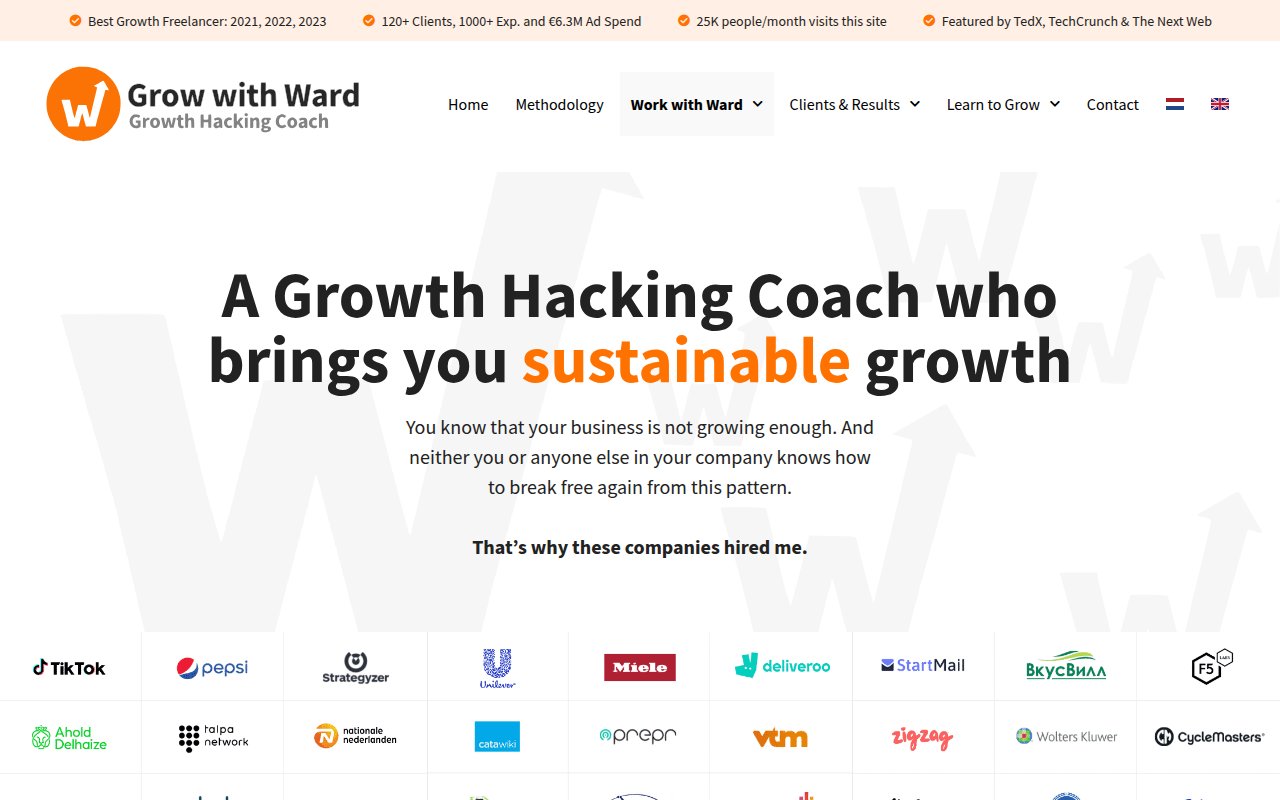
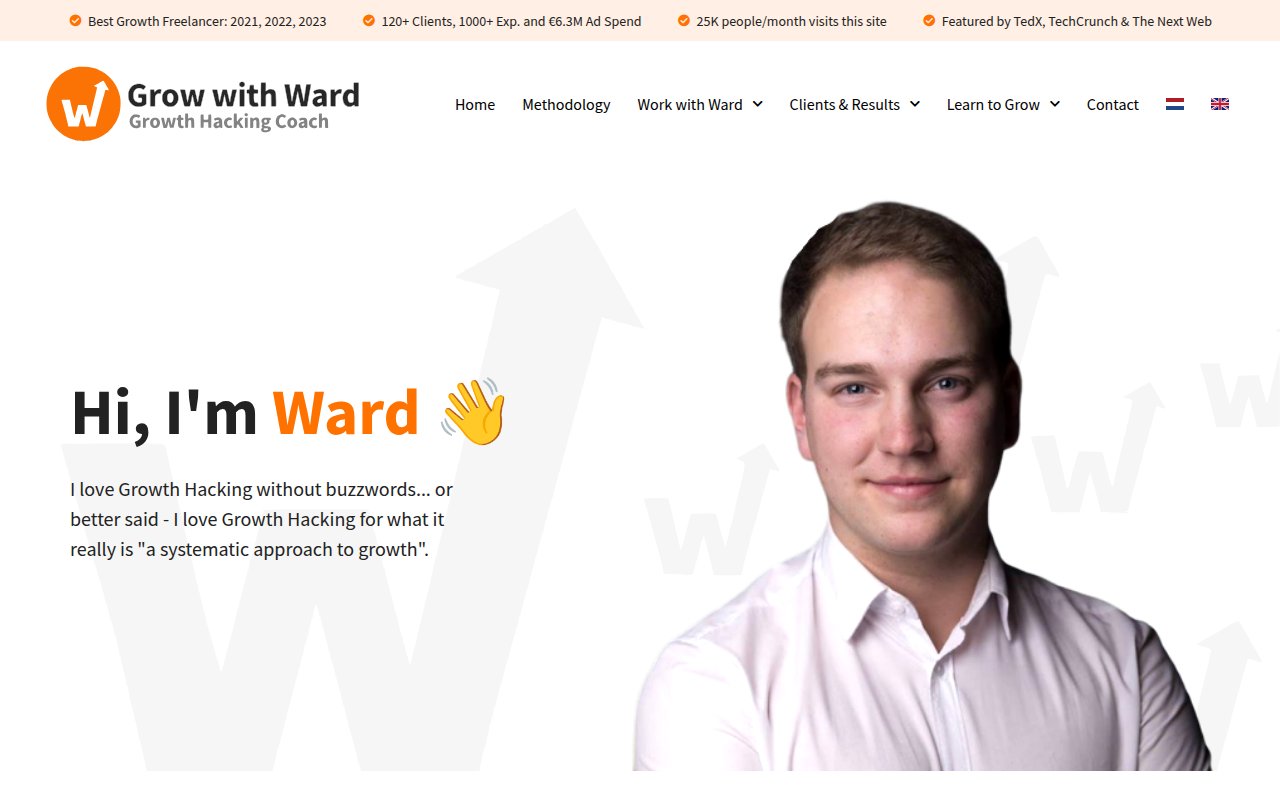
Ward van Gasteren’s trust bar runs across the top of every page with three consecutive Best Growth Freelancer awards, client count, and monthly traffic. By the time you’ve read a sentence, you’ve already seen the awards, client count, and traffic. TikTok’s Director of Global Monetization Strategy calls his guidance “exceptional,” and a client reports 73% lower acquisition costs and 3.5x higher conversion rate.
Scarcity signals reinforce the positioning: a maximum of 2-3 clients at a time. He positions quality as his only marketing channel, and it’s believable because the credentials already prove the demand.
The weakness is depth on methodology. The FORWARD framework page is mentioned but doesn’t go deep enough to differentiate his process from other growth frameworks.
Mike Rizzo (MarketingOps.com)
Side project as consulting calling card
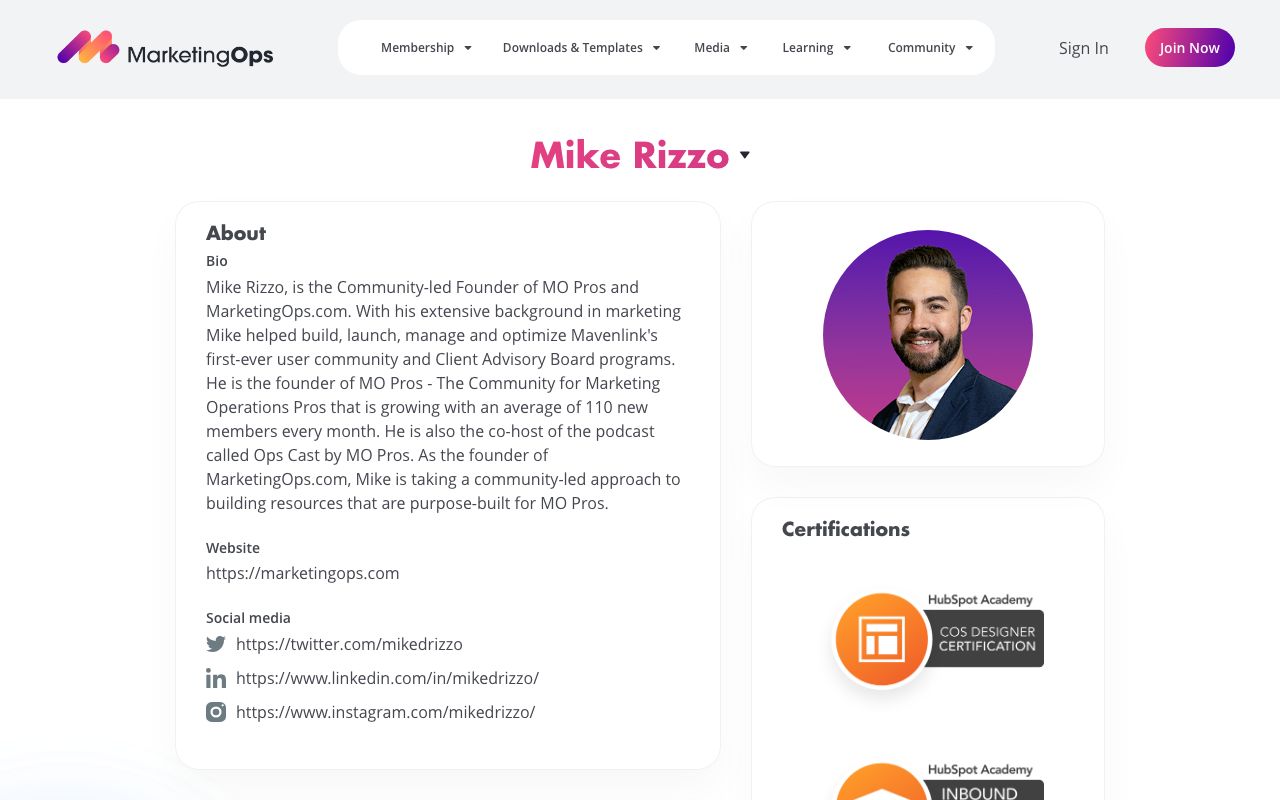

Mike Rizzo never built a consulting website. Instead, he built MarketingOps.com, a community platform for Marketing Operations professionals with 4,000+ members, a Slack group, a podcast (Ops Cast), courses, templates, and local chapters. His profile page on that platform is his calling card. Google his name and it’s what comes up.
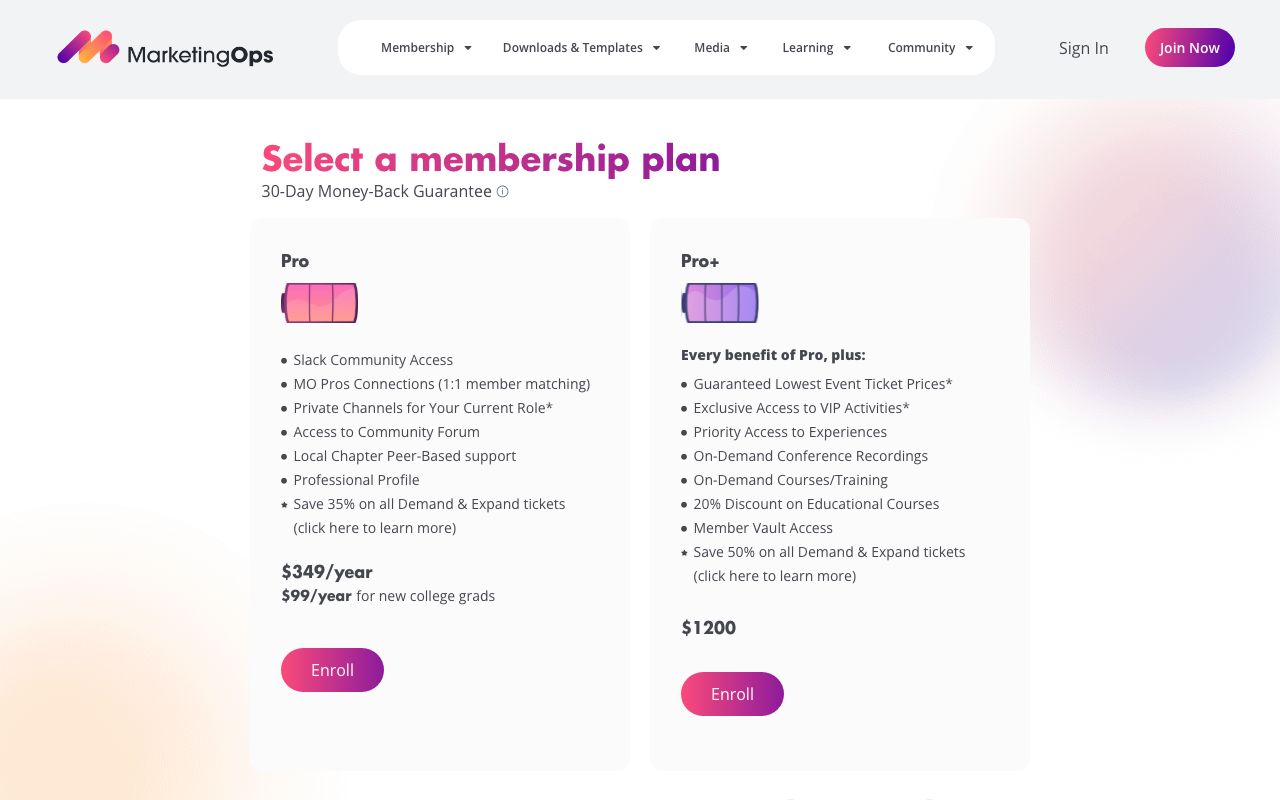
The business model is the interesting part. Membership runs $349/year for Pro and $1,200 for Pro+. Beyond his consulting work (which runs through a separate firm, GNW Consulting), Mike has built recurring revenue from memberships, templates, events, and educational content. The side project became the main thing.
Claire Jarrett
Google Ads author with full content ecosystem
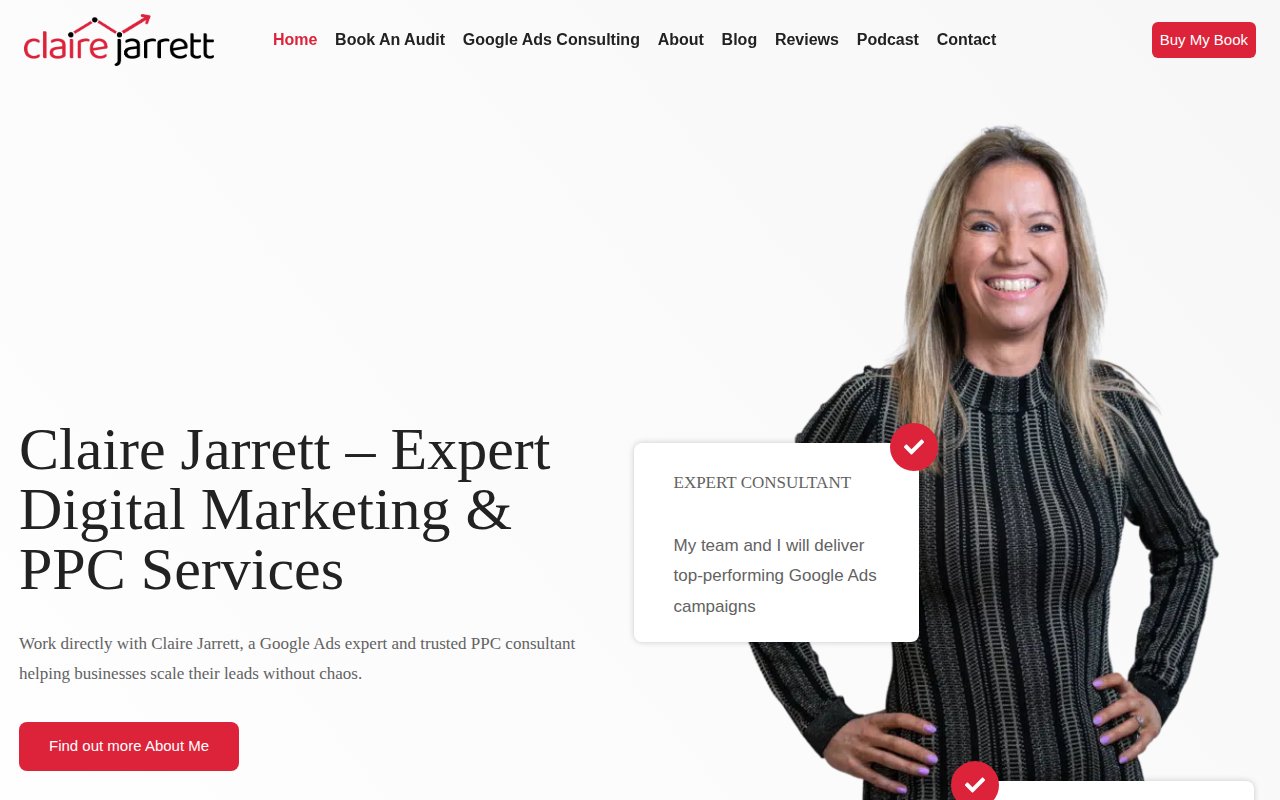
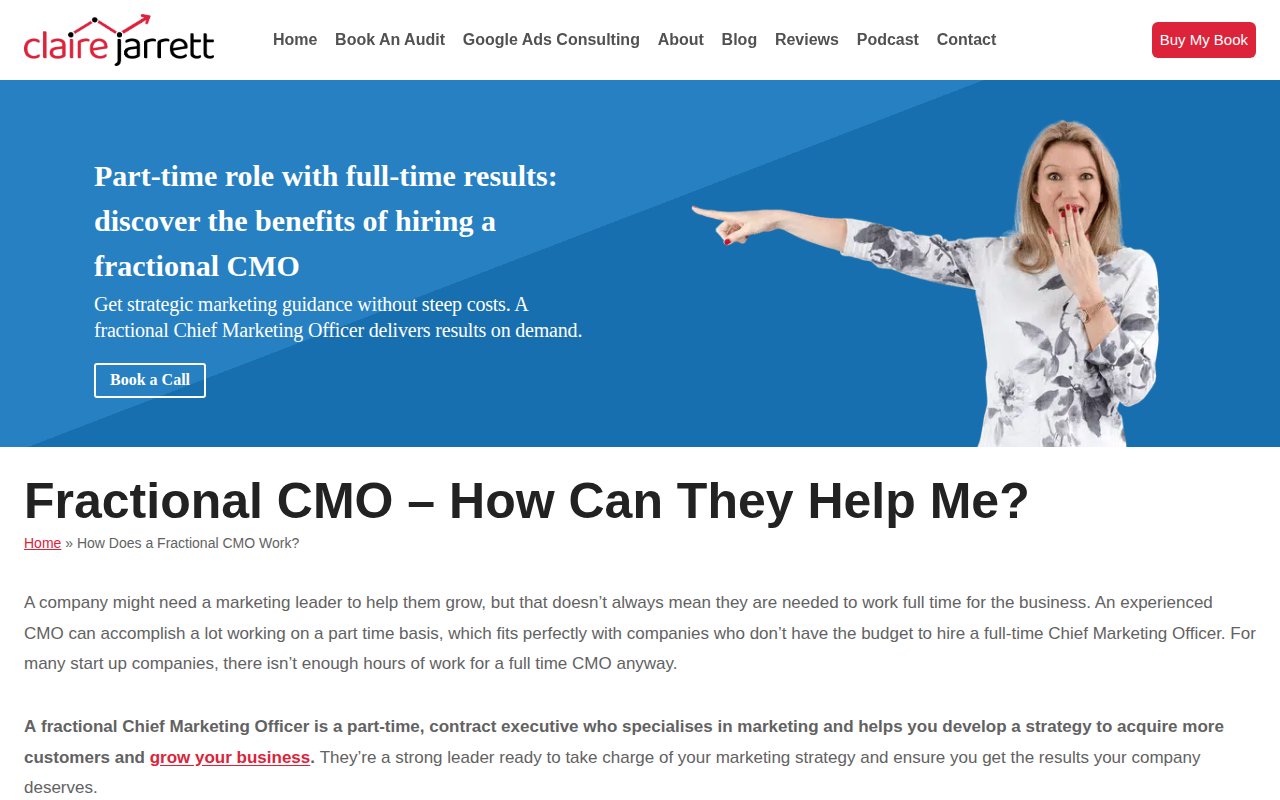
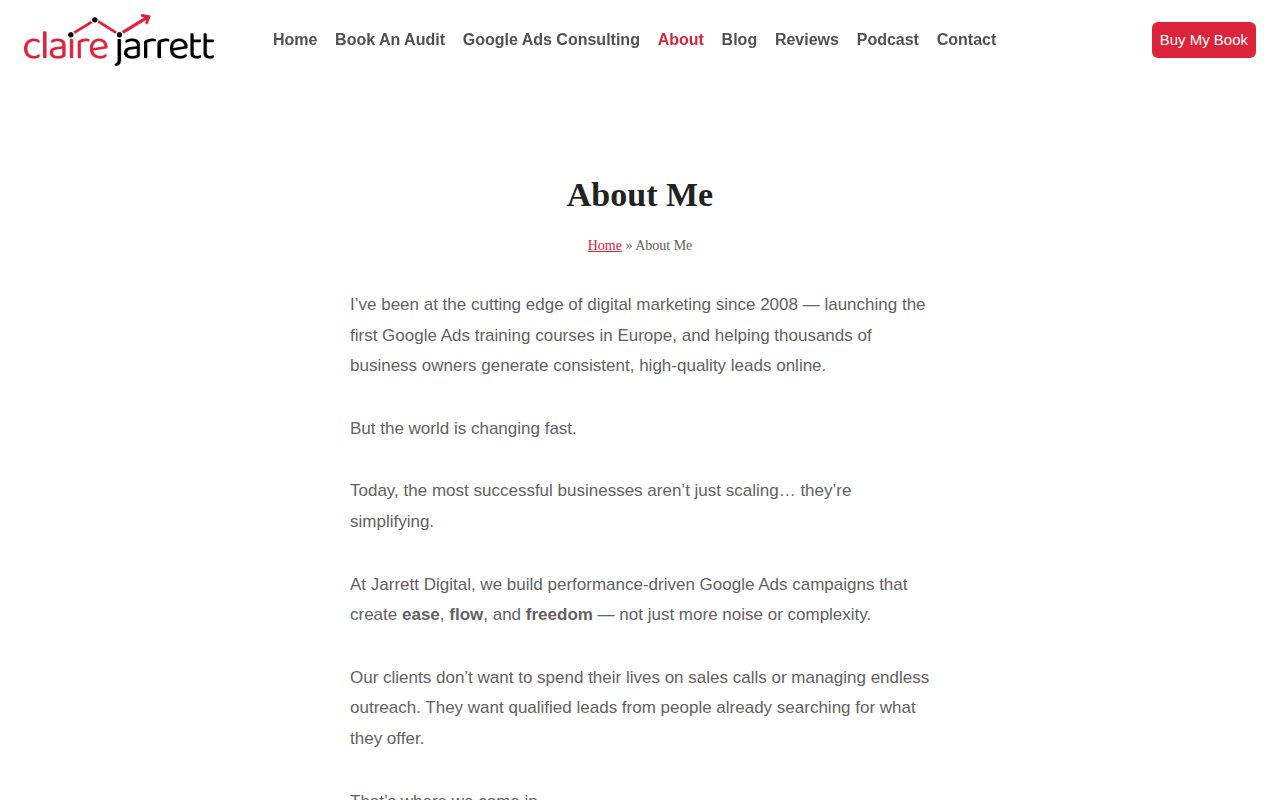
Claire Jarrett puts “Buy My Book” right in her main navigation. Her homepage doubles as an educational resource, listing the specific Google Ads mistakes she finds most often in audits.
She’s built separate landing pages targeting “Google Ads Consultant,” “PPC Consultant,” and “Fractional CMO,” each optimized for different search queries.
The breadth is also the weakness. Google Ads specialist, Fractional CMO, LinkedIn Ads, B2B marketing consultant. The positioning gets diffuse when you try to be the expert at everything.
Asia Orangio (DemandMaven)
Customer research as the growth engine
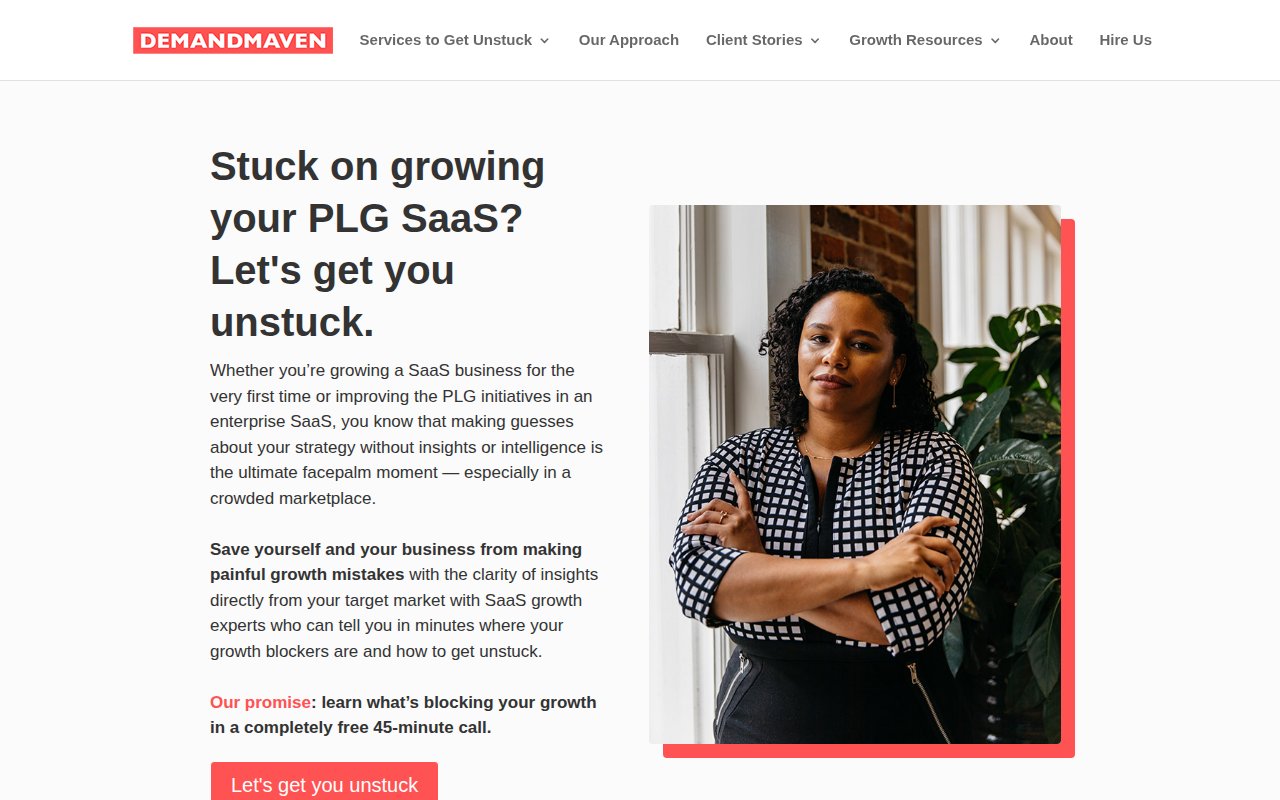
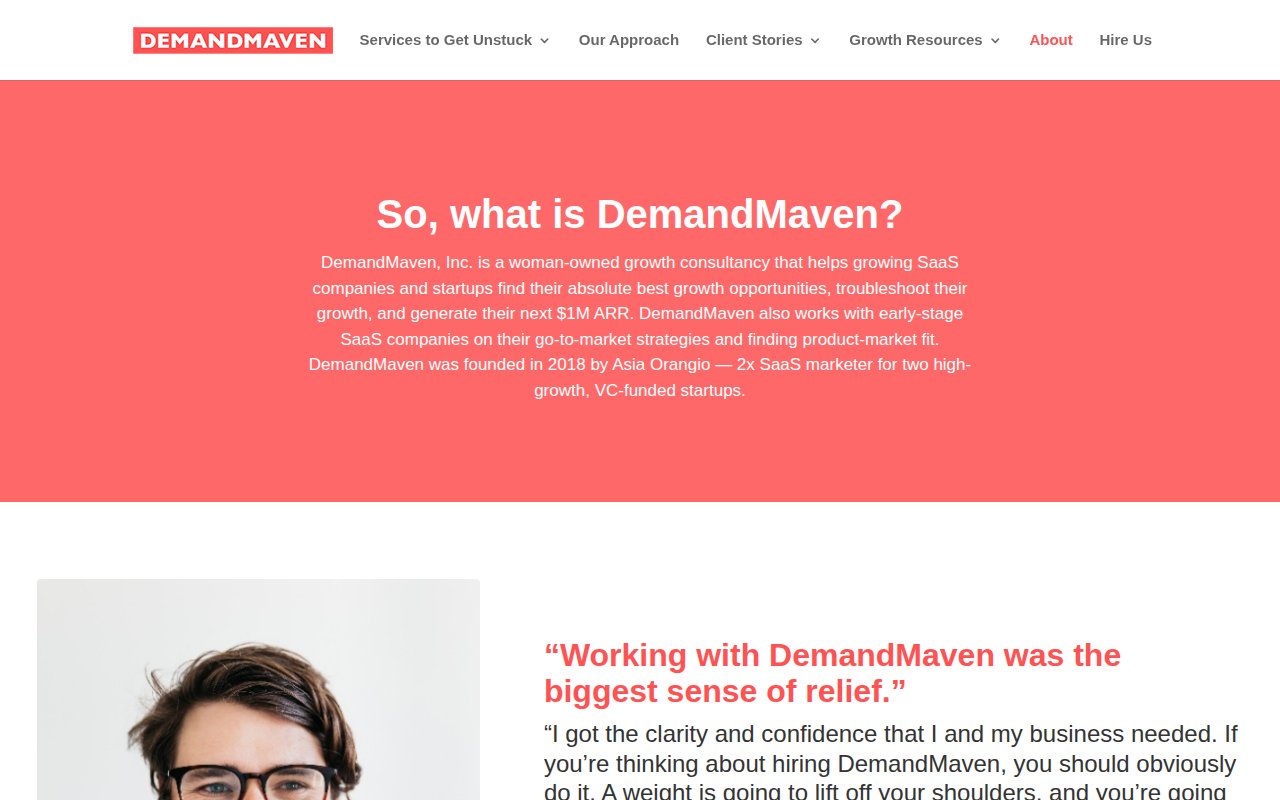
DemandMaven shows what happens when a solo consultant builds a proper consultancy brand. Asia Orangio leads with her face and SaaS-specific language that makes it obvious who this is for. An April Dunford endorsement and named case studies from companies like SparkToro with measurable outcomes back up the positioning.
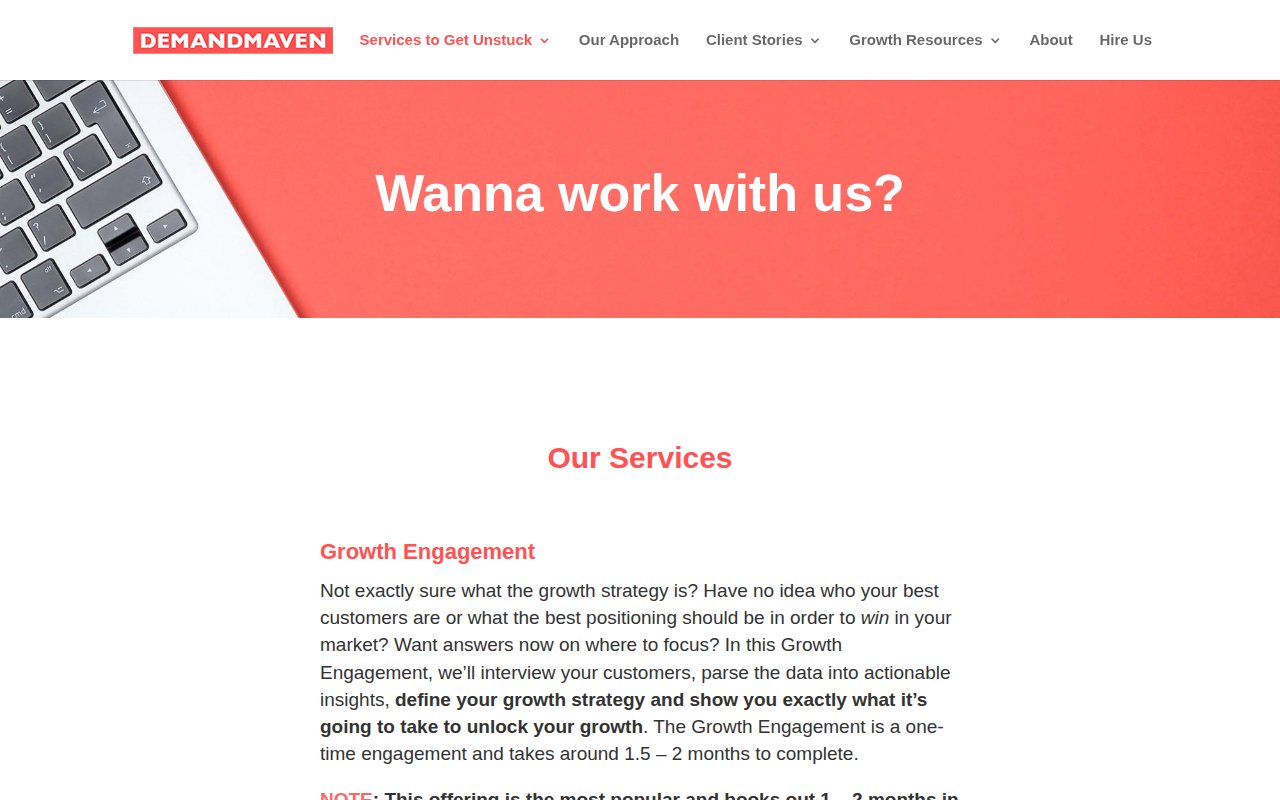
The service architecture is well structured. A one-time Growth Engagement (1.5-2 months) leads into a Growth Retainer ($5K+/month), but only after completing the initial engagement. This creates a natural progression and protects against scope creep.
The tradeoff is discoverability. Asia also runs a separate personal site (asiaorangio.com), which splits her online presence. Searching her name surfaces two competing properties.
Brian Honigman
Consultant, coach, and trainer in one
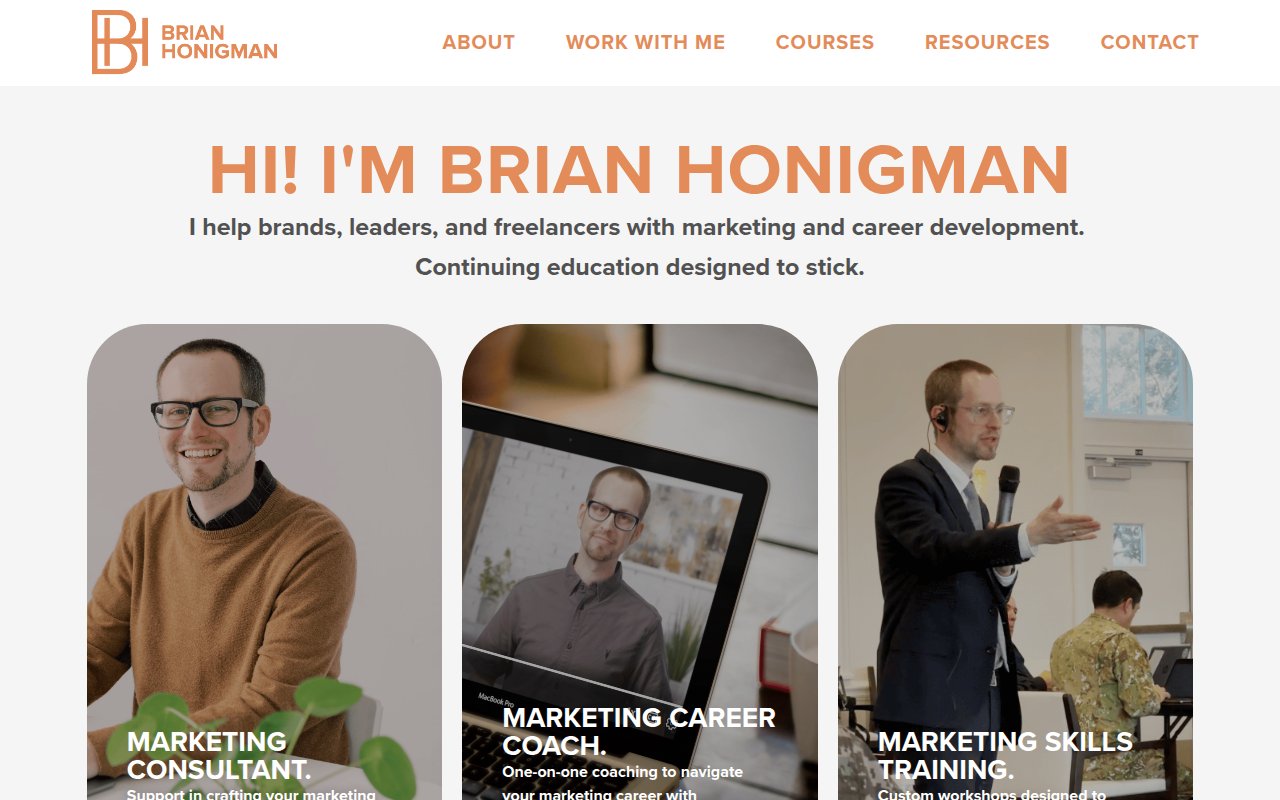

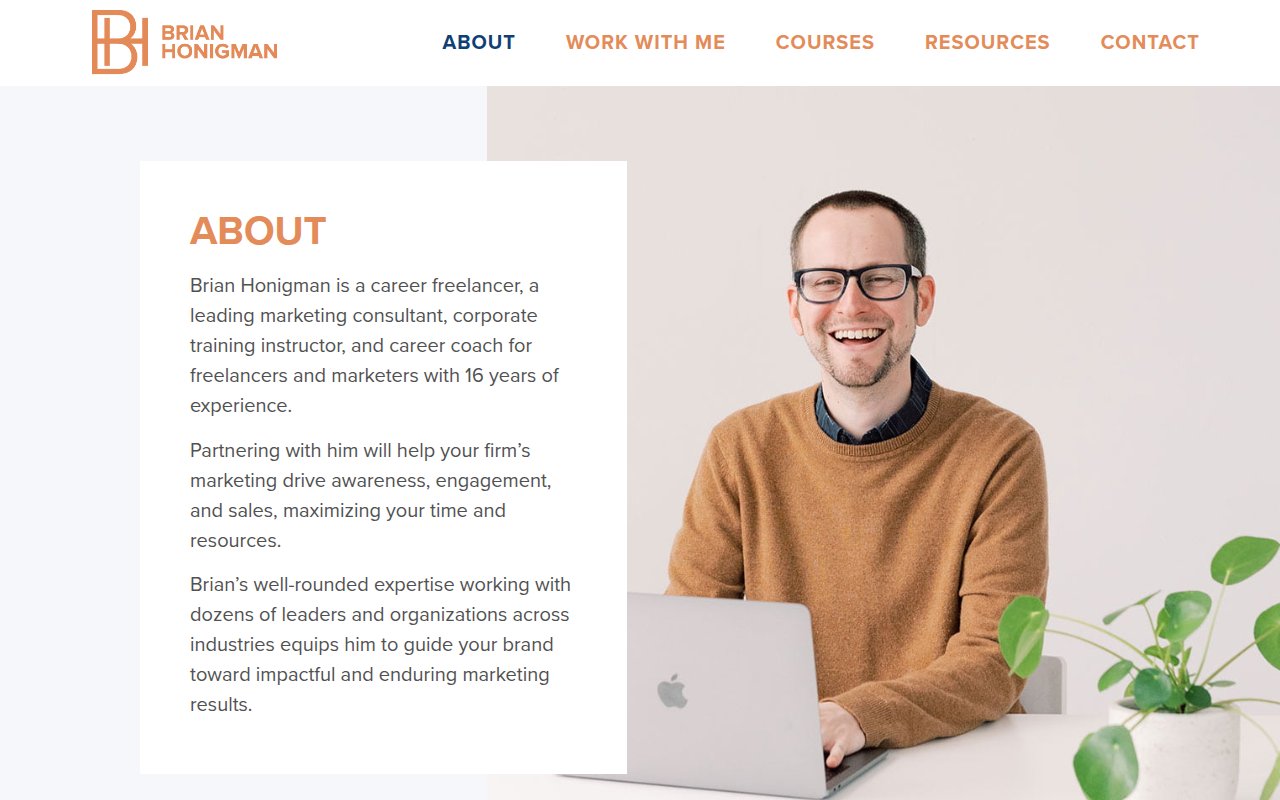
Brian Honigman splits his homepage into three distinct pillars (consulting, coaching, and training), each with a contextual photo. Social proof is organized by sector. Tech clients (Zillow) sit next to nonprofits (NATO) and media (Thomson Reuters). His Kellogg and NYU adjunct credentials plus 950,000+ LinkedIn Learning students round out the credibility.
The missed opportunity is ownership. The newsletter lives on Substack rather than his own domain, which means traffic and subscribers building someone else’s platform instead of his.
Michael Cottam
Bills by the minute, endorsed by Rand Fishkin
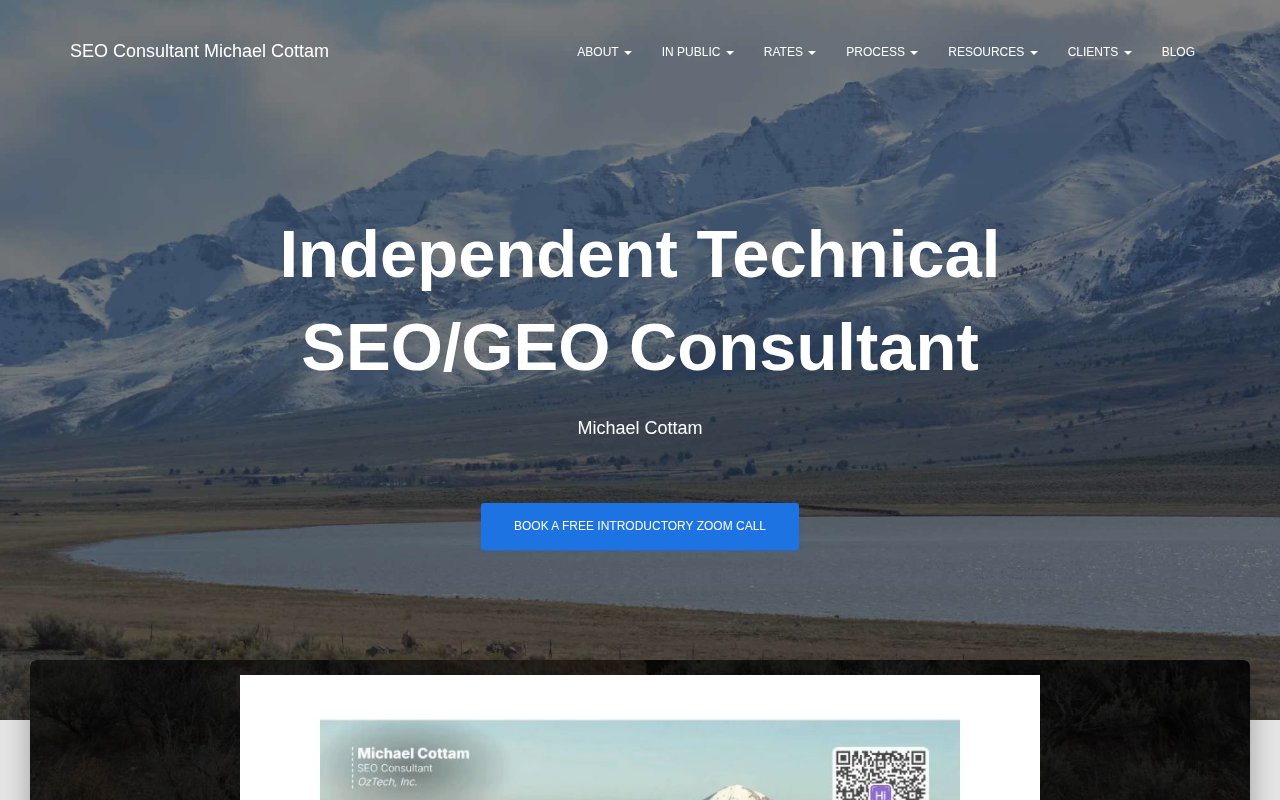
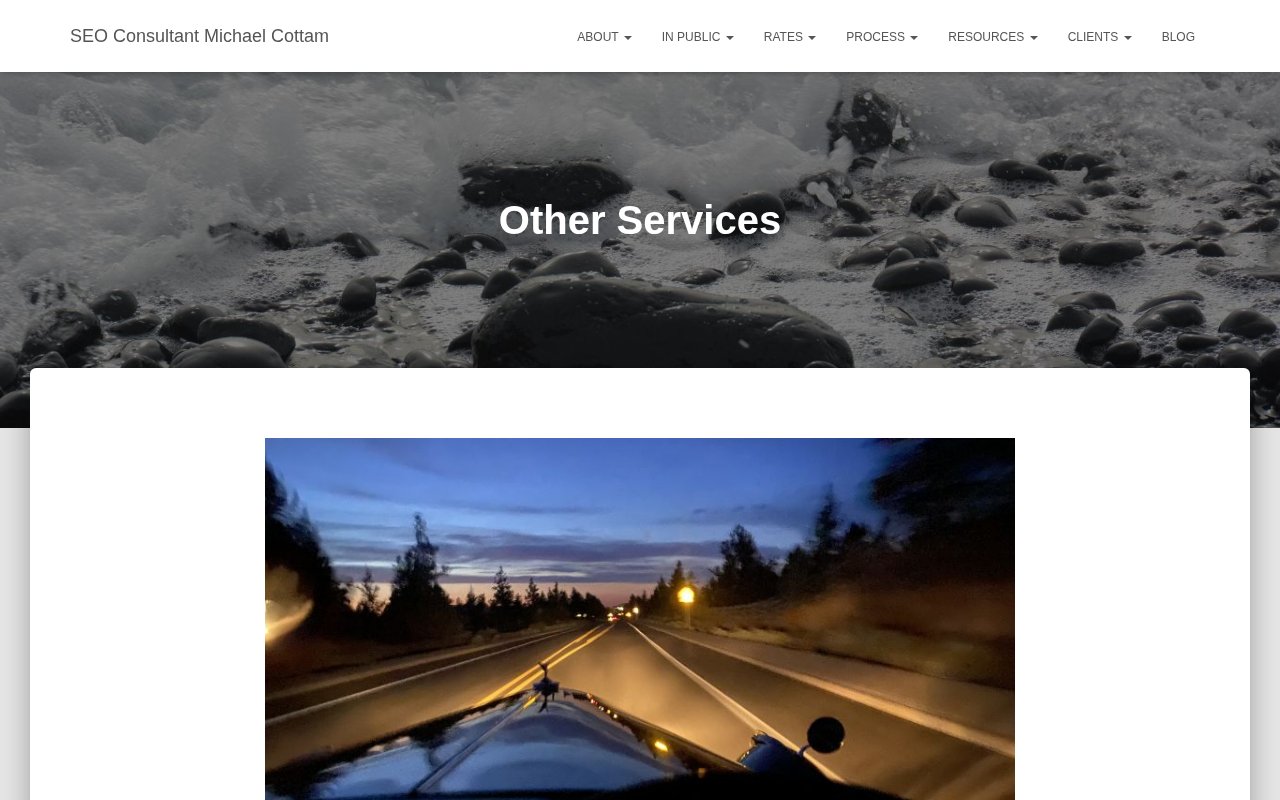
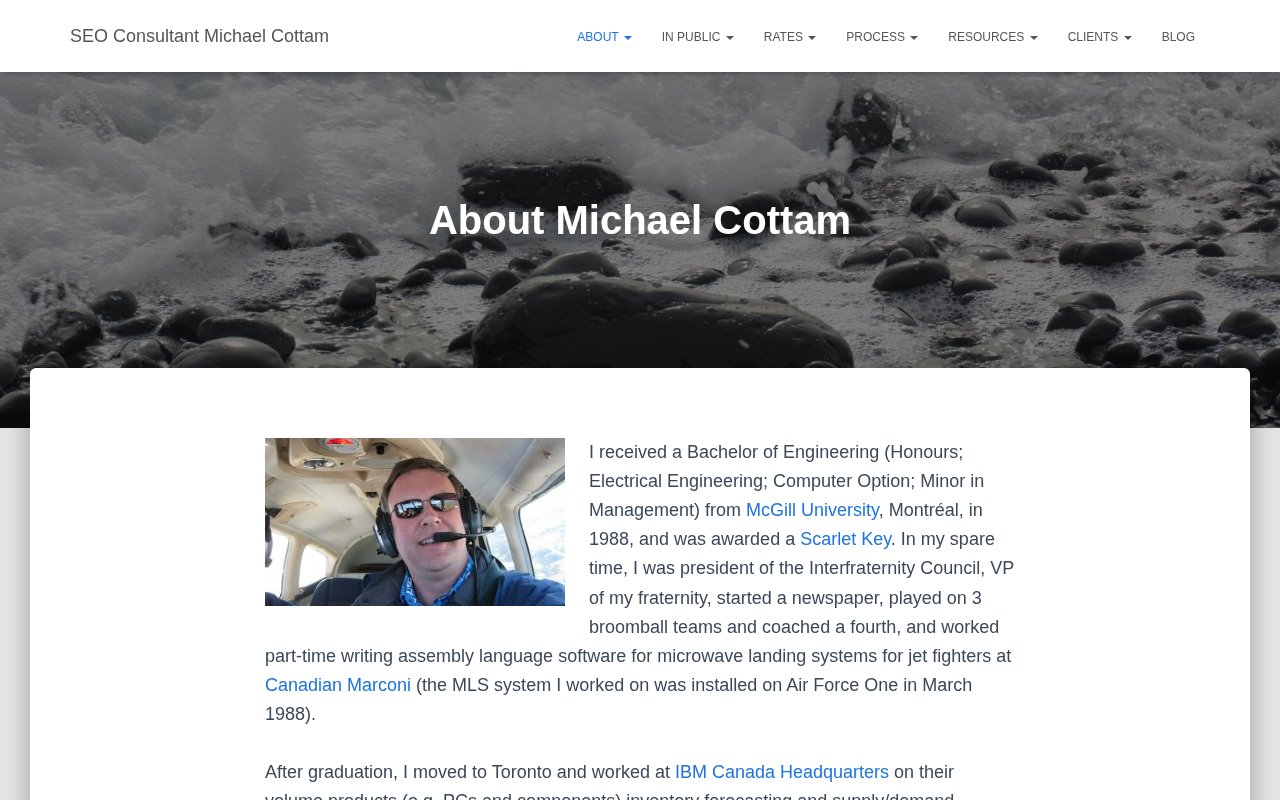
Michael Cottam’s site is the most content-rich in this collection and the least visually polished. The standard WordPress template won’t win design awards, but the content makes up for it. A Rand Fishkin testimonial, endorsing Cottam as someone he tried to hire at Moz, carries real weight.
His billing model is unique: no retainers, no monthly minimums, billed by the minute. He publishes every rate on a dedicated Rates page. Across 17 years and 1,400+ clients, he’s accumulated 60+ published articles and 30+ speaking engagements.
The dated design is the obvious gap, but the depth of content and published rates give prospects everything they need to make a decision.
Jess Joyce
Developer-turned-SEO bridging both teams
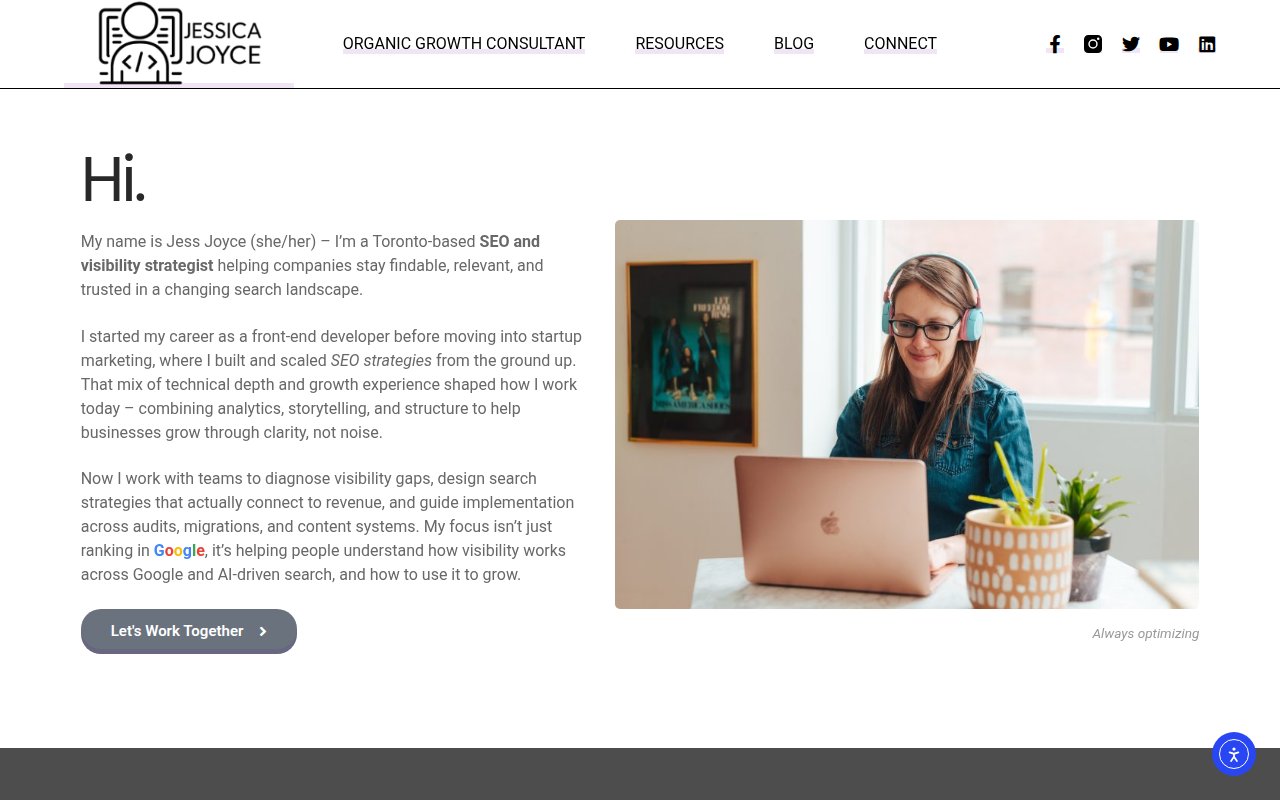
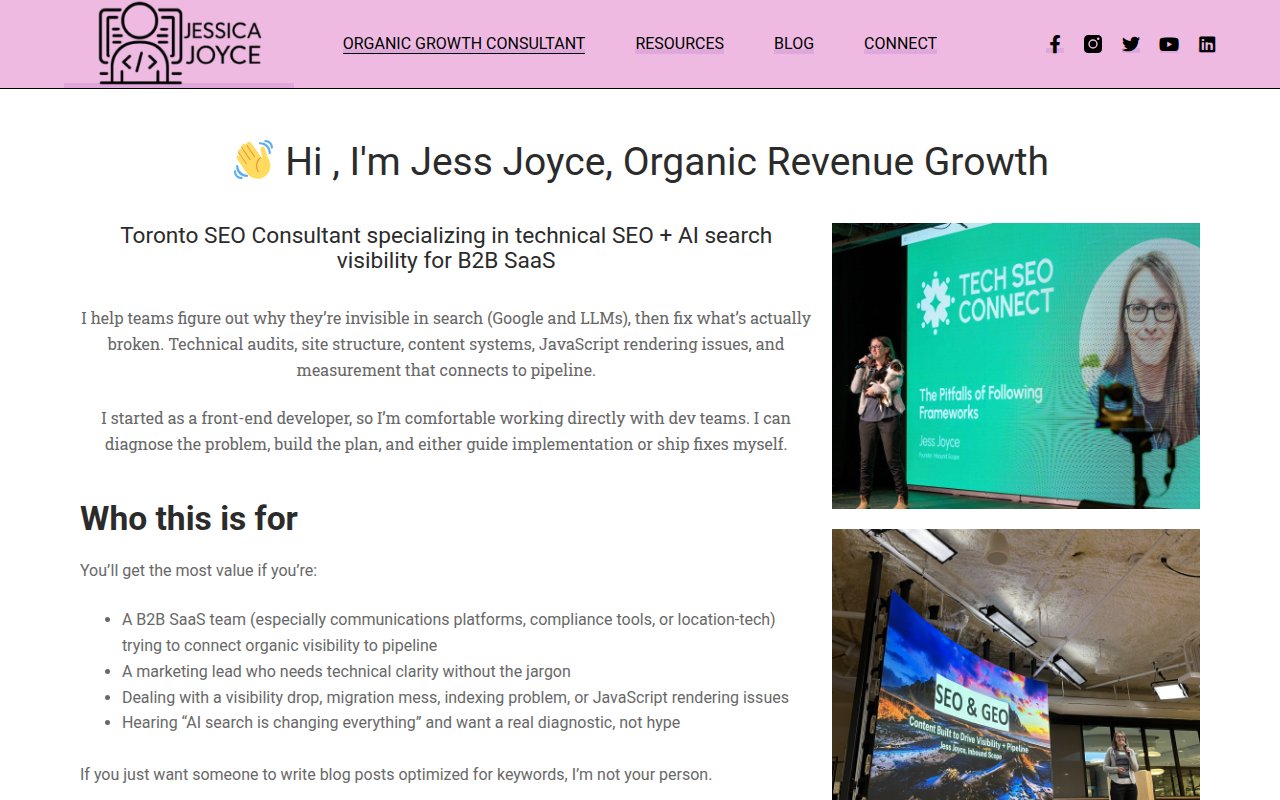
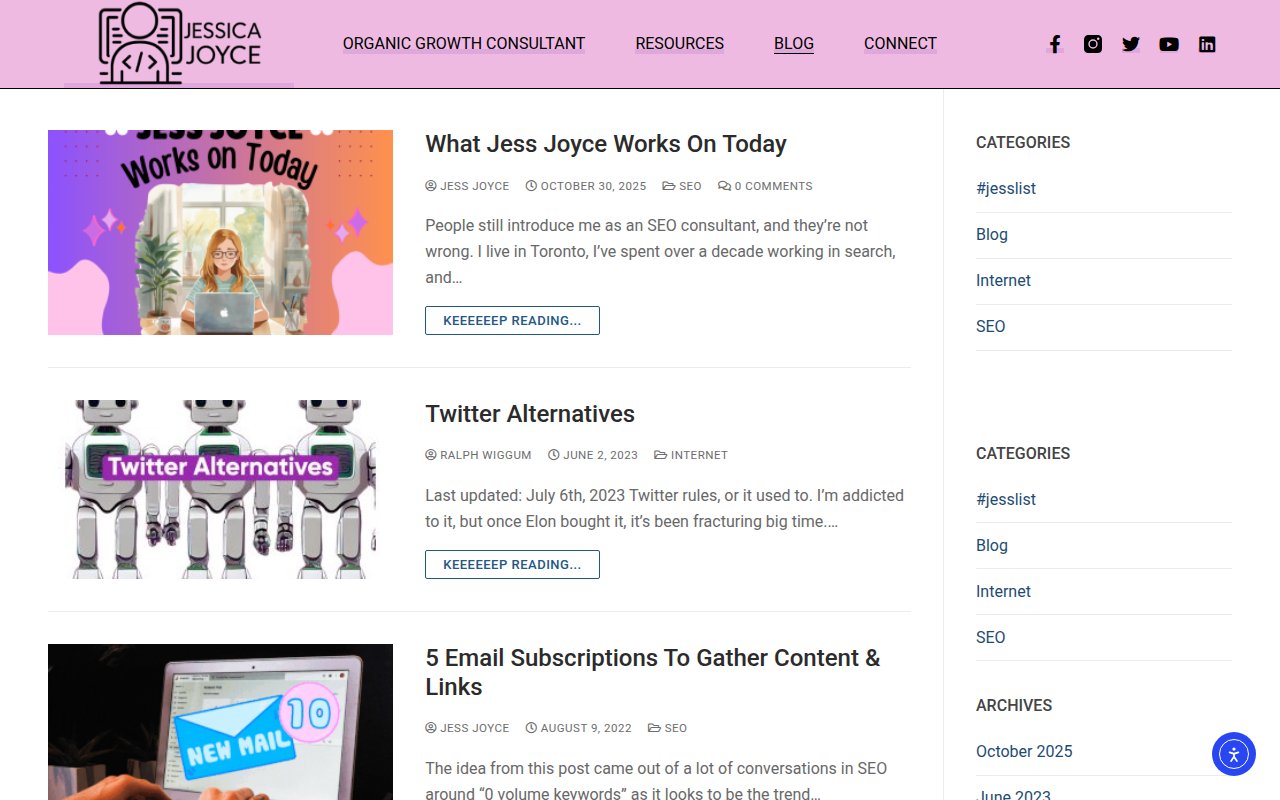
Jess Joyce started building websites on Geocities at 15. That developer background is her primary differentiator: she bridges marketing teams that want visibility and engineering teams that implement the fixes. She also states clearly who she’s not for: “If you just want someone to write blog posts optimized for keywords, I’m not your person.” She offers three tiers so prospects can pick their depth of involvement. Client work includes Honda and other major brands.
Social proof is the gap. Big brand mentions but no named testimonials with actual quotes.
Tom Critchlow
Blog-first, consulting-second
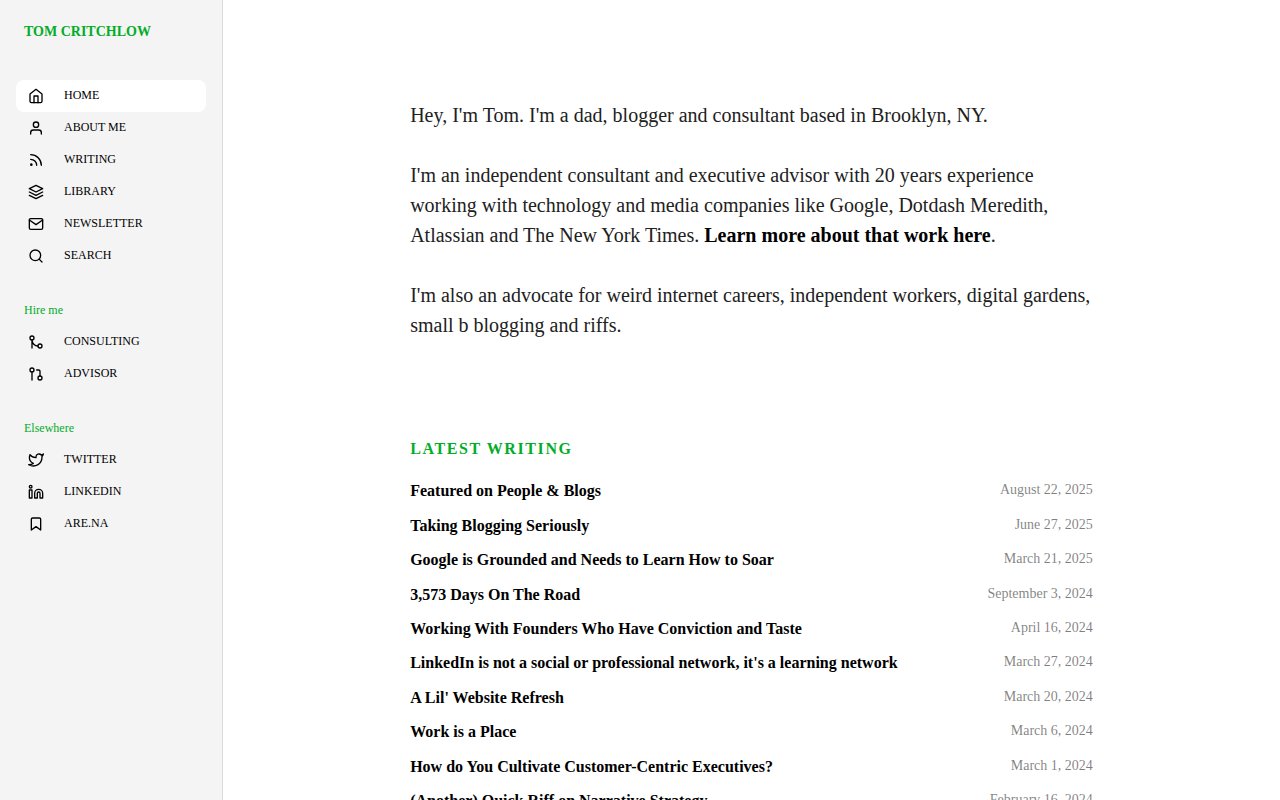
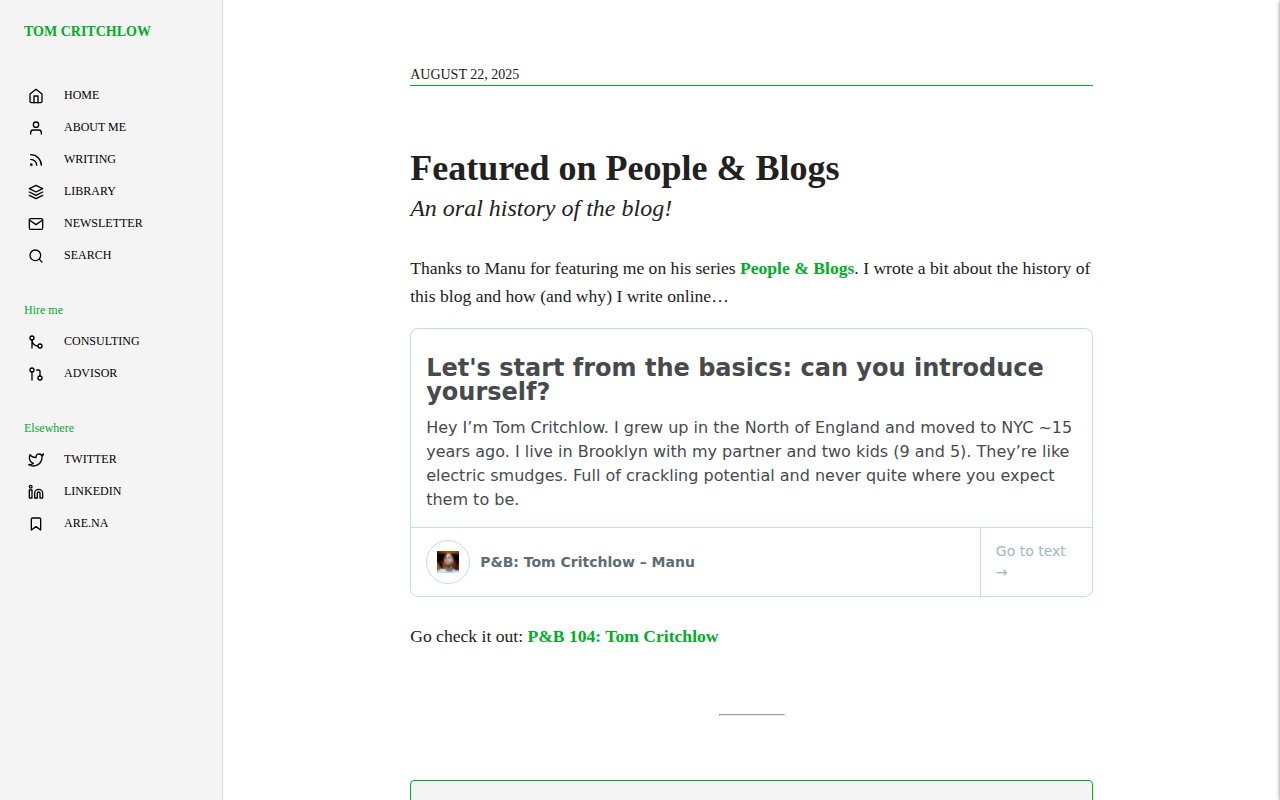
The entire homepage hero for Tom Critchlow’s site is a casual personal introduction with no CTA, no client logos, and no testimonials in sight. The site is a blog that happens to have a consulting page, not the other way around.
This works because the content drives the pipeline. Tom’s book (The Strategic Independent), his SEO MBA courses, and years of long-form writing have built an audience that finds him when they need strategy help. Client logos (NYT, Google, Angi, Finder) and a “CEO Whisperer” testimonial live on the consulting sub-page, not the homepage.
For consultants without an existing audience, this model is hard to replicate. Tom’s blog had years to compound before the pipeline followed.
What the best marketing consultant websites have in common
Niche specificity above the fold
"Growth hacking for startups." "B2B SaaS SEO." "Google Ads consulting." Nearly every top-performing site names its specialty in the first sentence, not buried on a services page three clicks deep.
Quantified results, not claims
The strongest sites put real numbers on their homepage: percentage increases in demos, dollar figures in ARR, client counts with timelines. Named case studies with outcomes beat anonymous "we helped a company grow 300%."
Endorsements from recognizable names
Rand Fishkin, April Dunford, TikTok's Director of Monetization. A single testimonial from a known figure carries more weight than a dozen anonymous reviews.
Anti-agency positioning
Most consultants in our review explicitly contrast themselves against agencies: smaller teams, more accountability, no hand-offs to junior associates. The message is "you work with me, not a random analyst."
A content channel that compounds
Books, podcasts, newsletters, communities, courses. The top consultant sites are platforms, not brochures. The content generates the leads, and the website is the hub that ties everything together.
How to build your marketing consultant website
-
Pick a niche and name it in your first sentence. “Marketing consultant” is a category, not a position. “B2B SaaS SEO consultant” or “Google Ads specialist for service businesses” tells the visitor in five seconds whether they’re in the right place. Every top-scoring site in our review declares a specialty above the fold.
-
Put at least one measurable result on your homepage. A specific number (+150% demos, $132K ARR, 73% lower acquisition costs) converts skeptics faster than any testimonial. If you don’t have client results yet, use your own: “Grew my newsletter to 5,000 subscribers” or “Ranked on page one for [target term].”
-
Publish your rates or starting prices. Most consultants hide pricing and lose prospects who assume they can’t afford it. The two sites in our review that publish pricing both report it improves lead quality by filtering out poor-fit prospects before the first call.
-
Start one content channel and commit to it. Blog, podcast, newsletter, community. Pick one. The highest-scoring sites in our review have years of accumulated content driving organic traffic. You can’t shortcut this, but you can start today.
-
Make your first engagement low-commitment. Free 15-minute call, paid audit, strategy session. Every top site in this review offers a clear, low-risk first step. “Fill out a contact form and wait” is not a conversion path.
-
Build authority outside your website. Books, speaking, teaching, community contributions. The strongest consultants in our review (Brian Honigman at Kellogg, Tom Critchlow with The SEO MBA, Mike Rizzo with MarketingOps.com) have authority signals that exist independently of their personal sites.
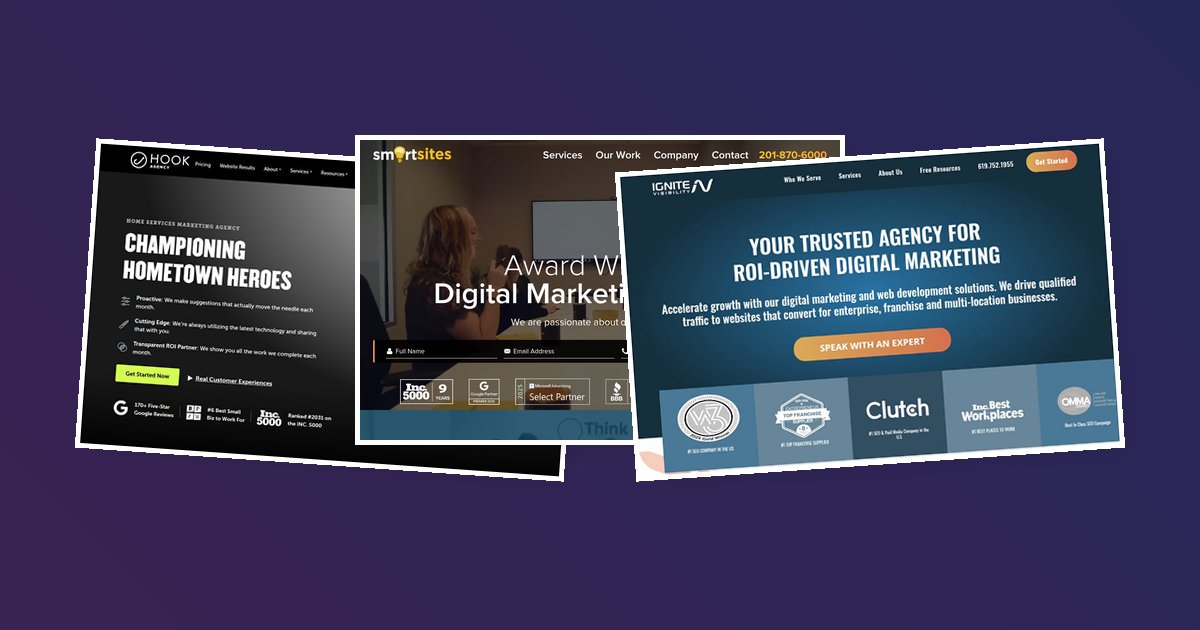
If you’re building a marketing agency rather than a solo practice, our marketing agency website examples cover a different set of design patterns optimized for teams and portfolios.
Key Takeaways
- Your website is your first case study. If you sell marketing expertise, every element of your site is proof of your competence.
- Niche specificity converts better than broad positioning. The best consultant sites name their specialty in the first sentence, not on a sub-page.
- Published pricing filters out bad-fit leads. Only two sites in our review publish rates, but both report better lead quality as a result.
- One testimonial from a recognized name beats twenty anonymous reviews. Invest in getting endorsements from respected people in your niche.
- Content compounds. The highest-scoring consultant sites have years of blog posts, case studies, and methodology pages driving organic traffic that a brochure site will never match.
- A consultant site doesn't need polished design to generate leads. Substance, proof, and a clear path to a conversation matter more than aesthetics.
How we picked these sites
We started with a broad scan of dozens of marketing consultant websites, filtering for independent practitioners (not agencies) with strong professional signals: active client work, published content, recognizable client logos, and recent site updates. We also reviewed industry publications like Marketing Week, Consulting Magazine, and The Drum to find consultants worth evaluating beyond the first page of Google.
From that pool, we scored each site on five criteria: UX quality, conversion optimization, social proof integration, team authenticity, and SEO page coverage. Every site got a multi-page review covering the homepage, services or consulting page, about page, and any notable pages like pricing, case studies, or methodology.
The sites featured here earned the highest overall scores. Each one made the cut because it does something specific well, not because it’s the best at everything. The goal is a collection where every site teaches a different lesson about building a consulting practice online.
Frequently Asked Questions
What should a marketing consultant website include to get clients?
The strongest consultant sites in our review share a few things: a named specialty visible within the first scroll (not 'marketing consultant' but something specific like 'B2B SaaS SEO'), at least one quantified client result on the homepage, and a low-commitment first step like a free call or audit. Nearly every top-performing site also has a content channel (blog, podcast, or newsletter) driving organic traffic.
How much does a marketing consultant website cost to build?
Most of the sites we reviewed run on WordPress or Webflow, which means a professional consultant site costs $2,000-$8,000 with a developer, or under $500 on a template. The real cost driver isn't the build itself. It's ongoing content. The highest-scoring sites have years of blog posts, case studies, and methodology pages. A dated WordPress site with great content consistently outperformed polished designs with thin pages.
Should a marketing consultant publish pricing on their website?
Only two of the nine sites we reviewed publish pricing, but both benefit from it. Taylor Scher lists four tiers from $3,500 to $10,000 per month, and Michael Cottam publishes his by-the-minute rates. In both cases, transparent pricing filters out poor-fit leads and attracts prospects who can afford the service. If your work is too customized for fixed rates, consider publishing starting prices or engagement minimums.
 12 Marketing Agency Website Examples That Win Clients (2026)