We scored dozens of keynote speaker sites, and the difference between the ones closing gigs and the ones getting passed over came down to how well each site serves the event planner with four tabs open and a deadline.
Jay Baer
Phone number and availability checker on every page
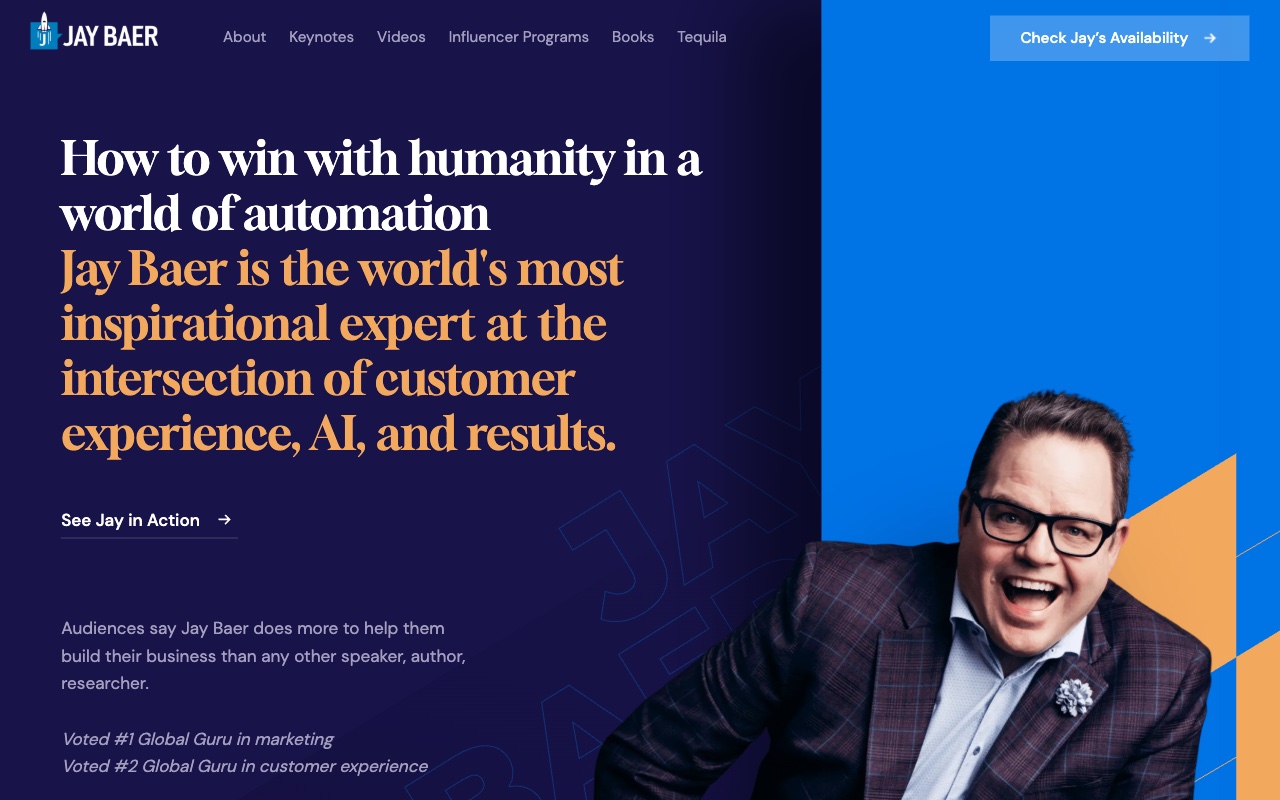
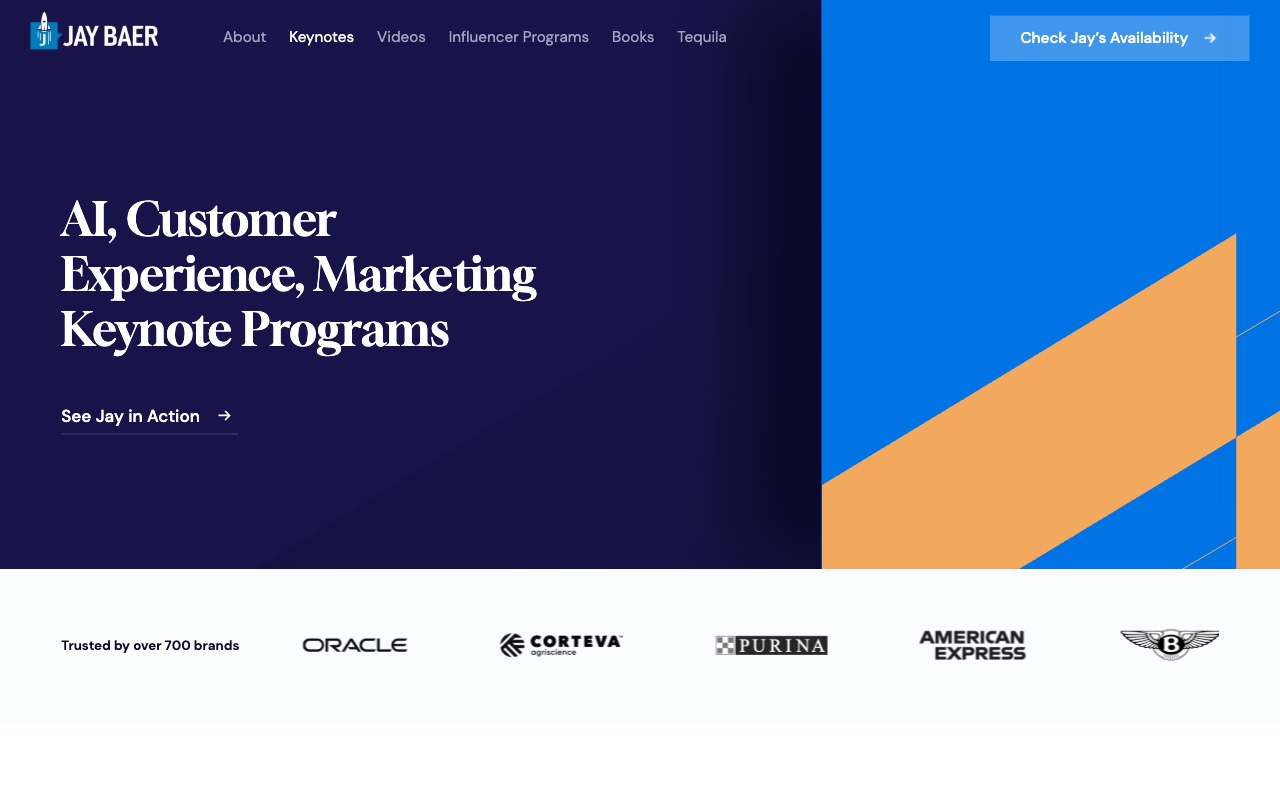
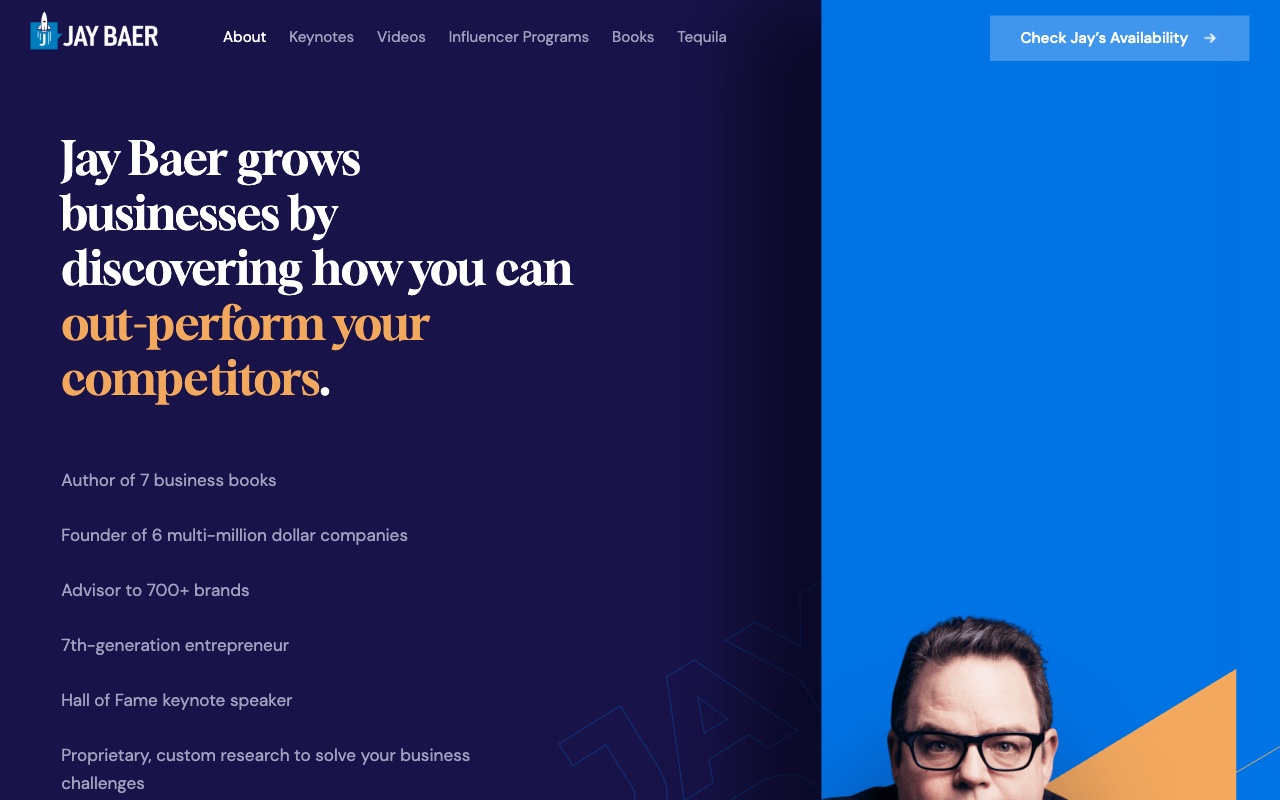
Jay Baer puts his booking agent’s direct phone number on every keynote page, not buried on a contact page or behind a form, but right next to an availability-check button.
The credentialing is stacked but specific: Hall of Fame speaker, 1,400+ presentations, advisor to 40 FORTUNE 500 clients. Five named keynote programs each come with audience-relevant stats that give planners ready-made justification for the budget request. Built on Webflow, the site is clean and loads fast.
The tequila section in the navigation is either brilliant personal branding or a distraction, depending on your audience. For corporate events it adds personality. For conservative buyers it’s a question mark.
April Dunford
CEO testimonials from Google and Postman above the fold
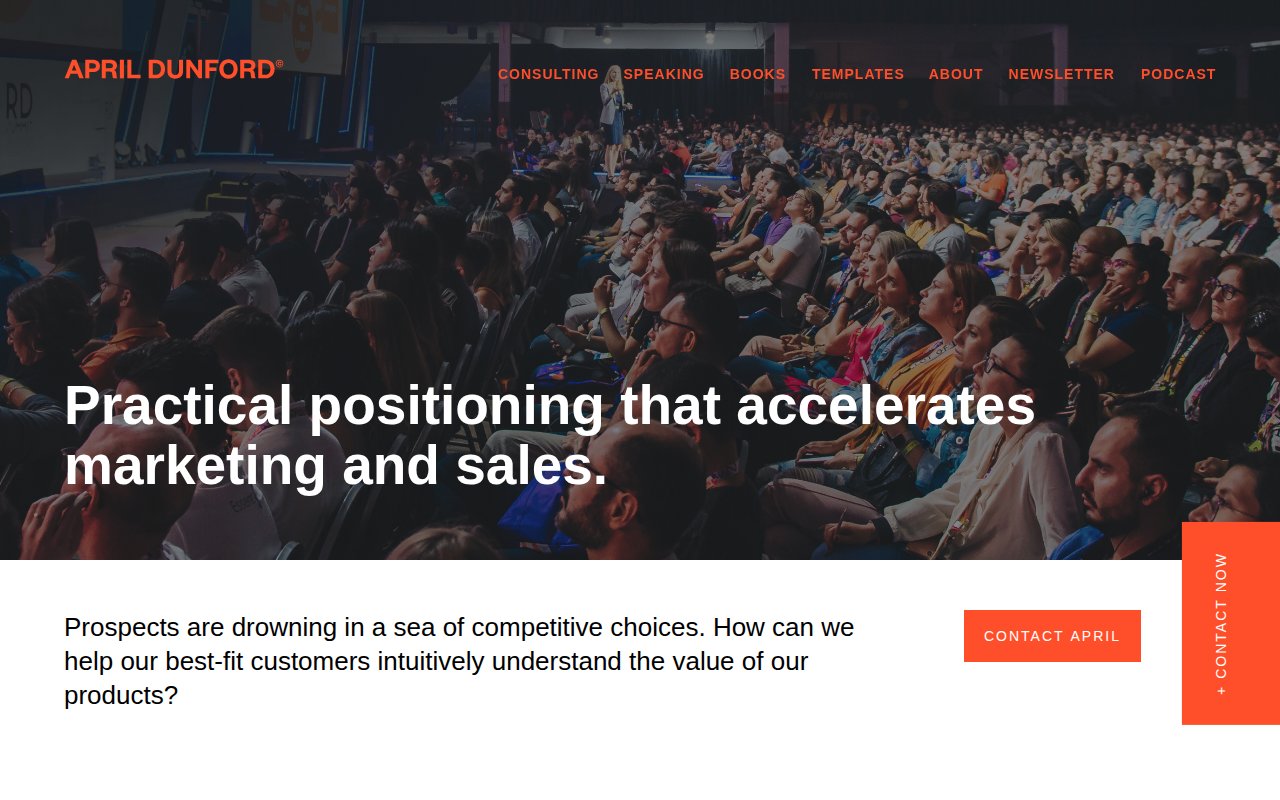
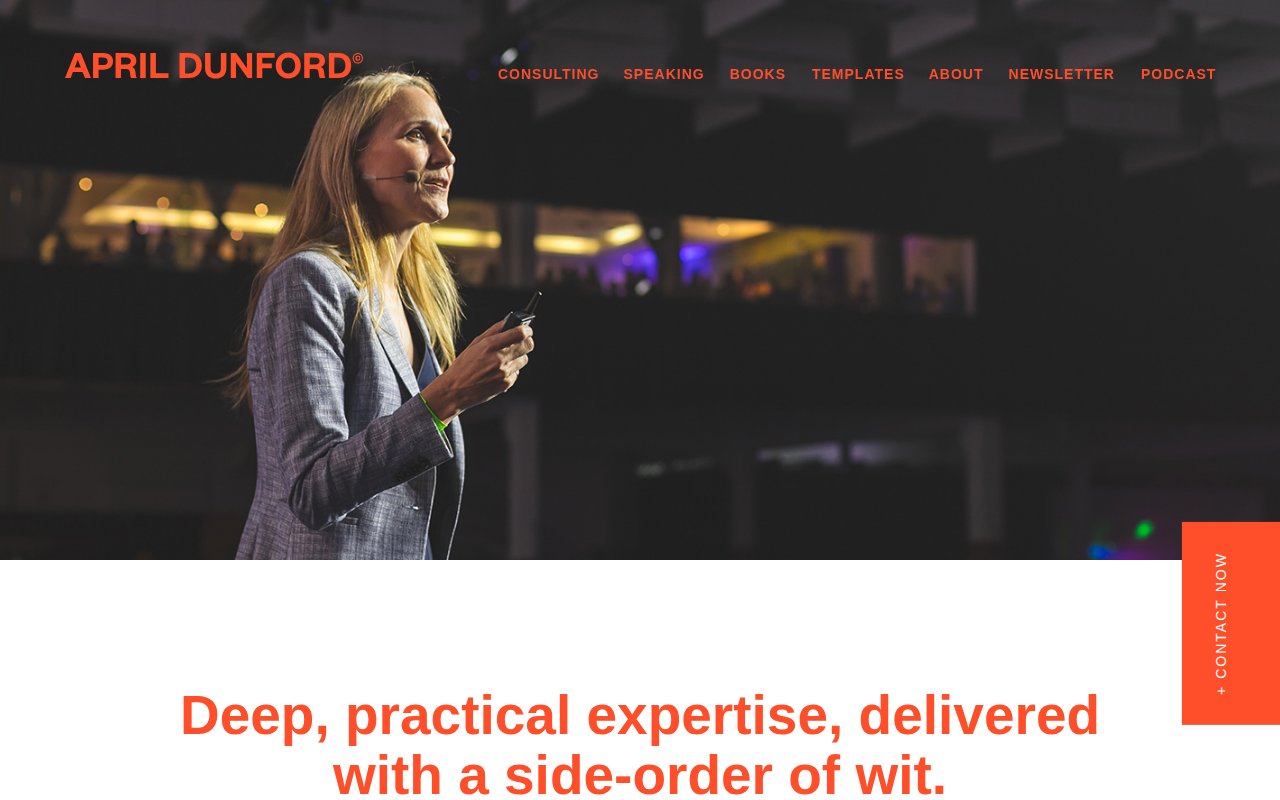
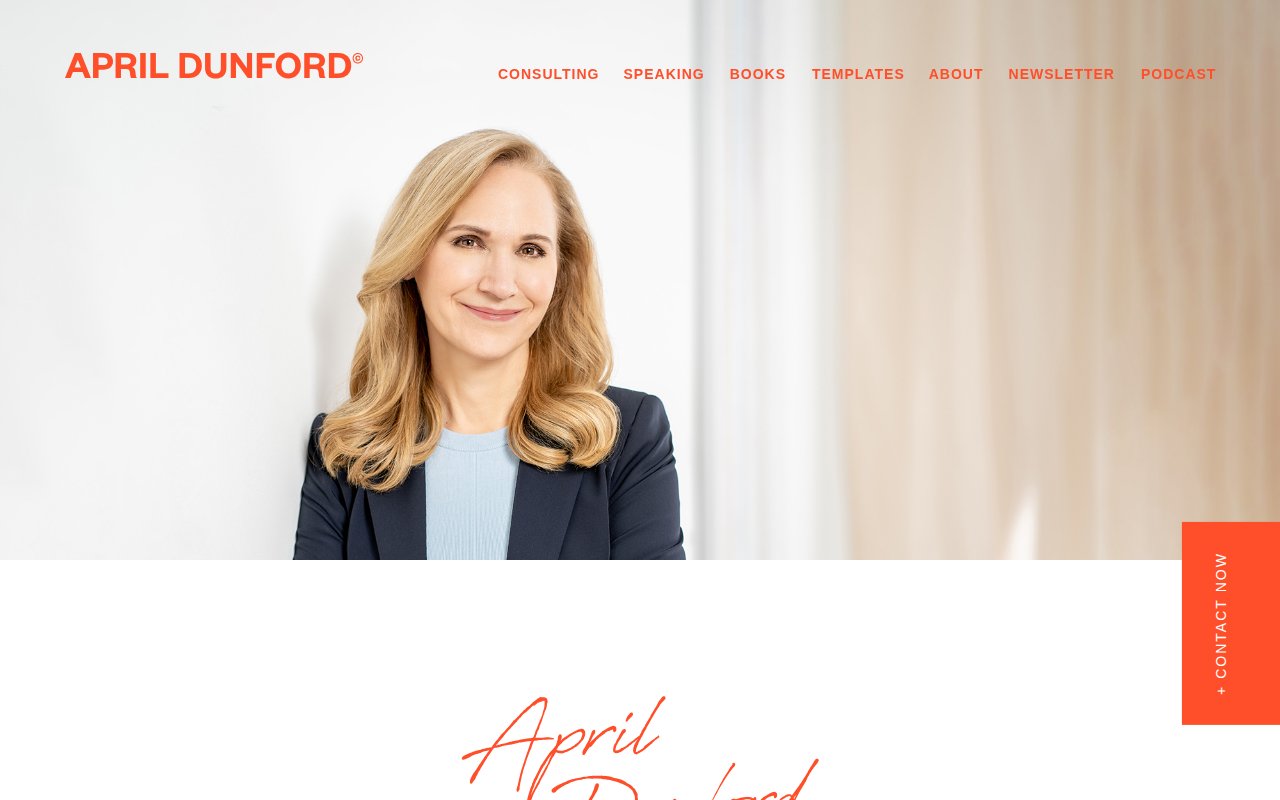
April Dunford’s homepage opens with a question about competitive differentiation that sounds like what her clients are already asking. Below it, testimonials from C-suite executives at companies like Google Cloud appear before the visitor scrolls.
The speaking page lists 20+ conference appearances across the B2B tech circuit so if your event is B2B tech, you can see she’s done it before. A persistent “Contact Now” button in the Webflow nav keeps the CTA one click away regardless of which page the visitor is on.
The site serves both consulting and speaking, and that dual purpose occasionally blurs which service a visitor should pursue. An event planner might wonder whether keynotes or consulting engagements take priority.
Marcus Sheridan
Instant pricing estimate as a trust signal
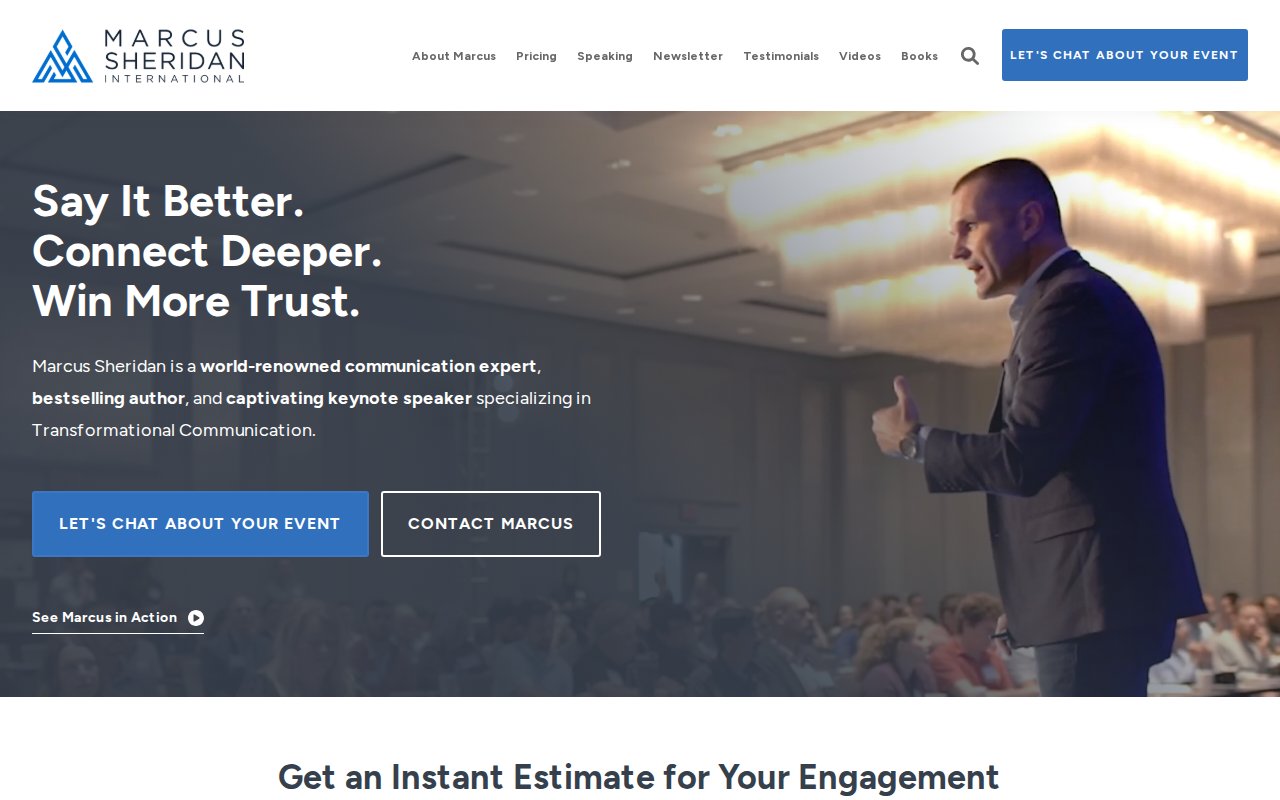
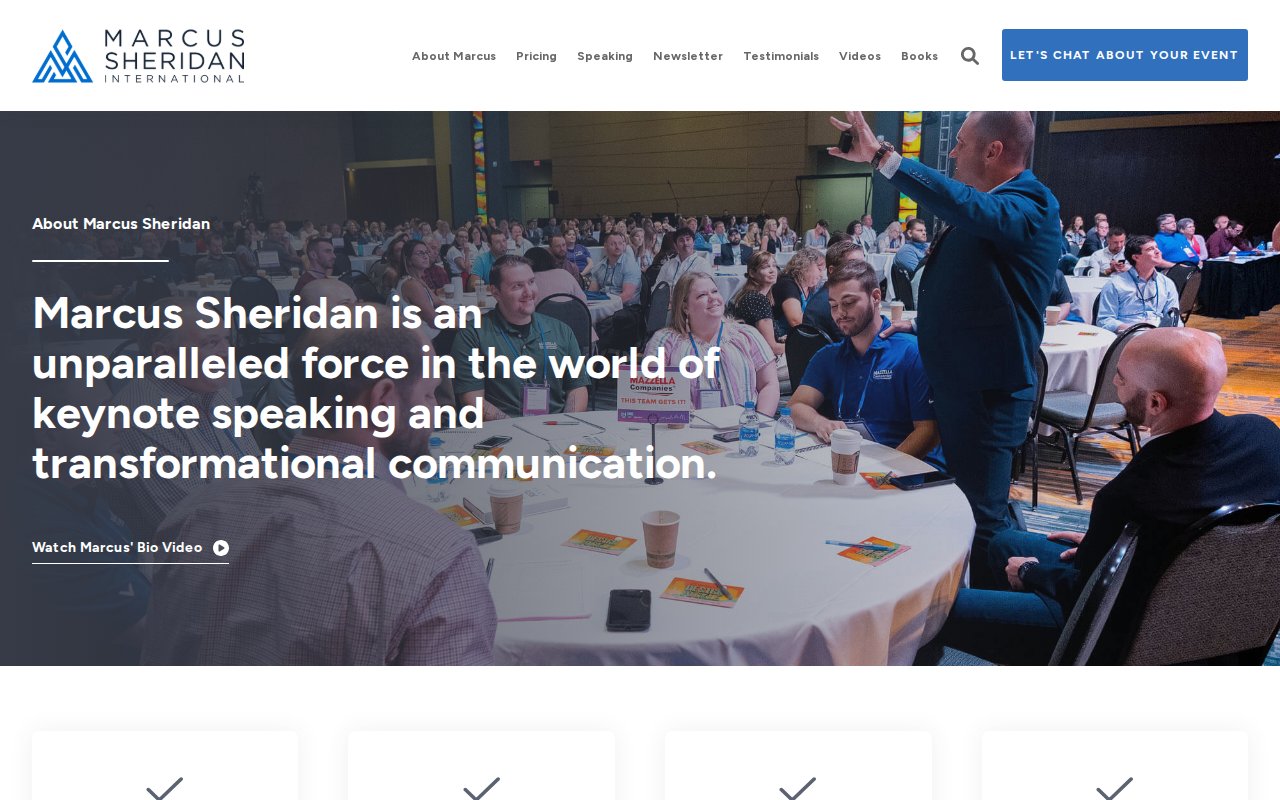
The homepage of Marcus Sheridan’s site calls out that fewer than 5% of speakers share pricing, then links to an instant estimate tool that gives event planners a fee range without a phone call. The pricing tool filters out unqualified leads and builds trust with serious buyers at the same time.
The origin story ties it together. Marcus saved his swimming pool company from the 2008 collapse by answering every customer question online. That story shows up everywhere on the site. 500+ keynotes and a claimed $1B+ in economic impact from businesses applying his frameworks. Four named keynote topics all connect to his core thesis of trust-based communication.
The weakness is maintenance. When we reviewed the site, the speaking page returned a 404, and for a speaker site, a broken speaking page is a real missed opportunity.
Ann Handley
Newsletter-first homepage with 51K subscribers as proof
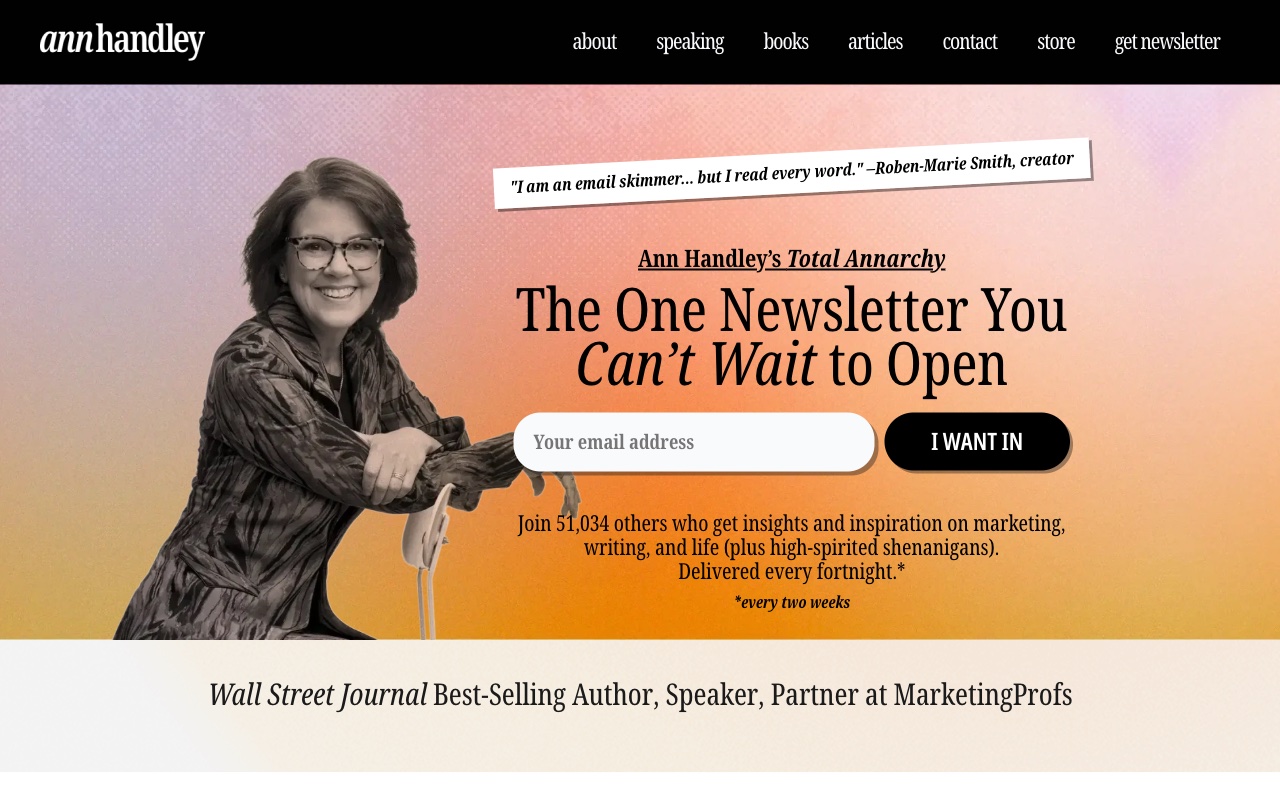
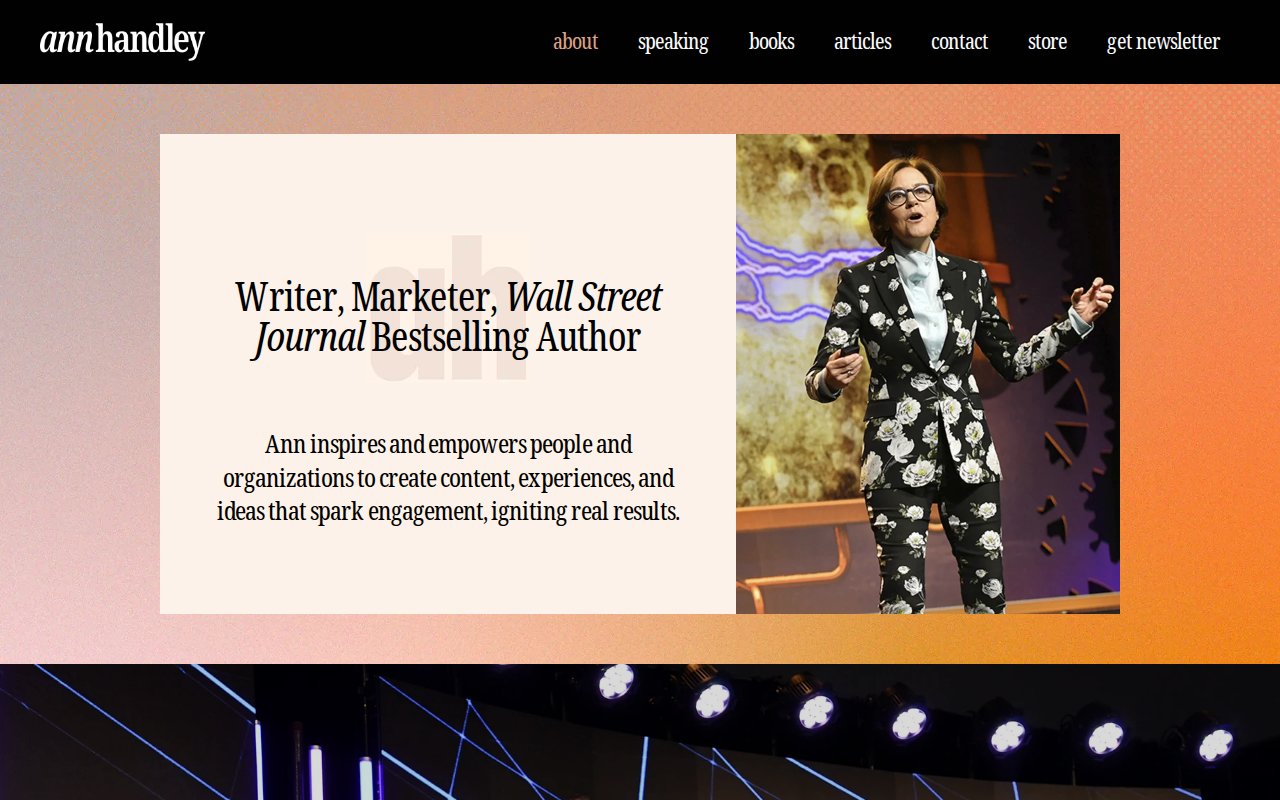
Ann Handley’s homepage opens with her newsletter: 51,034 subscribers. An event planner sees that number and knows this person has 51K people who voluntarily read her every week.
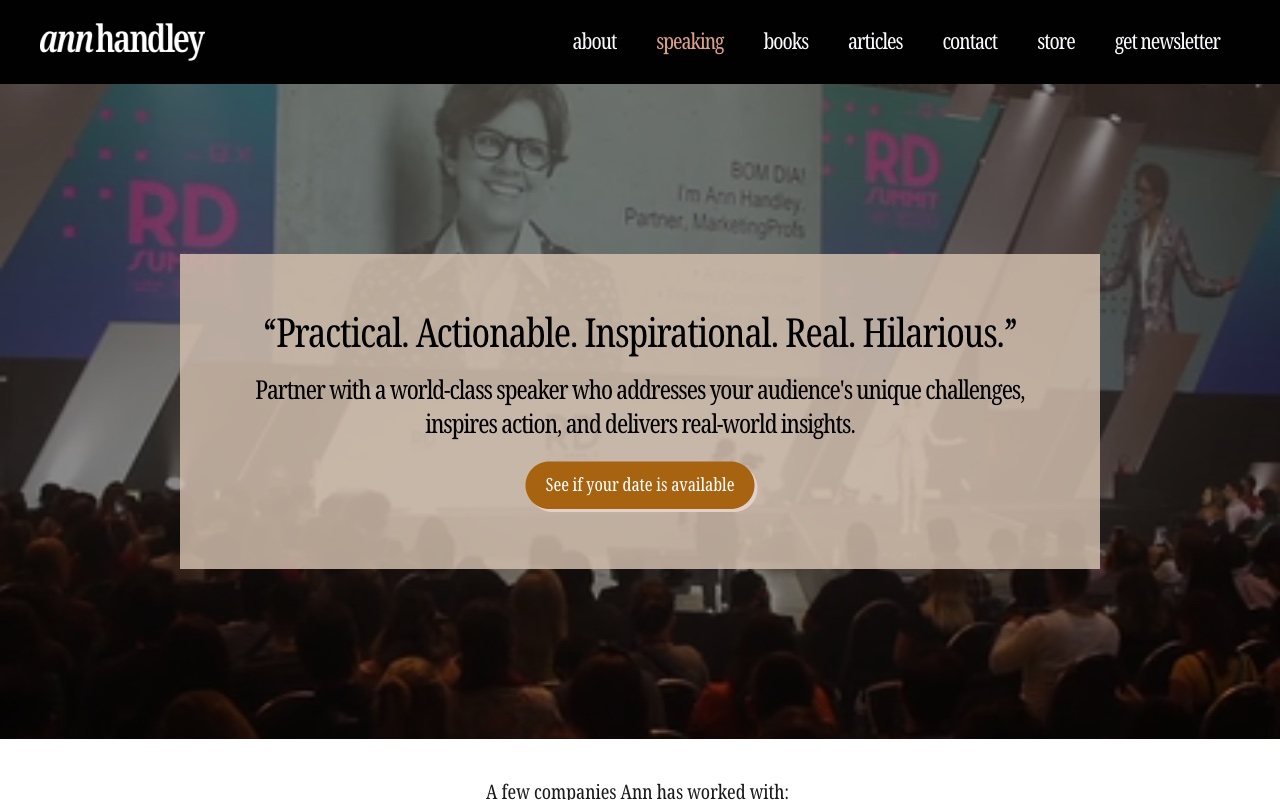
The speaking page lists five current keynote topics with full descriptions, client logos from Adobe and other enterprise brands, and named testimonials from organizations like Mayo Clinic. Audience feedback clusters around three words: inspirational, actionable, entertaining.
The newsletter-first approach means an event planner arriving from Google has to scroll past content marketing material to find speaking info. The trade-off is worth it, but only because the subscriber count is more persuasive than any speaker reel.
David Epstein
Corporate event testimonials that read like reference checks
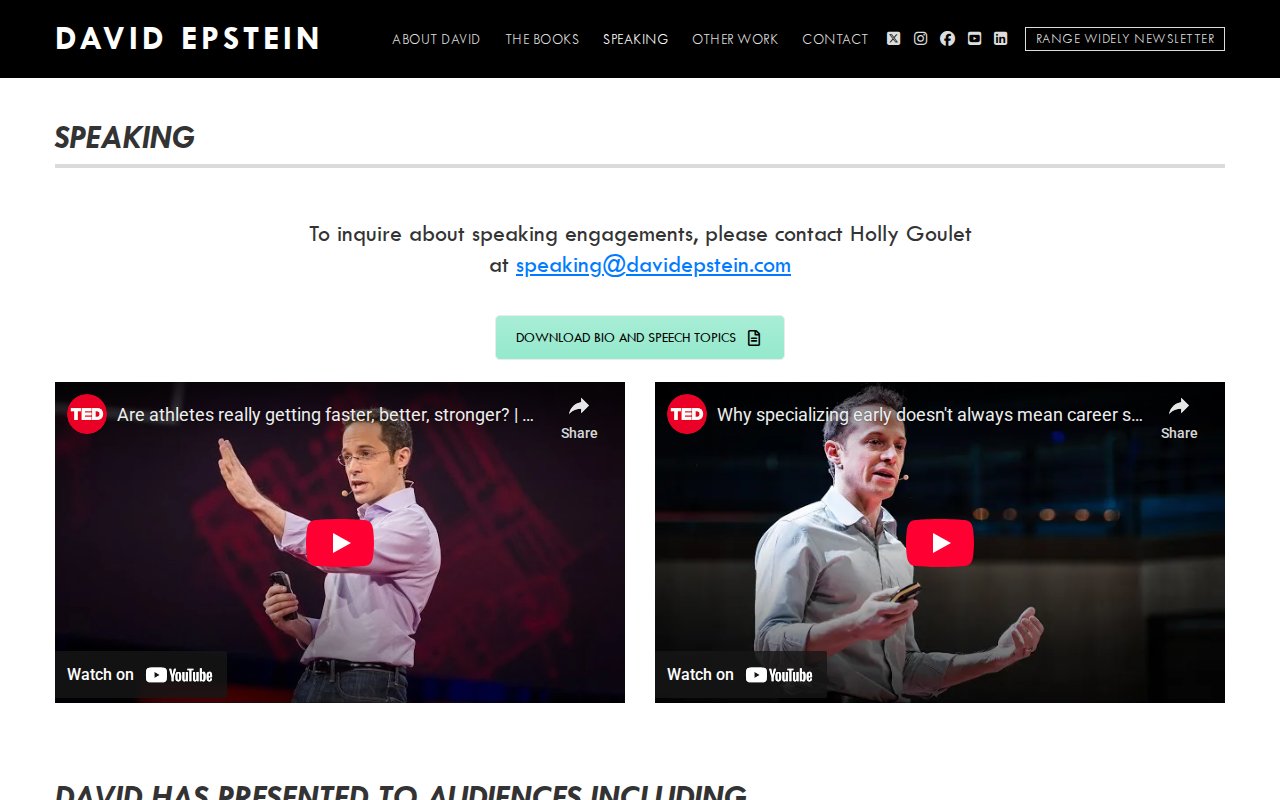
David Epstein’s speaking page features testimonials from BCG, EA, and World 50 that read like internal event feedback, not polished marketing quotes.
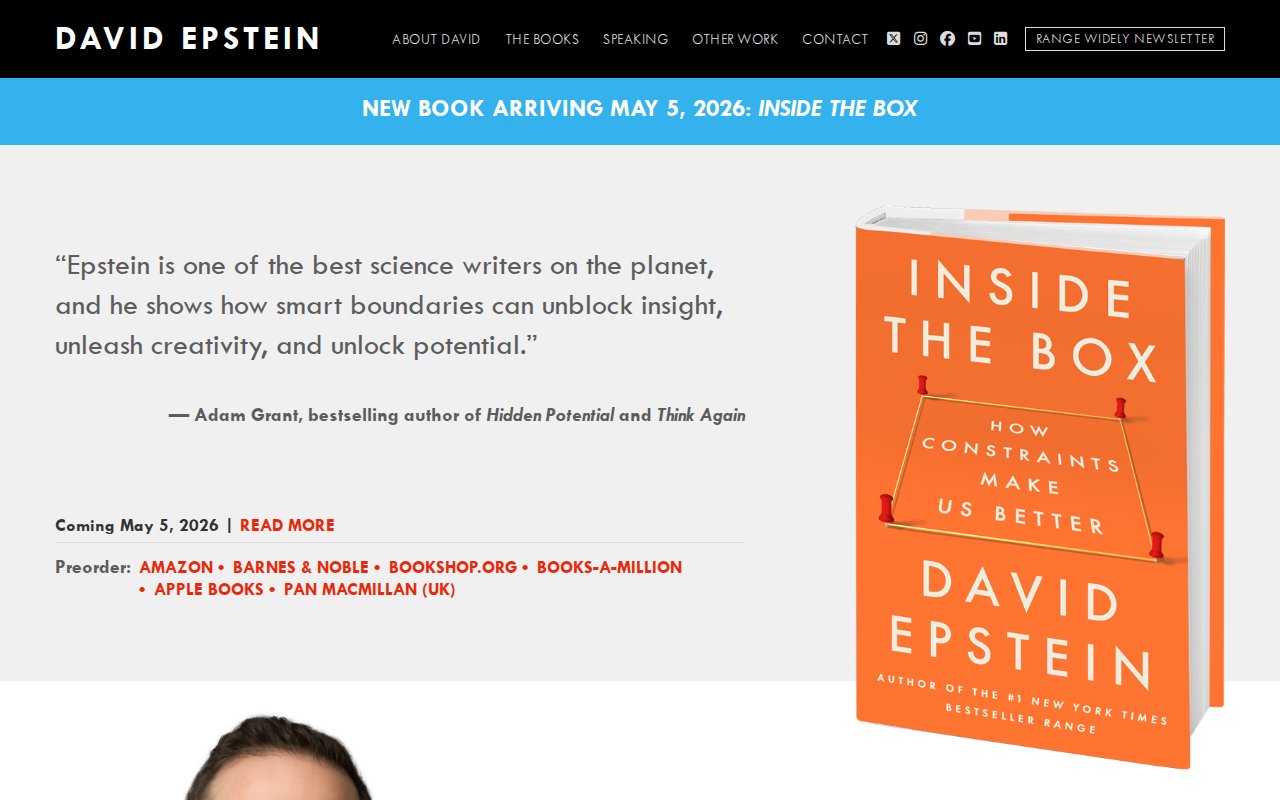
The site is author-first: Range (NYT #1 bestseller) leads the homepage alongside his other titles. The investigative journalist background (ProPublica, Sports Illustrated) adds credibility. Speaking is positioned as secondary to the author identity.
Where it falls short is the booking path: no form, no phone number, just an email address and a downloadable bio PDF.
Tamsen Webster
Training institute as an alternative to keynote booking
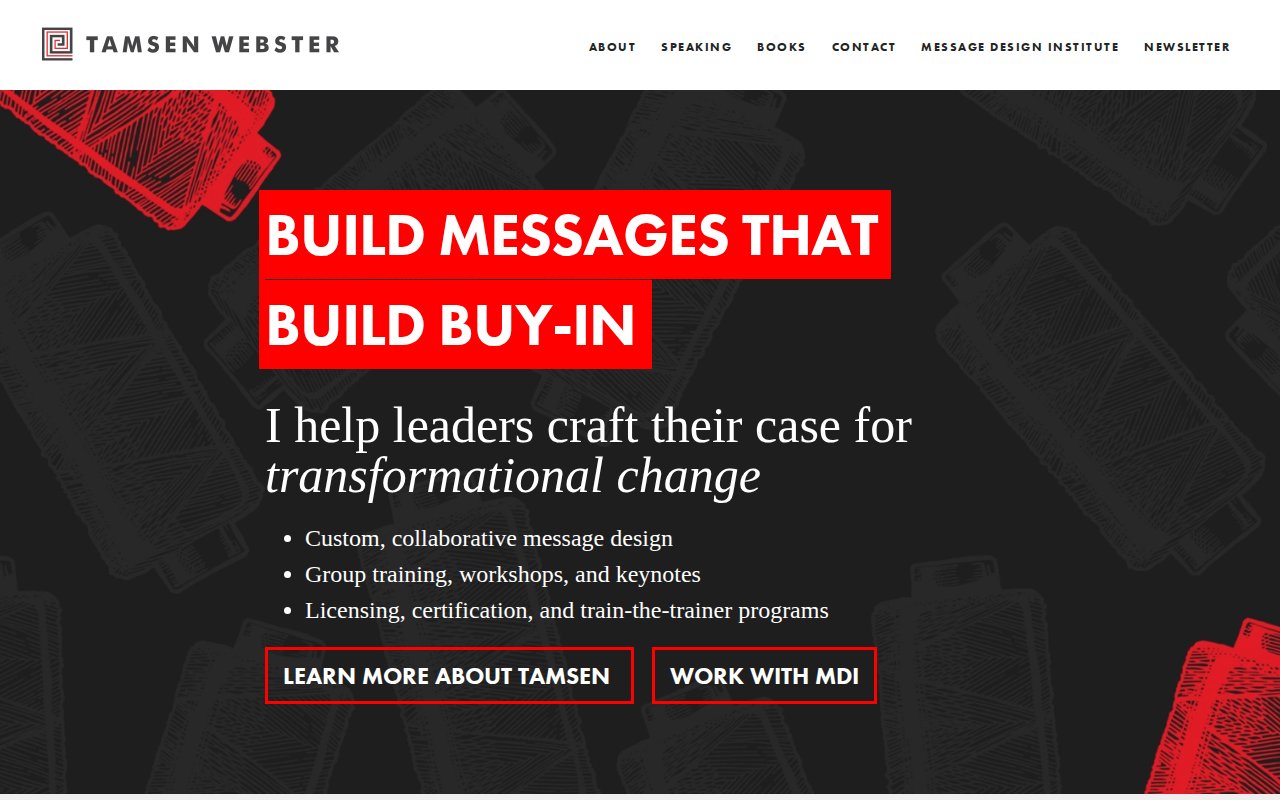
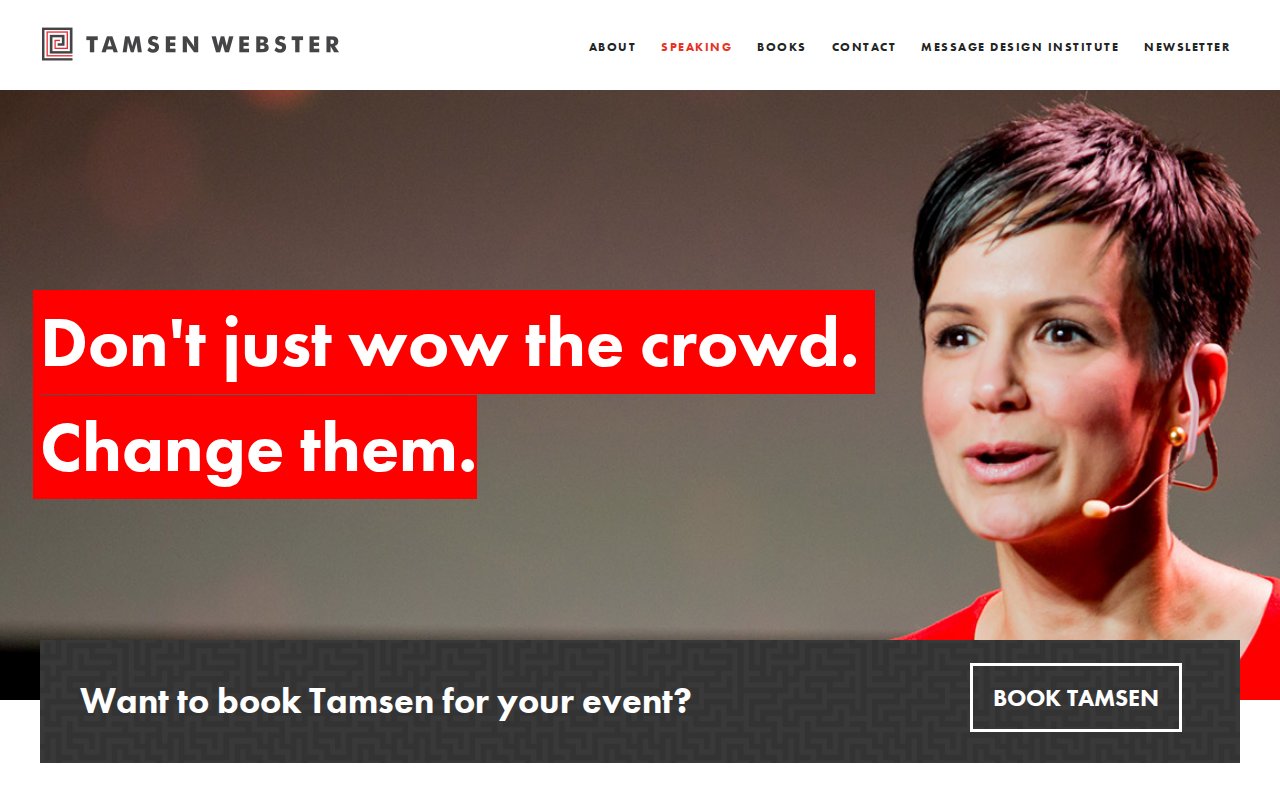
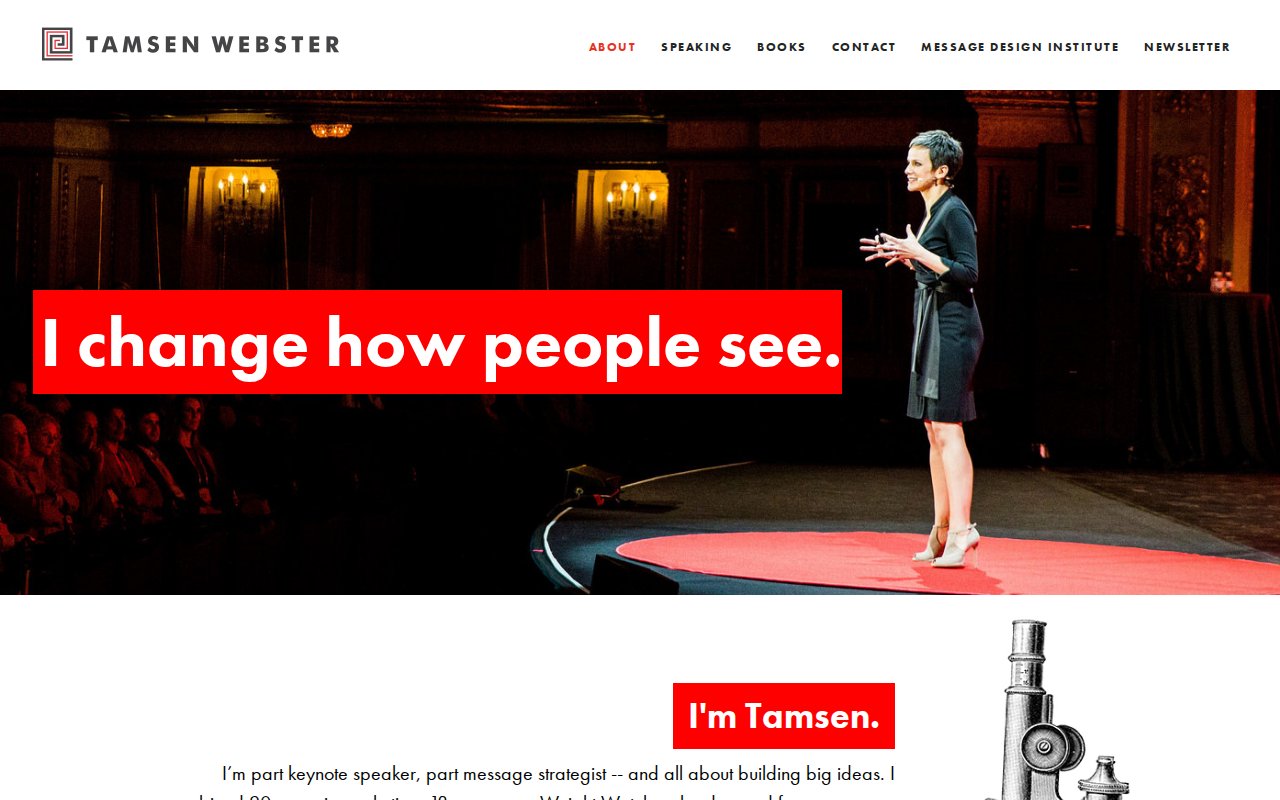
Tamsen Webster’s site includes a second conversion path. The Message Design Institute (MDI) offers training, workshops, and certification programs alongside keynote bookings.
She positions herself as part message designer, part translator of complex ideas into clear language. The TEDxCambridge executive producer credential shows she knows what makes a talk work from the organizer’s side, not just the speaker’s. Two named keynote topics each come with full descriptions and a direct booking CTA.
The WordPress site is functional but not distinctive. Compared to the Webflow builds in this list, the design feels template-heavy, and the visual identity doesn’t match the sophistication of her message design positioning.
Zack Kass
Former OpenAI Head of GTM as the entire brand
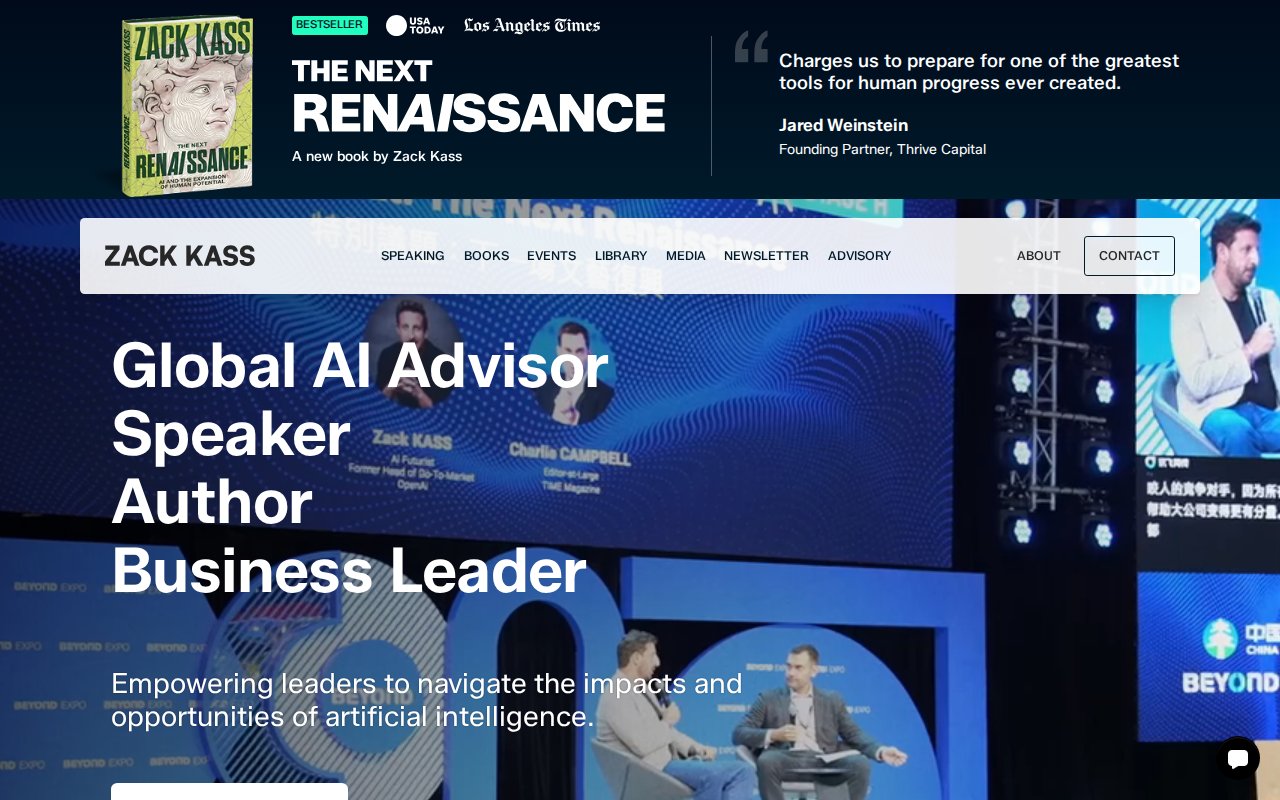
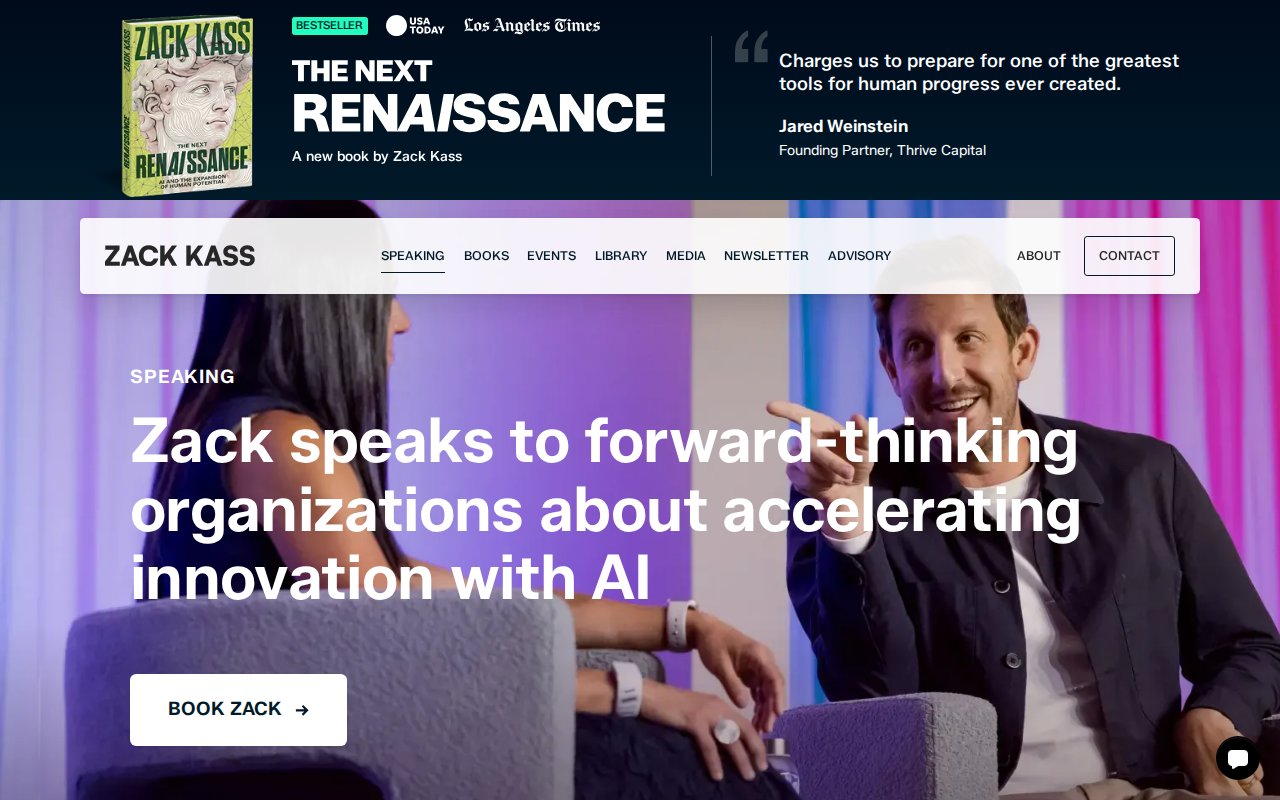
Zack Kass built his entire Webflow site around one credential: former Head of Go-to-Market at OpenAI. The book (The Next Renaissance, USA Today bestseller) is about AI. The three keynote topics are all AI-adjacent. The advisory practice targets AI strategy.
The testimonials back it up. Coca-Cola credits him with shaping their AI strategy. PayPal calls him their highest-rated speaker ever. A “Book Zack” CTA on the speaking page and “Get in Touch” on the homepage make the booking path clear.
With advisory, speaking, books, and a content library all in the nav, the site occasionally tries to serve too many audiences at once. An event planner looking for a keynote has to share the experience with C-suite workshop prospects and newsletter subscribers.
Tiffani Bova
Courses and podcast as revenue beyond keynotes
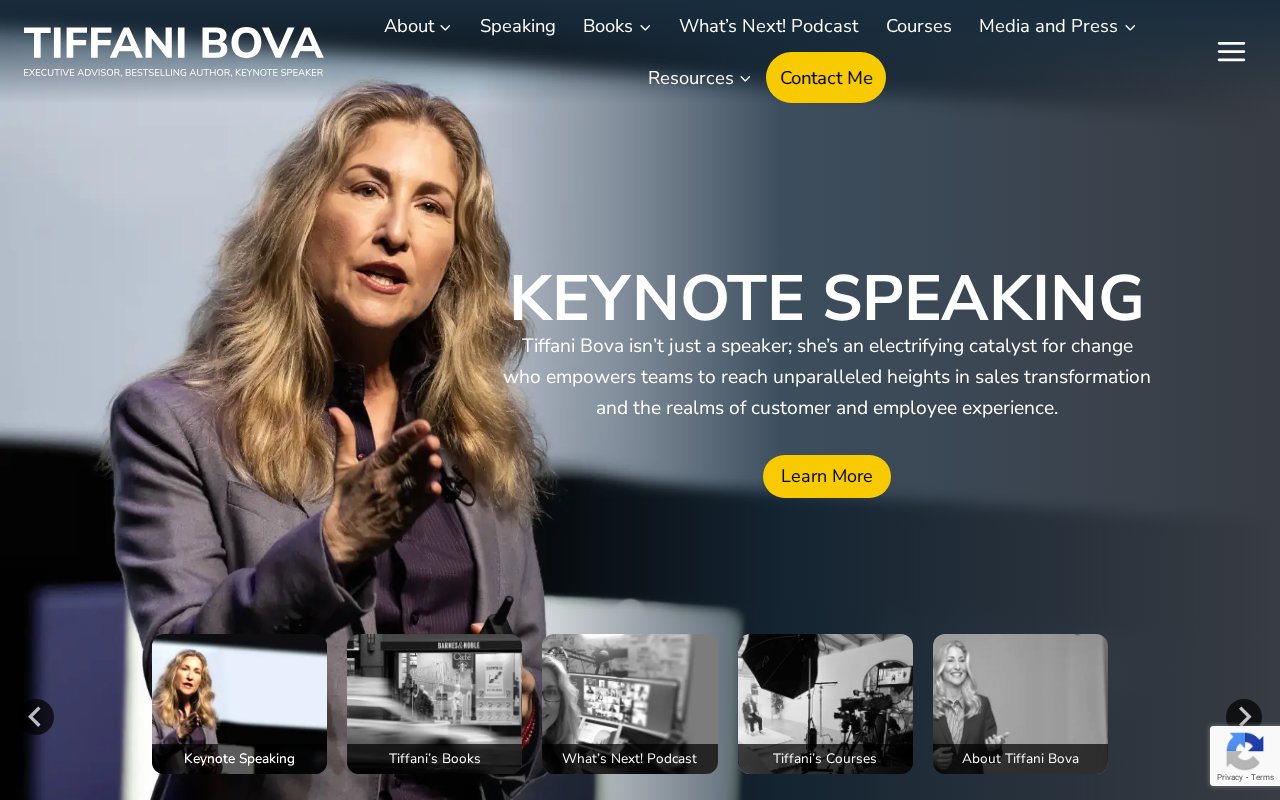
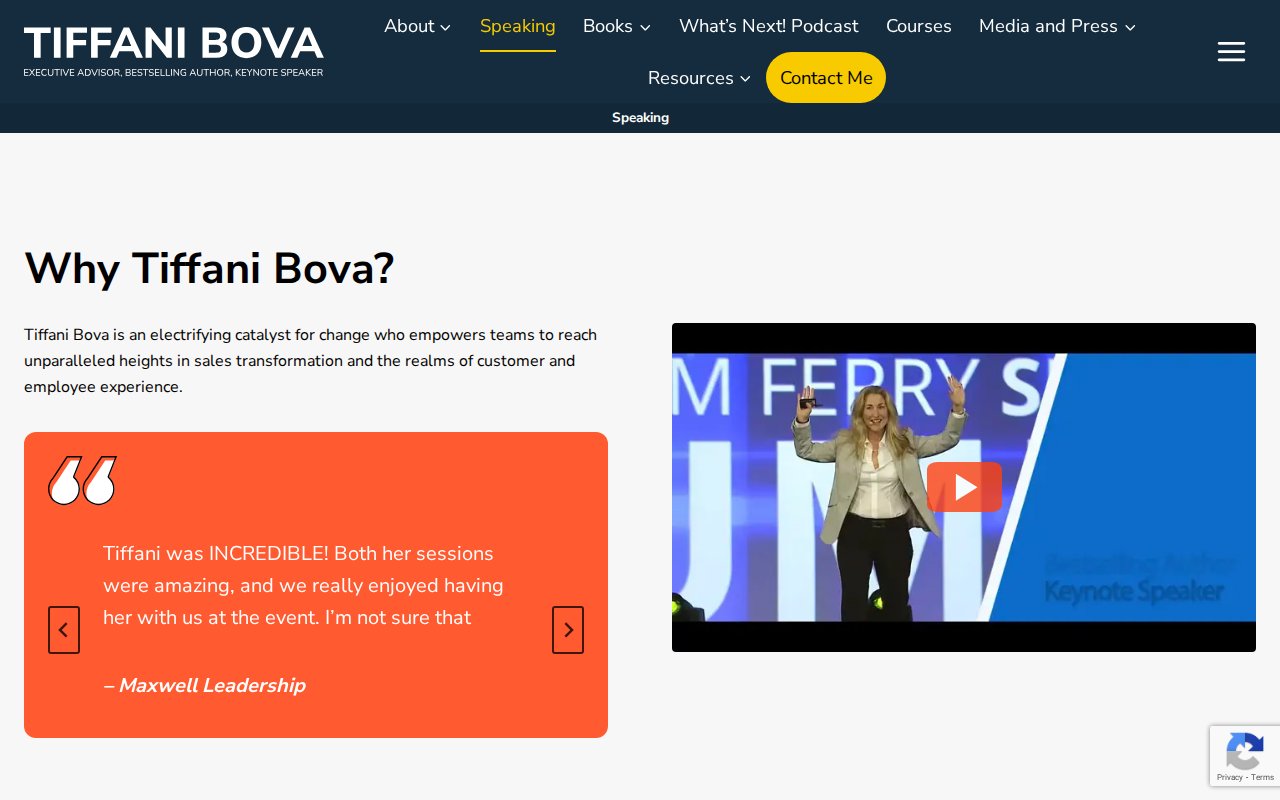
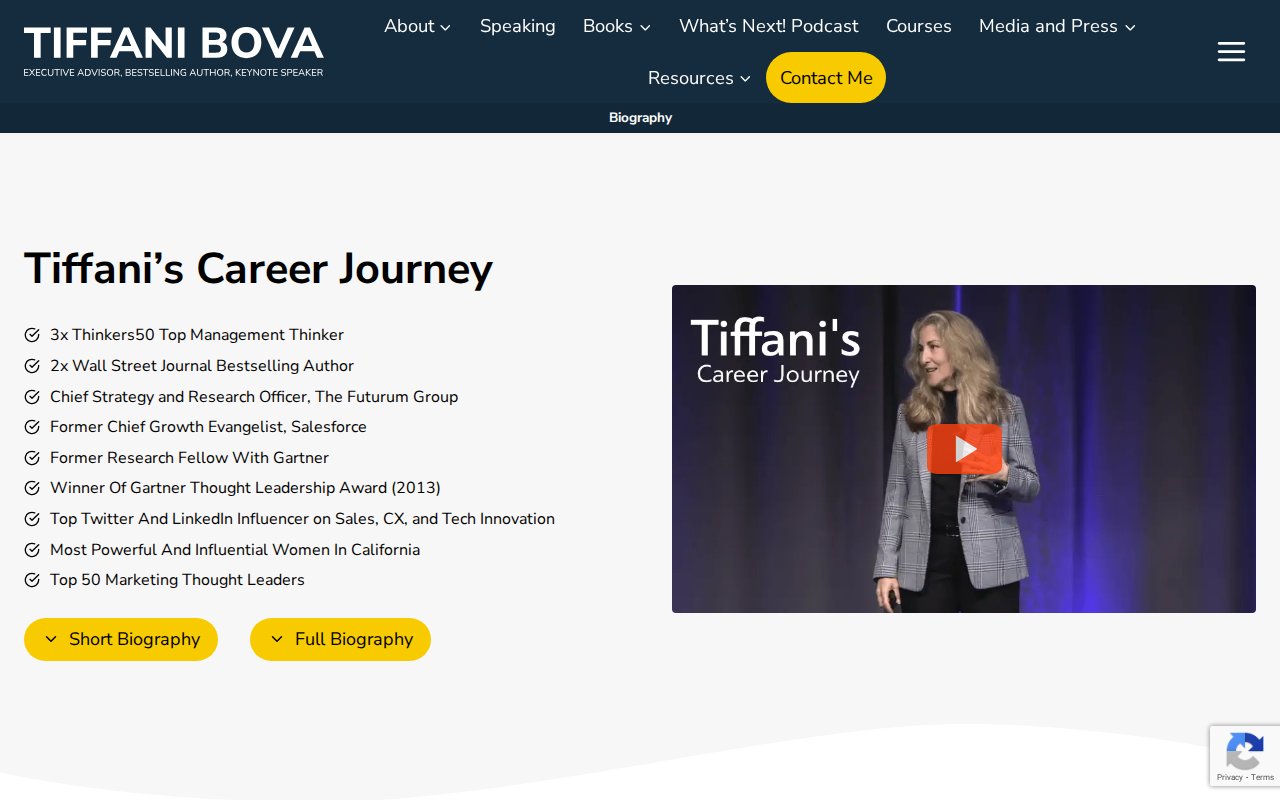
Tiffani Bova’s site functions as a business platform, not just a speaker page. Beyond keynotes, she offers online courses, a podcast (What’s Next!), two WSJ bestselling books, and a media/press section.
The speaking testimonials work because they include event context. Xerox’s Chief Growth Officer notes that partners were quoting her the next day. The Thinkers50 Top 50 ranking, held six consecutive years, is the kind of thing that still means something five years from now. Former Salesforce Growth Evangelist and Gartner Research Fellow add enterprise weight.
The tradeoff is conversion friction. No phone number, no instant booking tool, and the contact path takes several clicks. For an event planner comparing speakers in real time, those clicks cost bookings.
Seth Godin
Anti-design as a brand statement
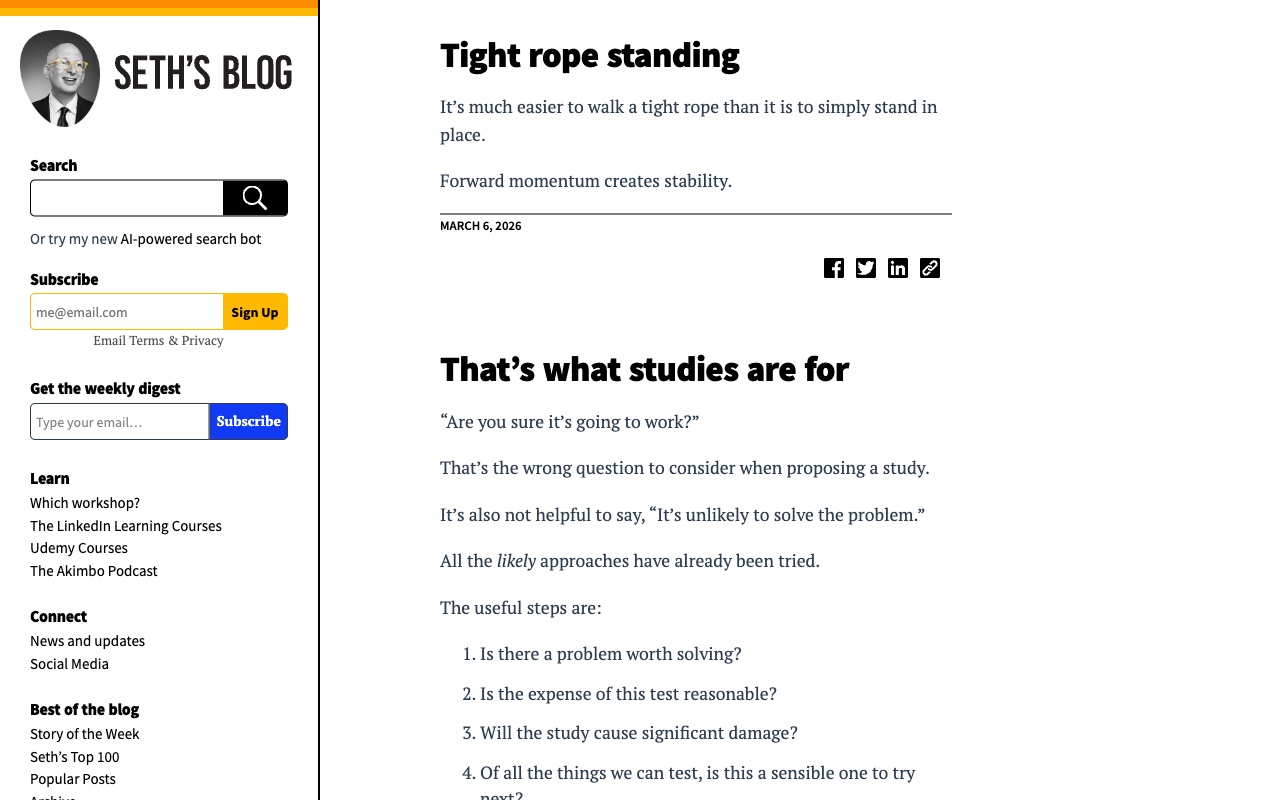
Seth Godin’s site is a WordPress blog with a sidebar. No booking form, no hero image, no CTA above the fold.
For a speaker with a $100K+ fee and a global waiting list, the minimal design works because the daily blog is a 20-year archive of marketing ideas that functions as the speaking portfolio.
Seth can afford this because 20+ books and decades of daily content built an audience that comes to him. For speakers still building a reputation, this approach is invisible. Brand authority, at sufficient scale, replaces conversion optimization entirely.
Scott Galloway
Media empire as the primary credential
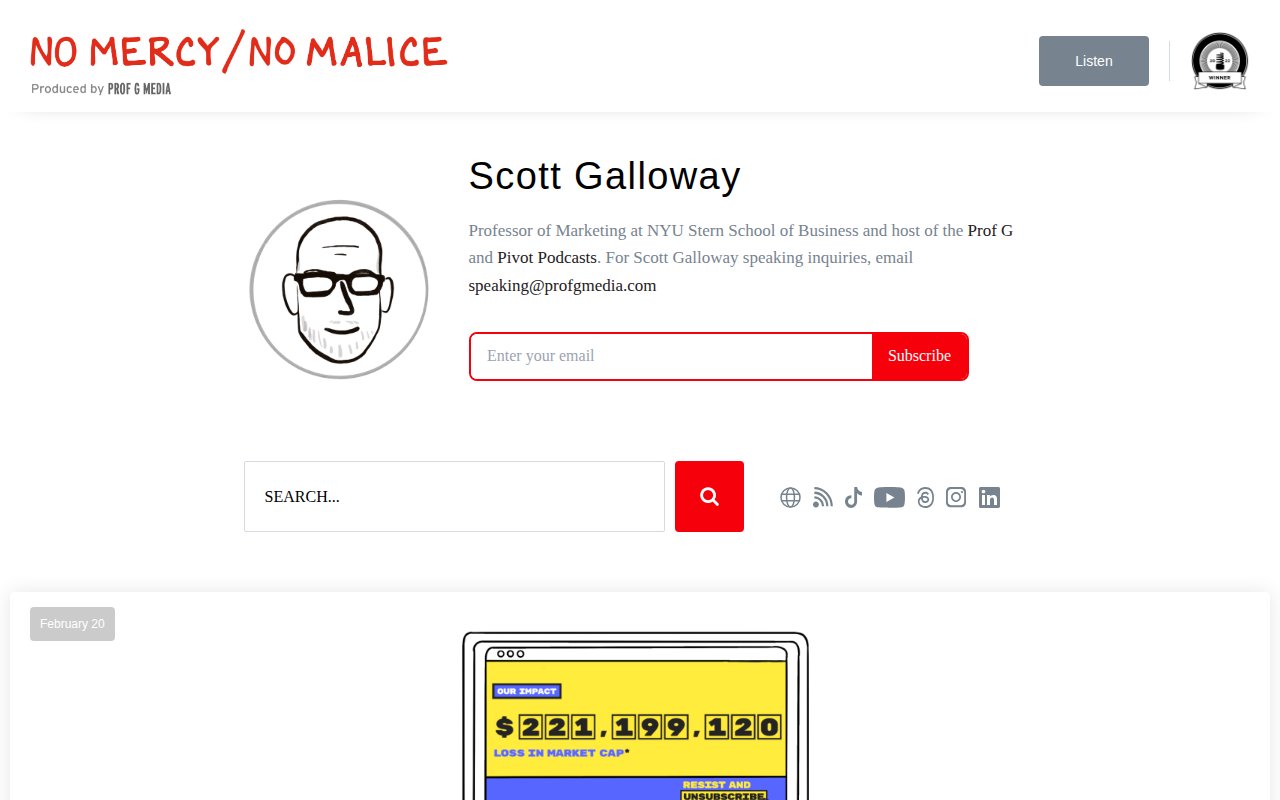
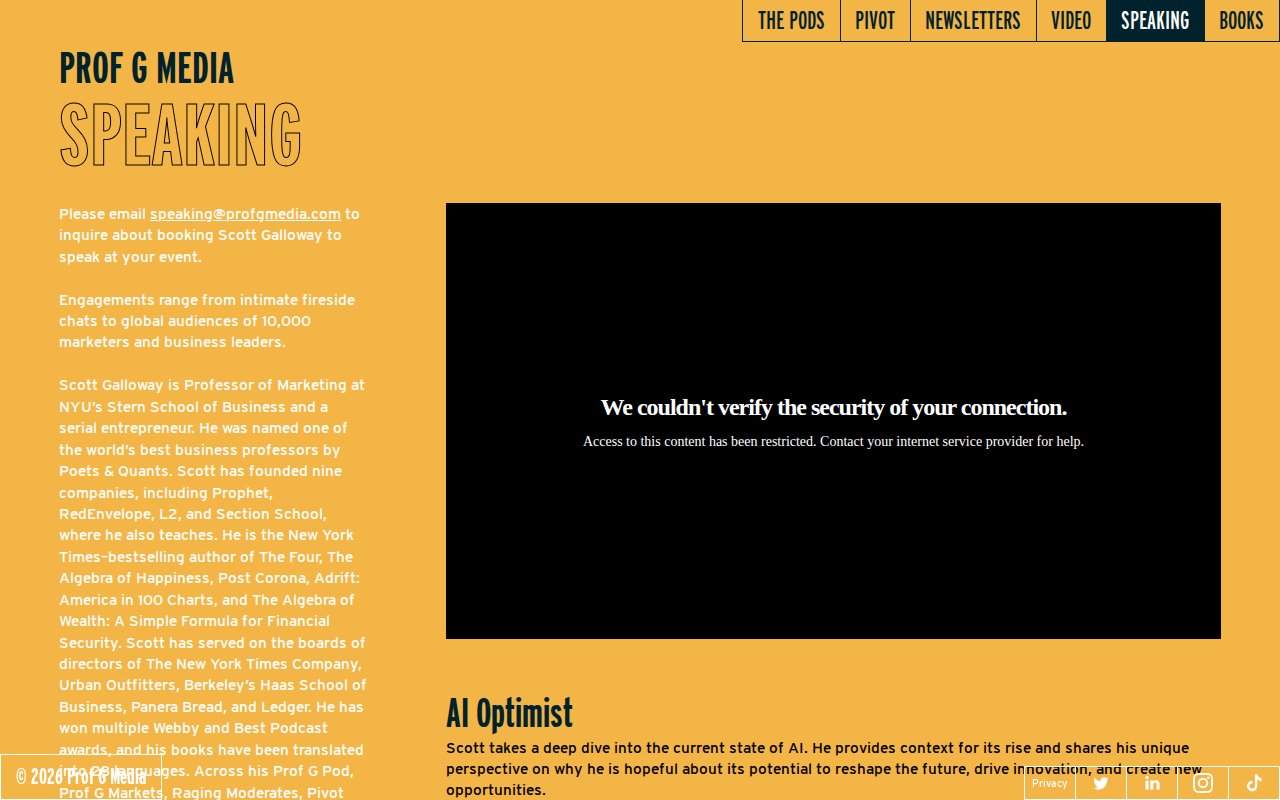
Scott Galloway’s site is a media brand that happens to include speaking. ProfGalloway.com is where millions read his No Mercy / No Malice newsletter. Speaking inquiries go to a separate domain (ProfGMedia.com/speaking), where the pitch is built on reach: millions of weekly listeners, books translated into 28 languages, four active podcasts. Endorsements from Bill Maher and other media figures sit alongside six keynote topics ranging from AI to intergenerational economics.
The separation between personal blog and speaking page means event planners need to know where to look. For planners who arrive cold, the split between domains is a barrier.
What the best public speaker websites have in common
Named testimonials from recognizable companies
Nearly every top-scoring site features testimonials from named executives at recognizable companies. "Helped us plan our entire AI strategy" from Coca-Cola converts better than "great speaker!" from an anonymous attendee. Named, titled, company-attributed praise is the currency of speaker credibility.
Distinct keynote topic pages with descriptions
Most high-performing sites have individually named keynote programs, each with a full description, audience fit, and expected outcomes. Specific topic pages show event planners exactly what they're buying.
Booking contact visible on every speaking page
Phone numbers, agent emails, and "Check Availability" buttons appear on every speaking-related page of the top-scoring sites. The booking path is never more than one click away, because event planners are comparing multiple speakers simultaneously.
Content channels that prove ongoing engagement
The strongest speaker sites maintain a newsletter, podcast, or blog that proves audience engagement between gigs. Subscriber counts and download numbers are more persuasive to event planners than a list of past conference names.
One clear credential above the fold
The best speaker sites lead with one specific, verifiable credential rather than a list. "Former Head of GTM at OpenAI" or "51,034 newsletter subscribers" or "Hall of Fame speaker with 1,400+ presentations." The visitor needs to know in five seconds what this speaker is known for and whether it matches their event.
How to build your speaker website
-
Write distinct topic pages for each keynote you offer. Every site in our review that scores well on conversion has individually named keynote programs, each with a description, audience fit, and expected outcomes.
-
Get named testimonials from corporate event clients. Ask for verbatim feedback that names the event, the audience, and the result. “Partners quoted her the next day” (Tiffani Bova’s Xerox testimonial) is worth more than fifty anonymous five-star reviews. Include the person’s name, title, and company.
-
Put your booking contact on every speaking-related page. Phone number, agent email, or inquiry form. Not just on the contact page. Event planners are often comparing you with three other speakers at the same time.
-
Build a content channel. Newsletter, podcast, blog, YouTube. The speakers who score highest in our review all maintain an audience between gigs, and their subscriber counts and download numbers function as ongoing proof of relevance. Start with whichever format matches your existing workflow.
-
Show your fee range or establish a clear qualification path. Almost no speakers publish pricing, which is why doing it can set you apart. Marcus Sheridan’s instant pricing estimate is the most aggressive version, but even stating “fees start at $X for a 60-minute keynote” removes the biggest friction point for event planners who need budget approval before they can call you.
Key Takeaways
- Named testimonials from recognizable companies convert better than anonymous audience praise. Get feedback from corporate clients that includes the event name and the outcome.
- Write distinct keynote topic pages with full descriptions and audience fit. "I speak about leadership" is not a topic page.
- Put your booking contact (phone, agent email, or form) on every speaking-related page. The first speaker to answer the event planner's question wins the booking.
- Build a content channel (newsletter, podcast, blog) that proves ongoing audience engagement. Your subscriber count is more persuasive than a past event list.
- Consider sharing your fee range. Almost no speakers do it. The one who does argues it builds trust and filters out unqualified inquiries.
- Lead with your strongest credential above the fold. The event planner needs to know in five seconds what you're known for and whether it matches their event.
How we picked these sites
We started with a broad scan of hundreds of public speaker websites, filtering for speakers with strong third-party signals: high event ratings, verified testimonials from corporate clients, meaningful organic search traffic, and recent site updates. We also reviewed industry publications like Speaker Magazine (National Speakers Association), Speakers Magazine (Black Speakers Network), and Toastmaster Magazine to find speakers worth evaluating who don’t dominate search results.
From that pool, we selected dozens of the strongest sites and scored each on five criteria: UX quality, conversion optimization, social proof integration, team authenticity, and SEO coverage. Every site got a multi-page review covering the homepage, speaking page, about page, and any standout pages like content libraries or pricing tools.
The sites featured here earned the highest overall scores. Each one made the cut because it does something specific well. The goal is a collection where every site teaches a different lesson about what works for speaker websites.
Frequently Asked Questions
What should a public speaker website include to get bookings?
The speaker sites that convert best share three traits: named testimonials from recognizable companies (not anonymous audience praise), clear keynote topic pages with full descriptions, and an obvious booking path (phone number, agent contact, or inquiry form) visible on every speaking-related page. Most sites in our review also include a downloadable speaker kit or one-sheet for event planners.
How much does a keynote speaker website cost to build?
Speaker websites range from $500-$2,000 on Webflow or Squarespace (three of our top-scoring sites use Webflow) to $5,000-$15,000 for a custom WordPress build with multiple landing pages. The platform matters less than the content: specific keynote topic descriptions, named client testimonials, and a clear booking path do more for conversions than custom code.
Should a speaker website show speaking fees?
Almost none do. Marcus Sheridan is a notable exception in our review, offering an instant pricing estimate tool on his homepage. His argument: transparency builds trust and filters out unqualified inquiries. For most speakers, the industry norm is to route pricing conversations through an agent or inquiry form. But if your positioning is built around transparency or trust, showing a fee range can be a real differentiator.
 500+ Unique General Contractor Business Name Ideas