Every pressure washing homepage says the same thing: professional, insured, satisfaction guaranteed. The homeowner with three browser tabs open is scanning past all of it, looking for a real crew photo, a specific review count, or a before/after shot of the driveway they actually want.
These nine sites convert because they answer the visitor’s real question early: can I trust this person with a 3,000 PSI hose pointed at my siding?
Charlotte Power Washing
Before/after hero that sells without words
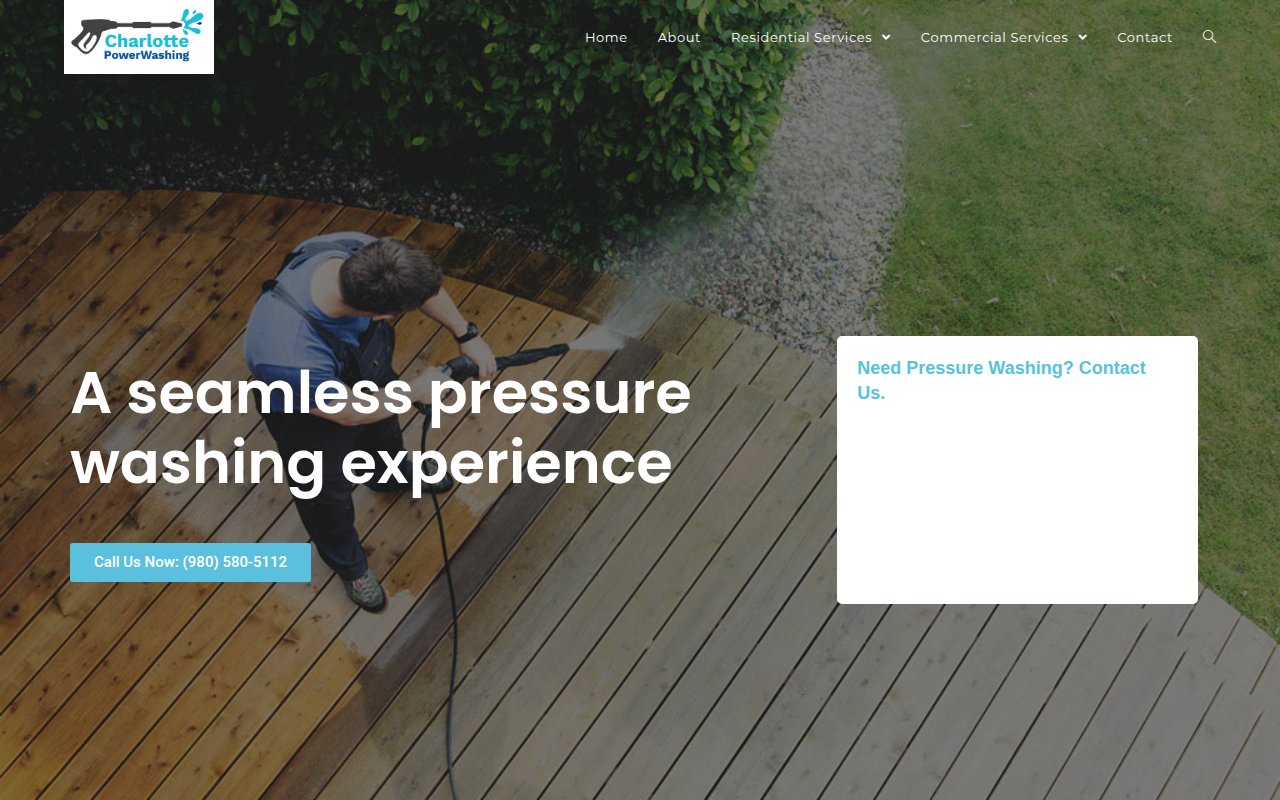
Charlotte Power Washing opens with a before/after deck photo where weathered gray on one side meets freshly restored golden wood on the other. The photo communicates the value proposition without any copy.
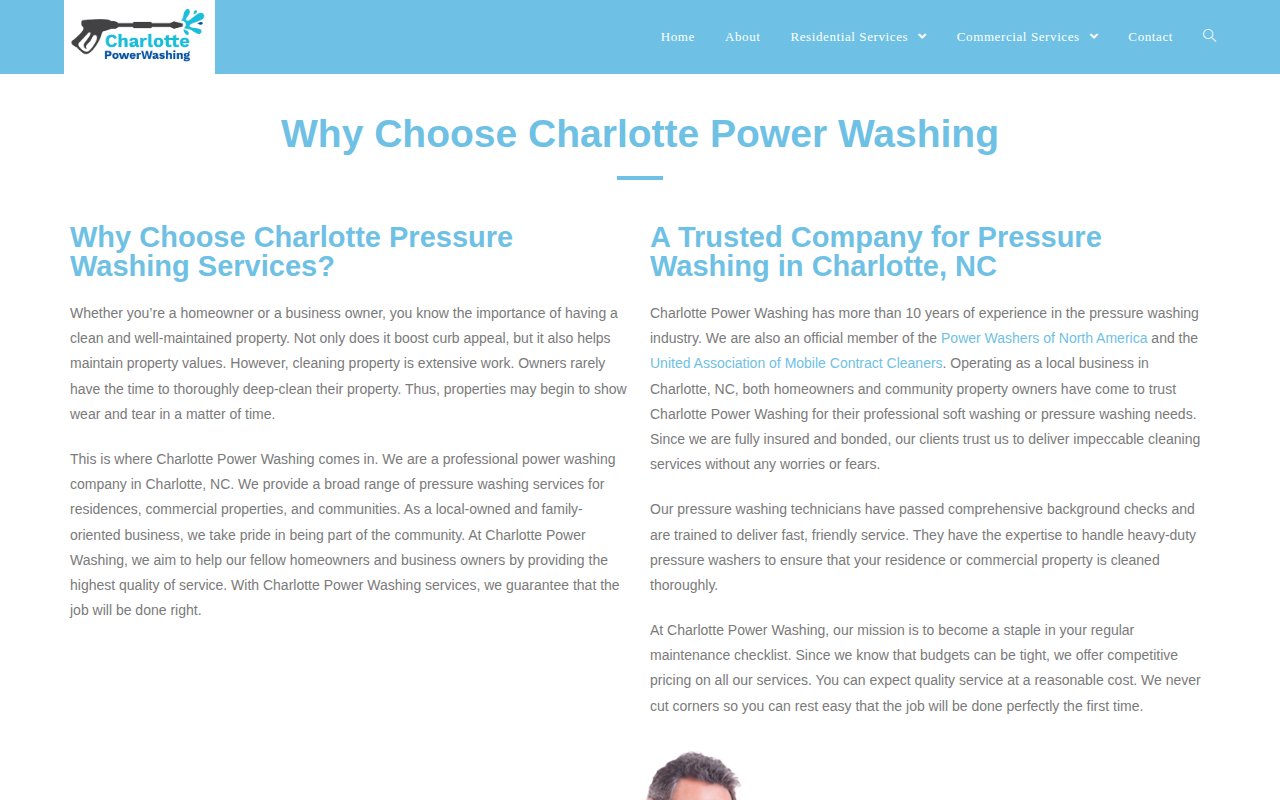
The About page adds professional association memberships and background checks on all technicians. For a business that sends workers onto your property with high-pressure equipment, those institutional credentials matter. The service list below the fold is also unusually specific for a local operator, covering niche commercial work most competitors don’t mention.
The gap is social proof. No review count or testimonials visible anywhere. Industry associations build credibility with peers, but homeowners want to hear from other homeowners.
Men in Kilts
ZIP-code-first conversion funnel
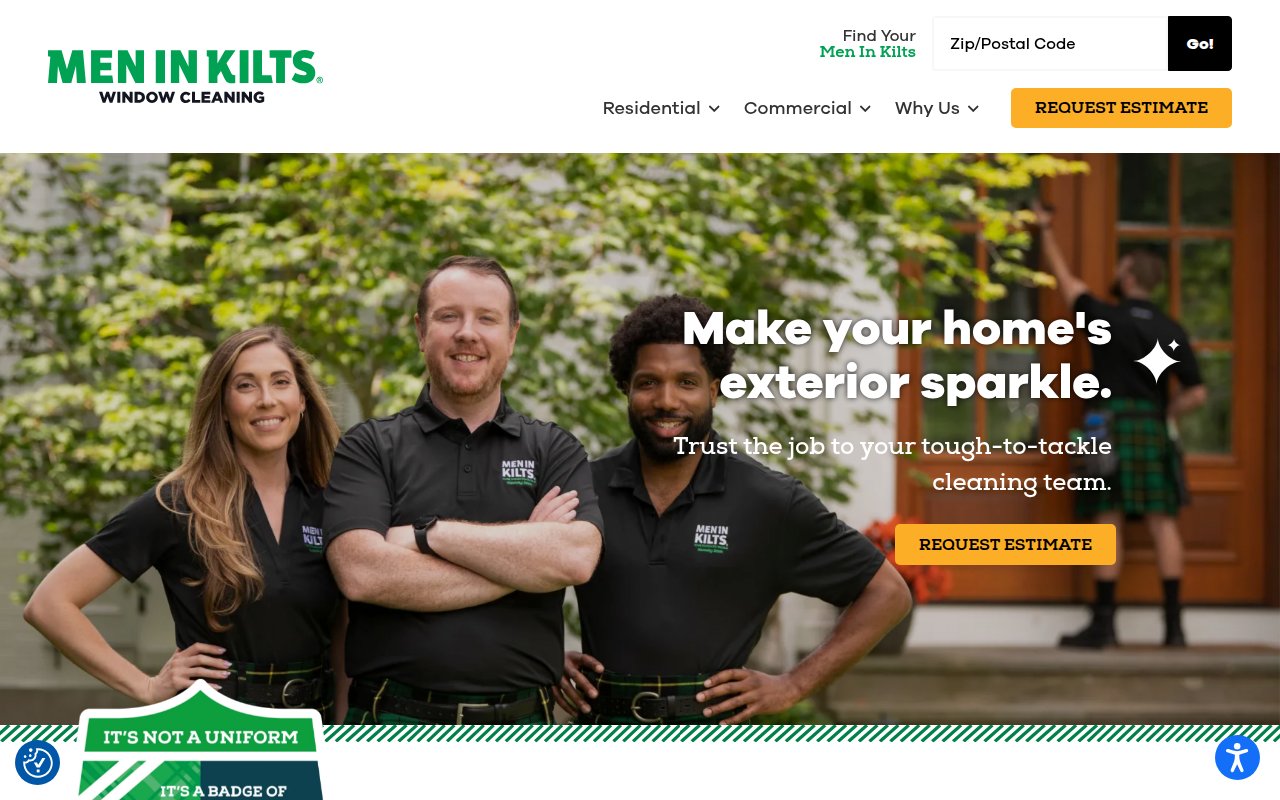
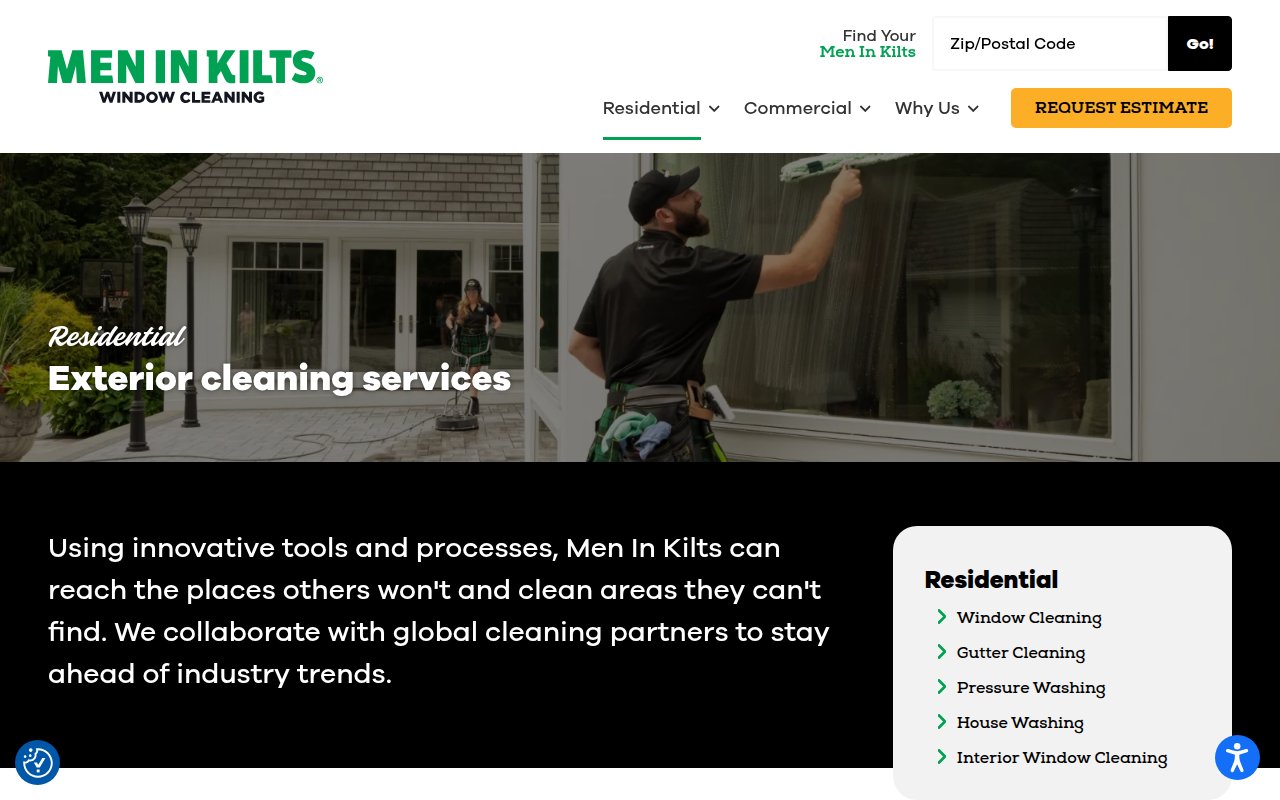
Men in Kilts is the only site we reviewed where the brand itself is the main competitive advantage. Staff in kilts is fun, memorable, and impossible for competitors to replicate. In a market full of “[City] Pressure Washing” names, that kind of identity separation is worth more than any single conversion tactic.
The primary CTA is a location finder that routes visitors to their nearest franchise before they see anything else, which solves the biggest UX problem for any multi-location business (getting visitors to the right local page fast). A satisfaction guarantee with a 48-hour re-clean policy helps, too.
The missing piece is social proof. No review count or testimonials above the fold. The brand does a lot of trust-building on its own, but a Google review count would add third-party validation that personality alone can’t provide.
WiseGuys Pro-Wash
Founder story that doubles as a trust signal
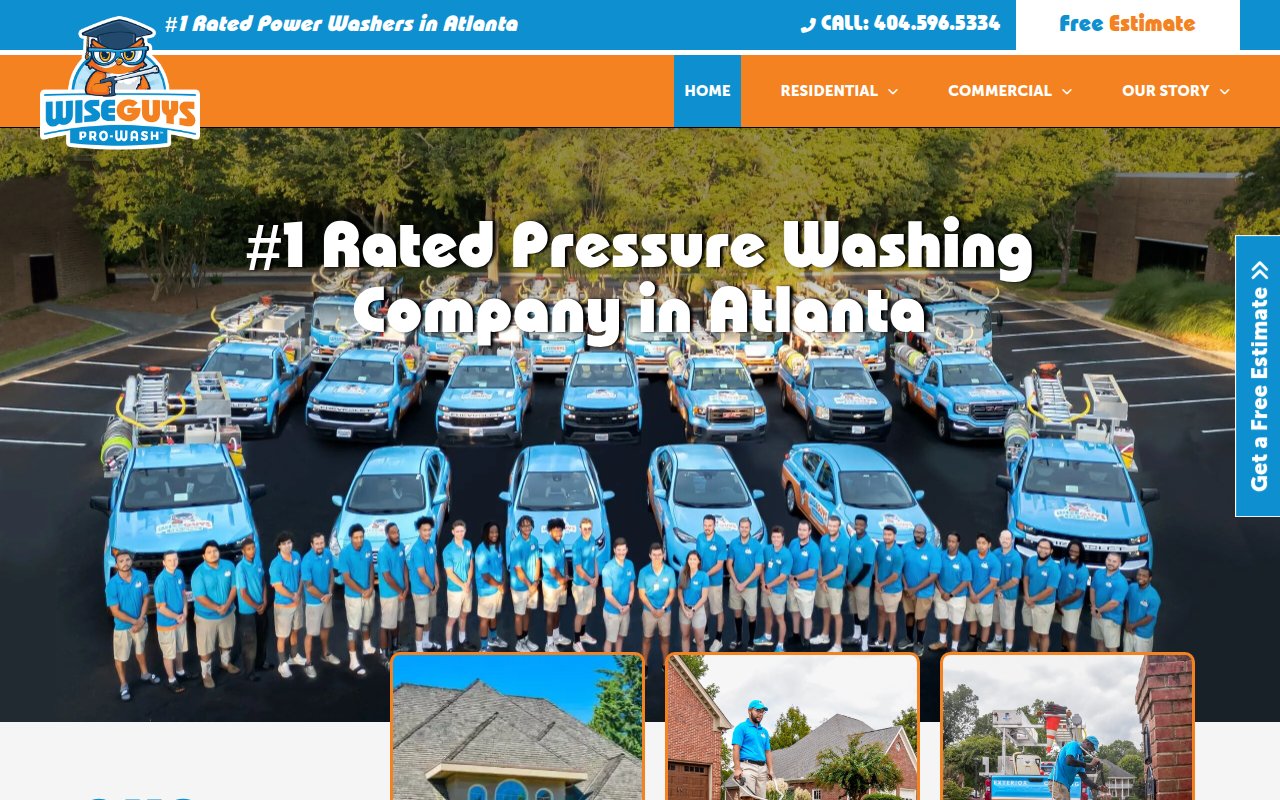
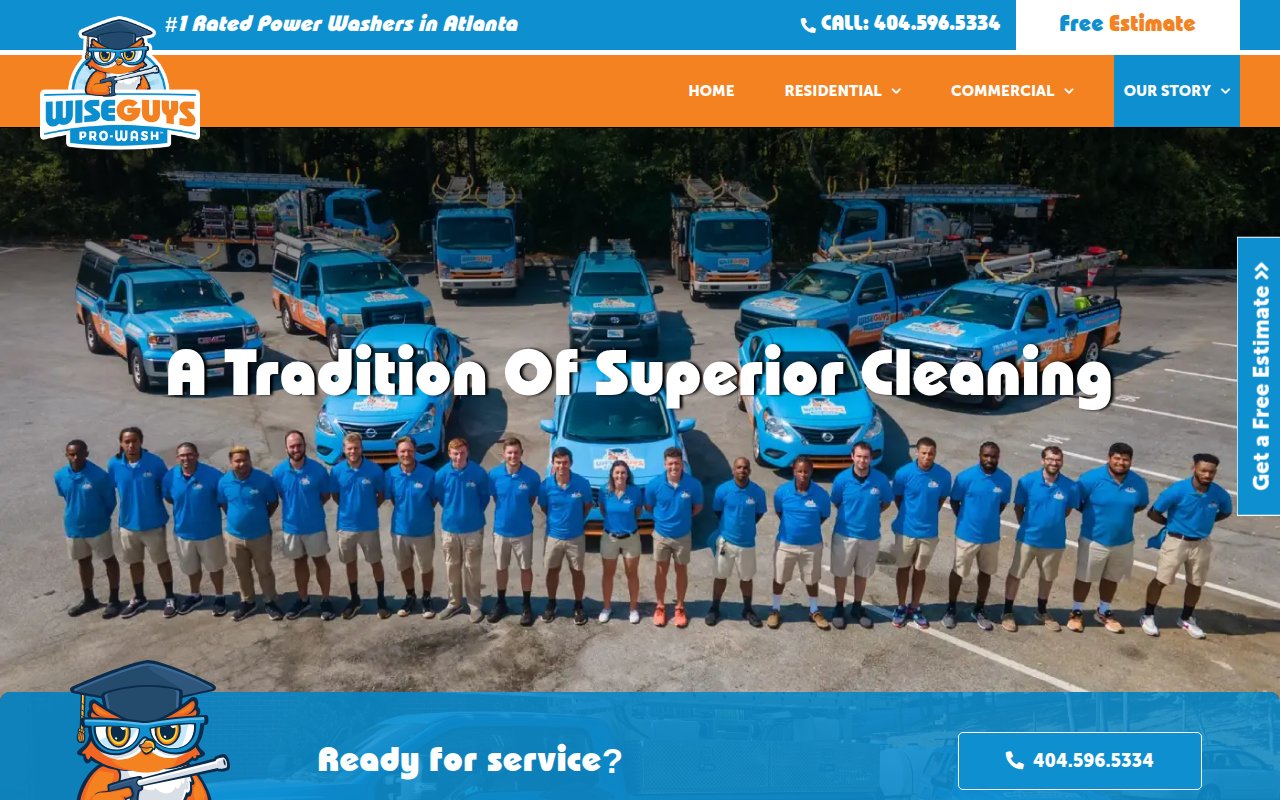
The homepage of WiseGuys Pro-Wash opens with a fleet photo showing uniformed staff and branded trucks. A full fleet with matching vehicles tells the homeowner this is a real operation, not a guy with a rented machine.
The About page has a genuine founder story: a college student who started pressure washing to pay tuition, graduated debt-free, and grew the business into a recognized Atlanta-area brand. The site claims top ratings but doesn’t display a specific review count on the homepage. Showing the number would be stronger than the claim.
Zap It Wash
Lead-gen form baked into the hero
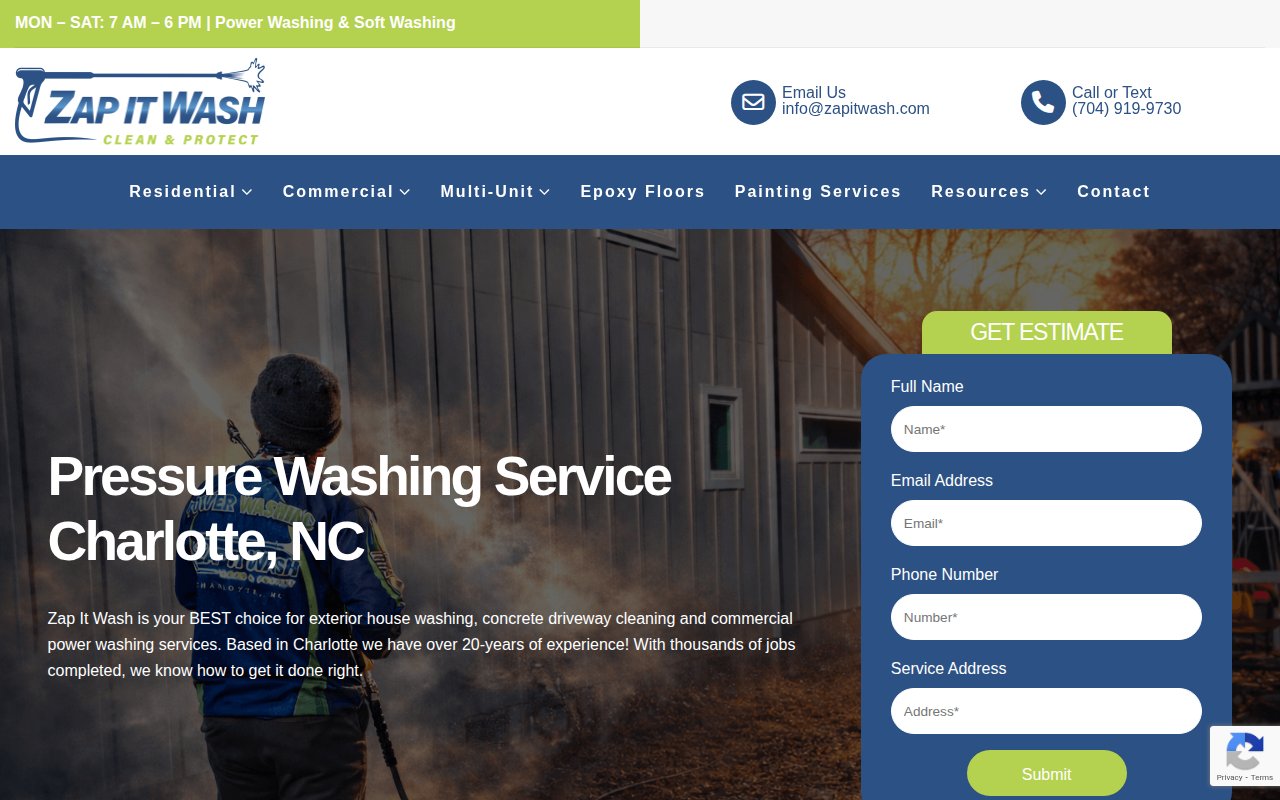
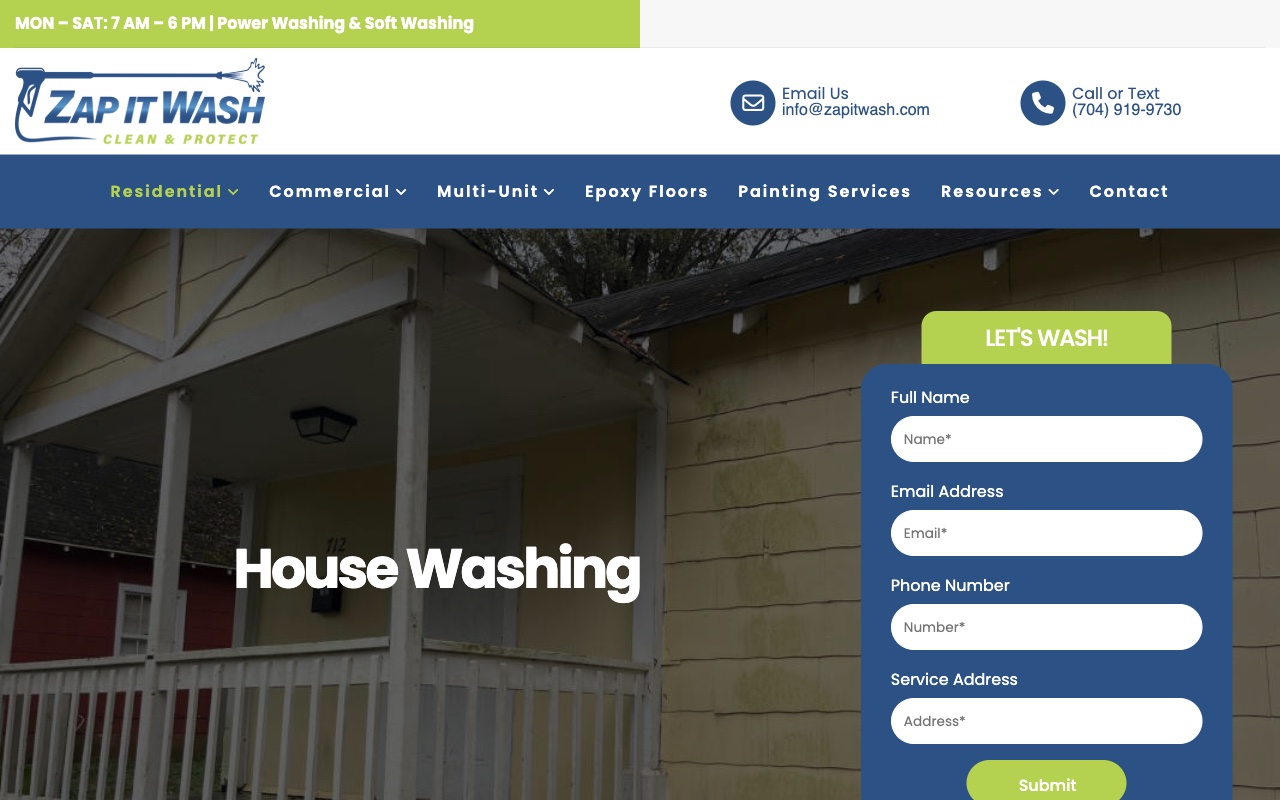
Zap It Wash embeds a lead-capture form directly in the homepage hero, so visitors can submit a quote request without scrolling or clicking through to a contact page.
The service range is unusually broad for a single-market operator, with dedicated sections for multi-unit properties (apartment complexes, HOAs, retirement facilities) that most competitors in one market don’t bother with. The biggest gap is team authenticity. No founder bio, no crew photos, and no About page content on the pressure washing site itself. For a business built on sending people to your property, a face behind the brand would help.
Allegiance Pressure Washing
Review count as a hero headline
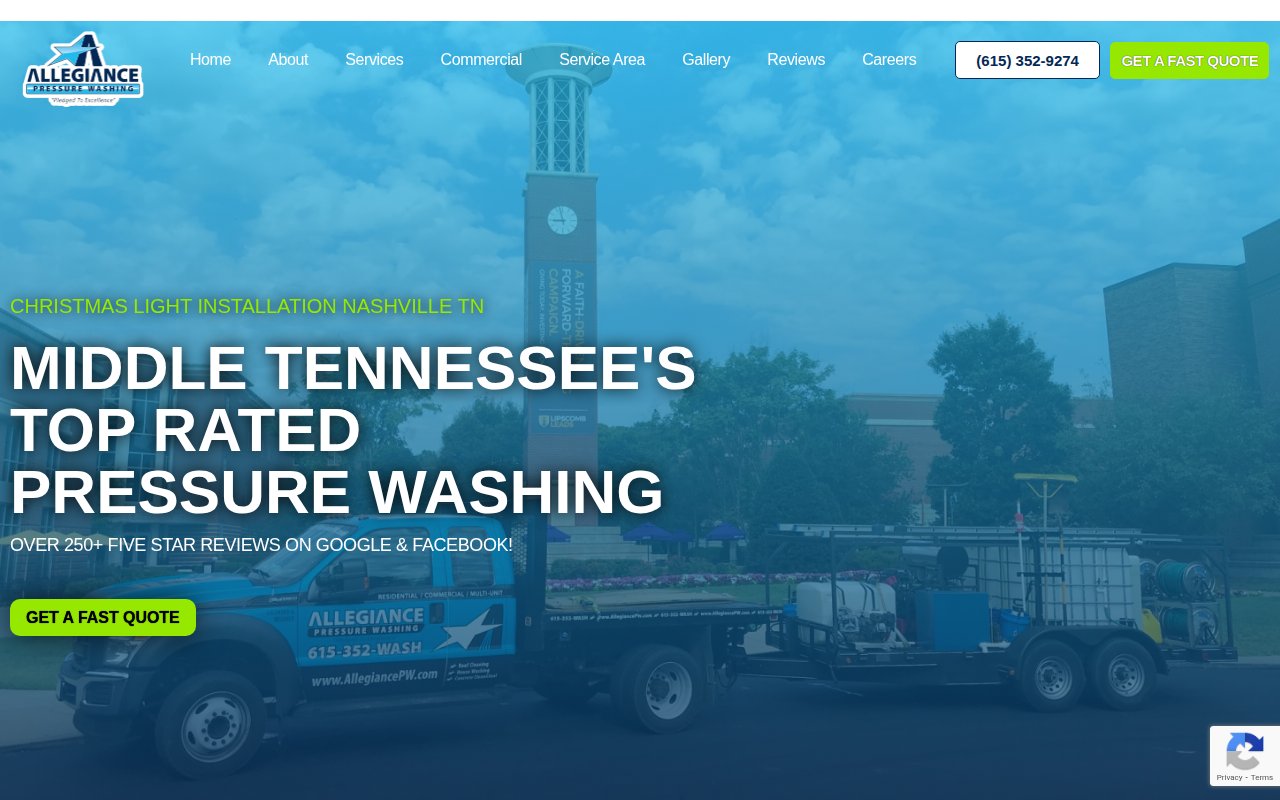
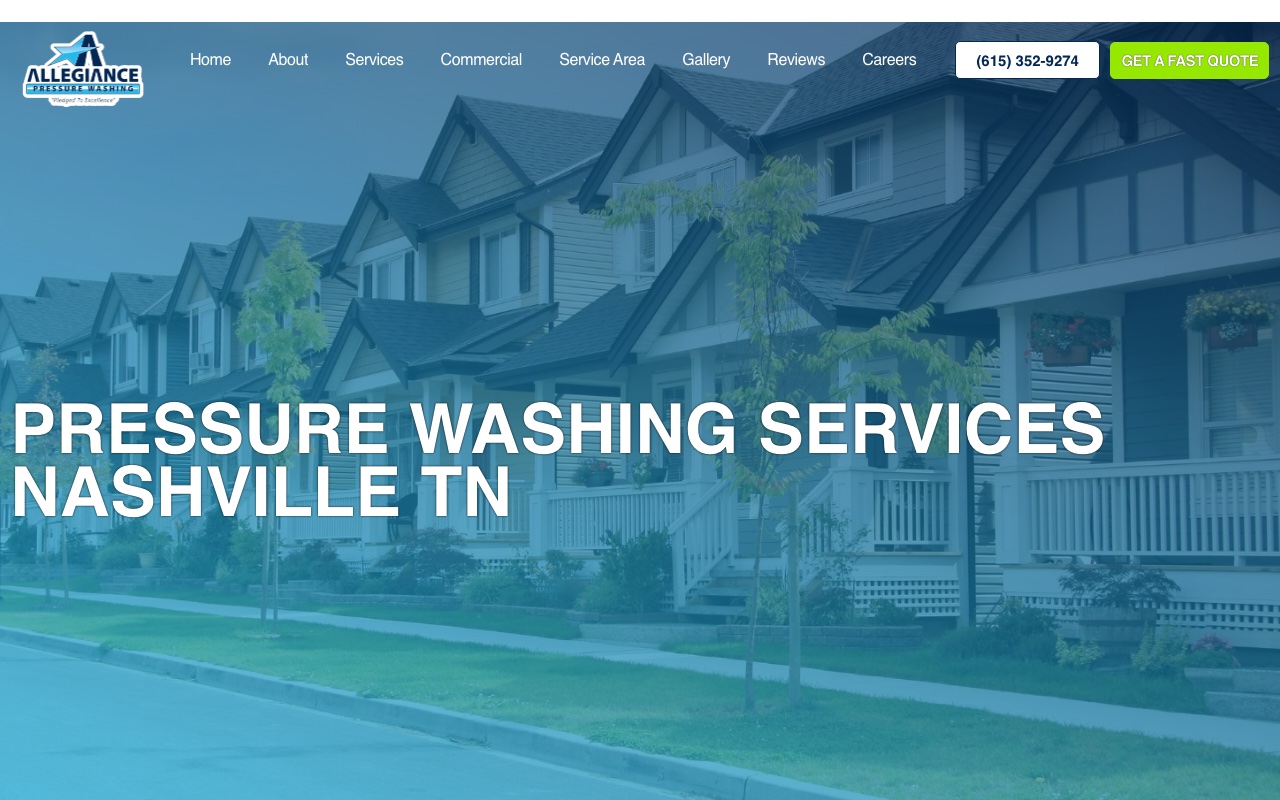
Allegiance Pressure Washing puts its review count directly in the hero headline, where most sites would put a tagline. Instead of saving reviews for a dedicated page that few visitors click, Allegiance makes the number impossible to miss.
The site has more pages than most local operators bother building, including a project gallery, service area pages, and a careers section. Inline testimonials from named local customers help, too. The weakness is team visibility. No team photos or founder story, and for a company with hundreds of reviews and a careers page, the anonymous team presentation feels like a gap worth filling.
HTX Power Washing
Self-service instant quote in 2 minutes
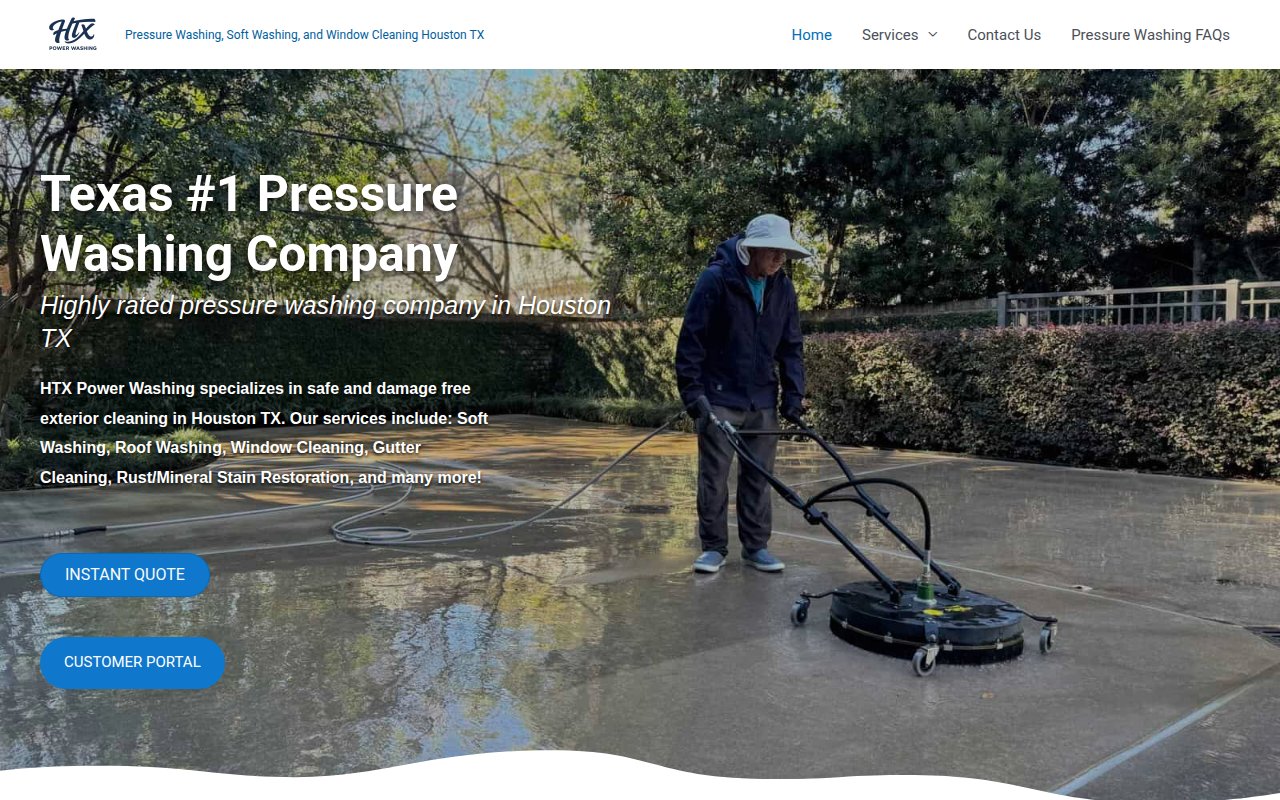
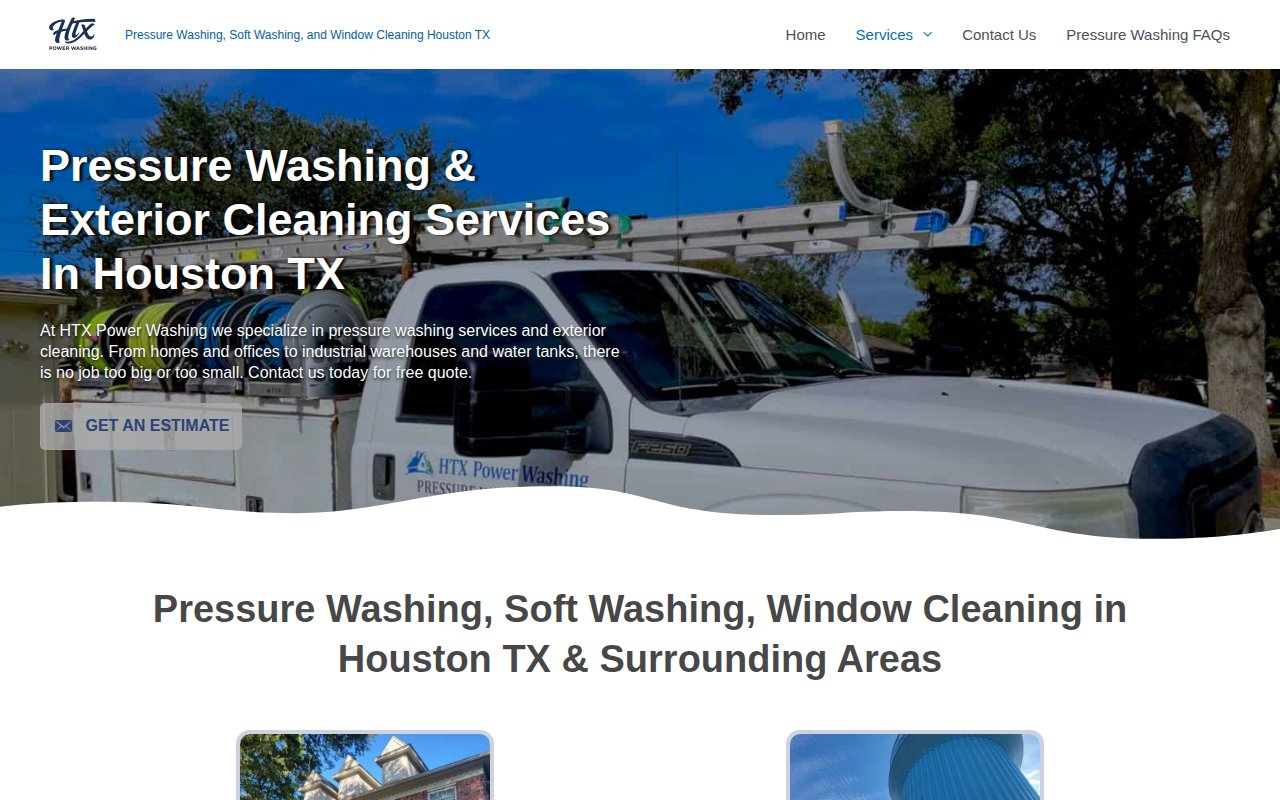
HTX Power Washing gives visitors a self-service path to pricing. An instant quote tool lets them price their job online in about two minutes, and a customer portal lets them manage bookings after, all without a phone call or a callback wait.
The service range spans residential soft washing to industrial-scale commercial work. Embedded reviews with specific, detailed feedback add more credibility than a star rating alone, and visitors can choose between instant online quotes or an on-site assessment.
What’s missing is a face behind the tech. No team photos or founder story. The tech-forward tools are the differentiator, but a crew photo would round out the trust signals.
Peachtree Power Wash
Published pricing that competitors won't match
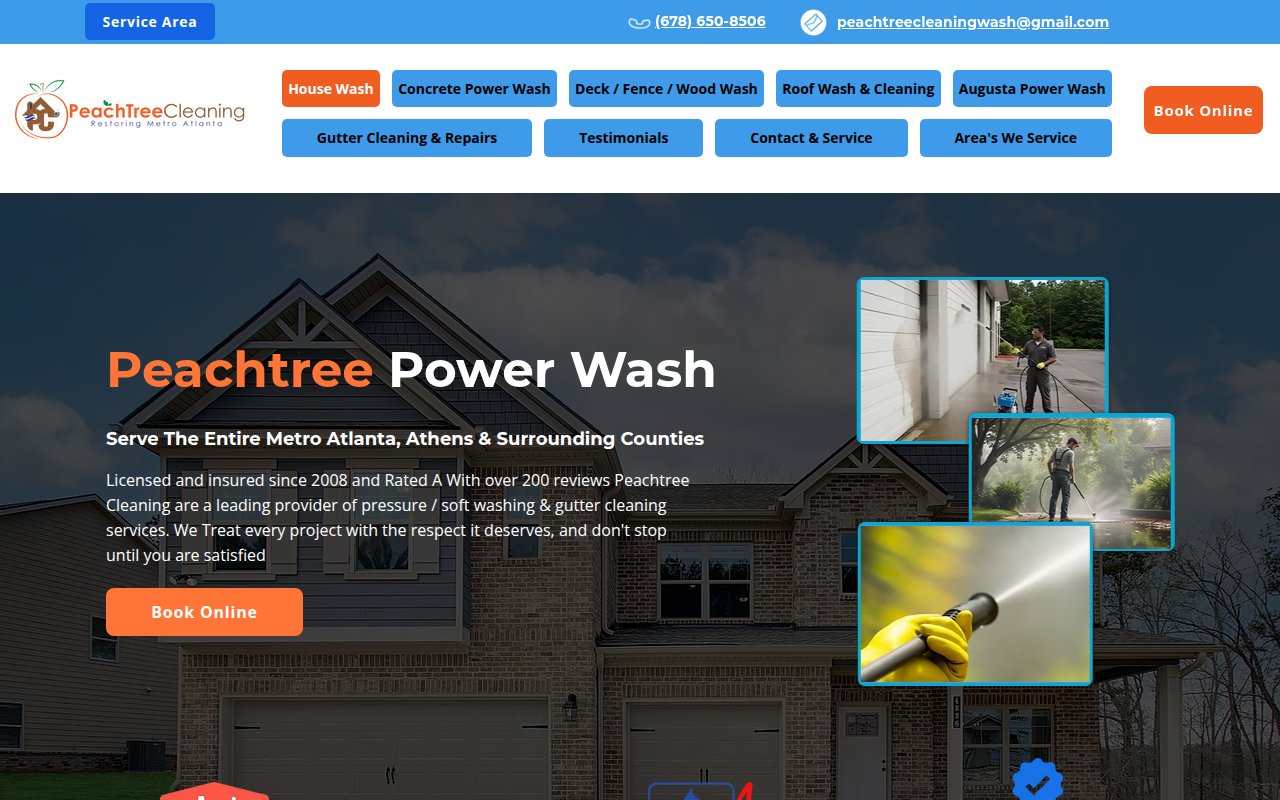
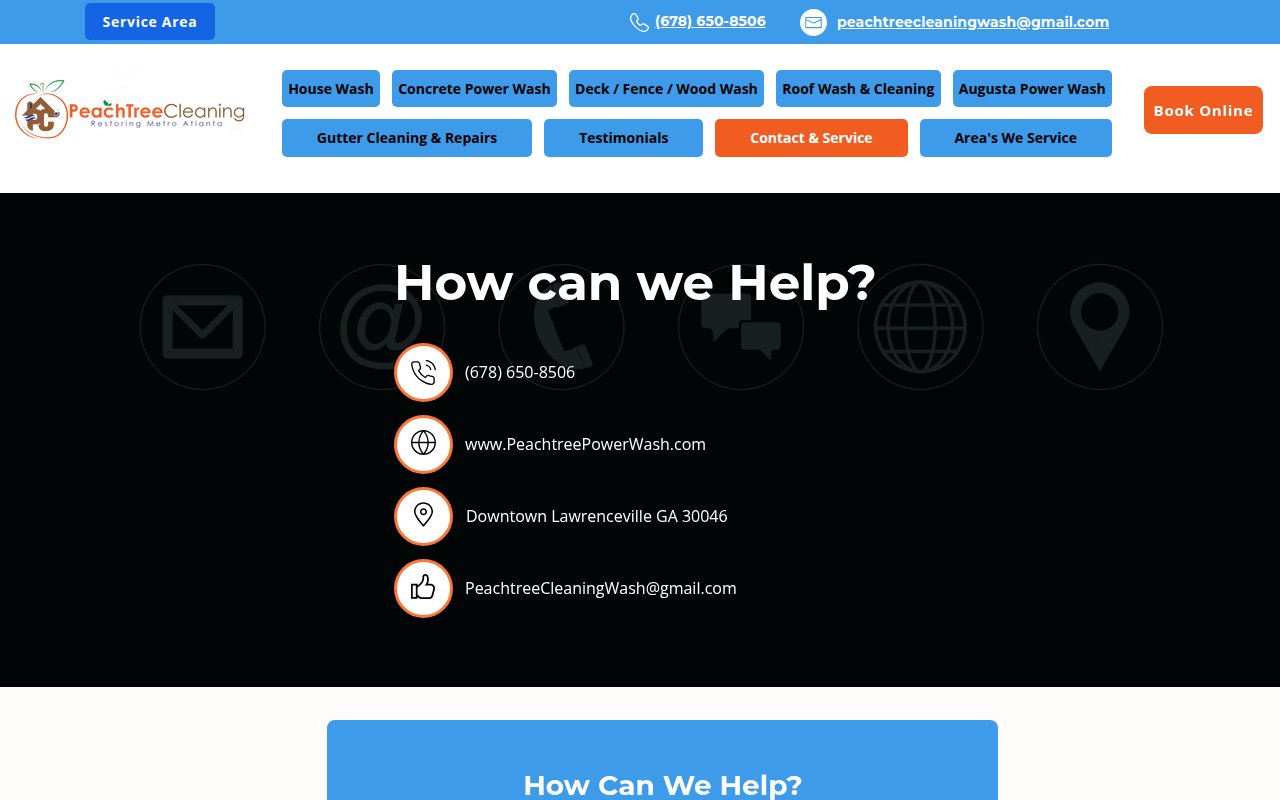
Peachtree Power Wash borrows from e-commerce with large, tappable service buttons across the header that let visitors jump directly to their specific cleaning need. An online booking option adds scheduling without a phone call.
This is the only site in the group that publishes actual prices. Flat rates by square footage (starting under $200 for smaller homes) give price-conscious buyers what they need to decide before calling. In business since 2008 with hundreds of reviews, and built on Wix, which shows you don’t need WordPress to compete in this space.
The design feels dated compared to other sites here, and no team information is visible. But for buyers who want a number before a conversation, the pricing transparency is a competitive advantage that outweighs the template look.
Water Works Pressure Cleaning
Call, text, or quote: three ways above the fold
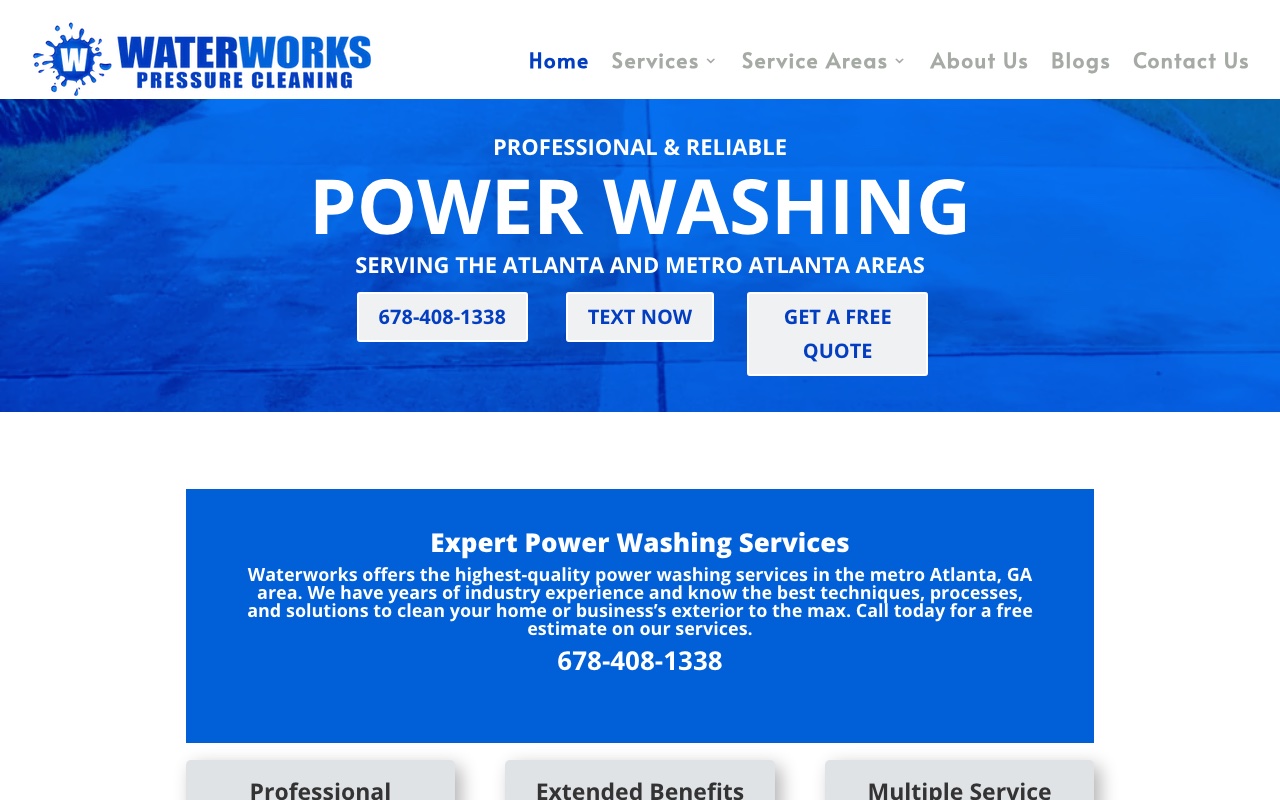
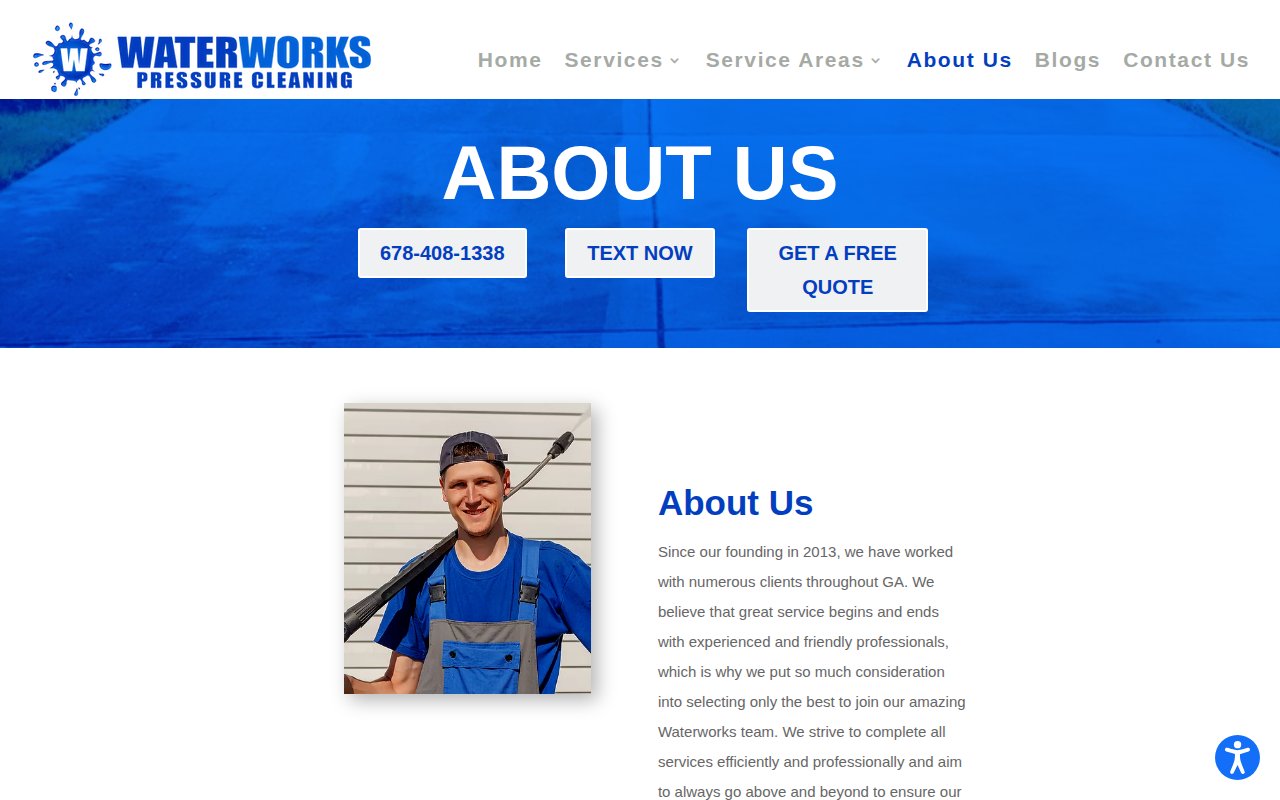
Water Works Pressure Cleaning offers three contact methods together in the hero: phone, text, and a quote form. Whatever the visitor prefers, there’s a path.
The triple-contact pattern repeats on every page, so the CTA is always within reach. Founded in 2013, the About page emphasizes hiring standards and team culture. Blog content and service area pages suggest the site gets regular attention, not just a build-and-forget job.
The weakness is social proof. No review count or testimonials visible on the homepage, and for a company operating since 2013, that absence is the biggest missed opportunity. The contact accessibility is excellent, but there’s no third-party validation to motivate the first reach-out.
Music City Pressure Washing
Family-owned identity as the headline value prop
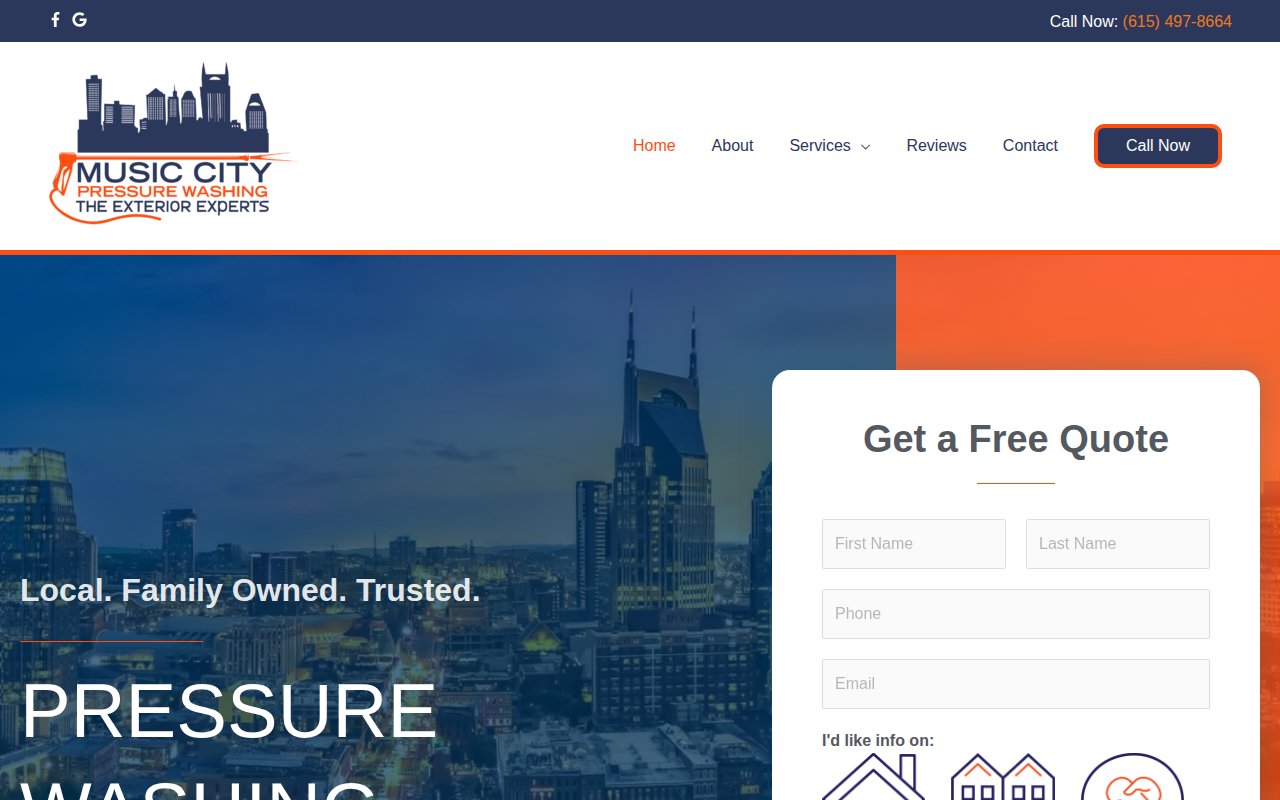
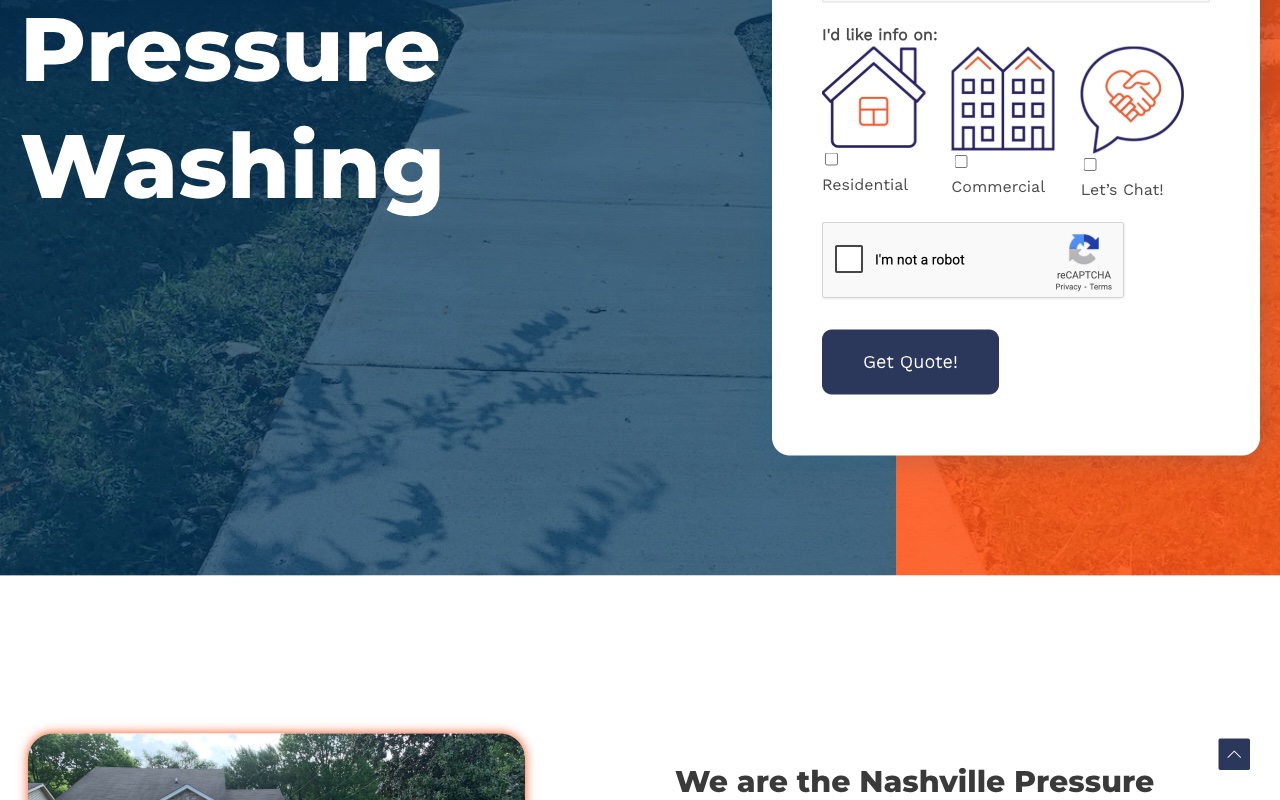
Music City Pressure Washing takes the simplest approach to differentiation in this group. The hero headline directly answers the three questions homeowners ask before hiring a service company: is this local, is it family-run, can I trust them?
The Nashville-themed branding leans into hometown pride, which plays well in that market. The founder is named in the copy, and the site’s language feels personal rather than corporate. A quote form with a residential/commercial toggle keeps things simple.
The site lacks embedded reviews and detailed team photos. The simplicity works as a positioning strategy, but without social proof, the family-owned claim has to carry all the trust weight alone.
What the best pressure washing websites have in common
Review counts above the fold
The highest-converting sites display a specific review number in the header or hero, not buried on a testimonials page. A real count is more persuasive than a vague claim about quality.
Real work photos, not stock imagery
Before/after shots, fleet photos, and crew photos outperform generic stock imagery every time. The sites that show their actual trucks, equipment, and results score highest on trust.
Multiple contact channels
Nearly every top-performing site offers at least two ways to reach out (phone plus form), and the best ones add text messaging. The channel you're missing is the lead you're losing.
Dedicated pages per service type
Sites with individual pages for house washing, driveway cleaning, roof cleaning, and gutter cleaning score higher on SEO. Each page targets a specific local search query that a single services page can't win.
Speed messaging in CTAs
The best sites don't just offer a way to get a quote. They tell you how fast you'll get one. For a service where customers have multiple tabs open, speed-to-response is the tiebreaker.
How to build your pressure washing website
-
Lead with before/after photos. One split-screen photo of a dirty-to-clean driveway communicates your value proposition faster than any paragraph of copy. Shoot your own work, even with a phone camera. Real results on real local properties beat stock photography.
-
Put your phone number and quote form above the fold. Every site in this group with a high conversion score makes the first contact step visible without scrolling. The strongest ones offer multiple channels (phone, text, form) so customers can reach out however they prefer.
-
Show your actual team and equipment. A fleet photo with uniformed staff or an action shot of your crew tells the homeowner this is a real operation. Stock photos of smiling models holding pressure washers signal the opposite.
-
Create a separate page for each service you offer. House washing, driveway cleaning, roof cleaning, gutter cleaning, and commercial services should each have dedicated pages. This is how you win “pressure washing [service] [city]” searches on Google.
-
Display your review count on every page. If you have Google reviews, put the count in your header or hero section. A specific number builds more trust than any copy you can write.
-
Write a real About page. The best-performing about pages in this group share a founder story, list industry credentials, or name the people behind the company. “We are a professional pressure washing company” tells the visitor nothing.
If you’re still choosing a name for your business, our pressure washing business name guide has 500+ ideas organized by positioning strategy.
Key Takeaways
- Before/after photos communicate your value proposition faster than any headline or tagline. Lead with visual proof of your work.
- A specific review count displayed in the header is more persuasive than a separate testimonials page or a vague quality claim.
- Multiple contact methods (phone, text, online form) capture more leads than phone-only. Different customers prefer different channels.
- Service-specific pages (house washing, driveway cleaning, roof cleaning) are how you win local searches. A single services page can't target them all.
- A real founder story or team photo turns a commodity service into a business people want to hire.
- Published pricing can be a competitive advantage if your rates are strong. It filters tire-kickers and reduces quote-request friction.
How we picked these sites
We started with a broad scan of hundreds of pressure washing websites across four metro areas (Atlanta, Houston, Charlotte, Nashville), filtering for companies with strong third-party signals: high Google Business Profile ratings, verified reviews, meaningful organic search traffic, and recent site updates. We also reviewed industry publications like Cleaner Times, Pressure Wash News, and Power Wash Industry Magazine to find companies worth evaluating beyond what ranks on page one.
From that pool, we selected dozens of the top sites and scored each on five criteria: UX quality, conversion optimization, social proof integration, team authenticity, and SEO coverage. Every site got a multi-page review covering the homepage, services page, about page, and any standout pages.
The sites featured here earned the highest overall scores. Each one made the cut because it does something specific well, not because it’s the “best” at everything. The goal is a collection where every site teaches a different lesson.
Frequently Asked Questions
What should a pressure washing website include to get more calls?
The strongest pressure washing sites we reviewed share four elements: a phone number or quote form visible above the fold on every page, real work photos (before/after shots or crew/fleet photos instead of stock imagery), a specific Google review count displayed prominently, and individual pages for each service type (house washing, driveway cleaning, roof cleaning). Sites with all four consistently scored highest on conversion.
How much does a pressure washing website cost to build?
A pressure washing website can range from $500-$2,000 using WordPress with a theme like Divi (used by most sites in this review) to $5,000-$15,000 for a custom build with booking integration and instant quote tools. The biggest cost driver is whether you need advanced features like online quoting, customer portals, or location-based routing for multiple service areas.
Should a pressure washing website show pricing?
Only one site we reviewed publishes pricing, and it works well. Peachtree Power Wash lists flat rates by square footage, which filters tire-kickers and attracts buyers who already know they're comfortable with the number. Most pressure washing companies avoid published pricing because rates vary by surface type, condition, and access. If your rates are competitive and straightforward, publishing them can be an advantage.
 10 Public Speaker Website Examples That Get You Booked (2026)